The Walking Program
A progressive walking protocol that builds pain-free endurance — from five steps to thirty-minute walks.
The mechanic's rule: Start with the mechanism. Find what winds symptoms up, remove needless irritation, and rebuild capacity one clean exposure at a time.
Walking Is Medicine
Walking is a practical aerobic activity that many people with back pain can scale by time, pace, terrain, and rest intervals. It can build general capacity and confidence, but it is one option rather than a universal best exercise.
Walking can be adjusted progressively. A dose that is too large may trigger a flare, while a very small dose may be a useful starting point rather than a failure to stimulate healing.
If you can walk a short distance comfortably, that gives you a useful starting dose. Begin below the amount that causes a substantial flare and expand it gradually when recovery remains acceptable.
The Interval Walking Method
Step 1: Find Your Limit
Walk until you feel the FIRST hint of discomfort — not pain, just awareness. Count the steps or note the time. This is your current limit.
Examples:
- "I can walk 3 minutes before pain starts" → your limit is 2.5 minutes
- "I get about 200 steps before it hurts" → your limit is 180 steps
- "I can walk to the end of my driveway" → that's your distance
Step 2: Build the Interval
Walk to 80% of your limit. Then REST. Use a relief posture:
- Sit (slight flexion helps stenosis)
- Stand with one foot elevated on a step
- Lean forward slightly with hands on knees
- Perform a standing decompression stretch
Wait until any discomfort completely subsides. Then walk another interval.
Step 3: Accumulate Volume
Your goal is to accumulate walking time without ever triggering pain. Three 5-minute walks > one 15-minute walk that leaves you in pain.
| Week | Walk Duration | Rest Duration | Total Sessions |
|---|---|---|---|
| 1 | Your limit × 0.8 | Until pain-free | 3-5 per day |
| 2 | Add 10-20% | Same | 3-5 per day |
| 3 | Add another 10-20% | Shorten if able | 3-4 per day |
| 4 | Continue building | Reduce rests | 2-3 per day |
| 6 | Aim for continuous | Eliminate | 1-2 per day |
| 8+ | 30 min continuous | None needed | Daily |
There is no validated universal weekly percentage. Increase only one variable at a time and use the during-activity and next-day response to choose the next dose. If a new level causes a meaningful, lasting flare, reduce it and rebuild more gradually.
Walking Technique
Speed Matters
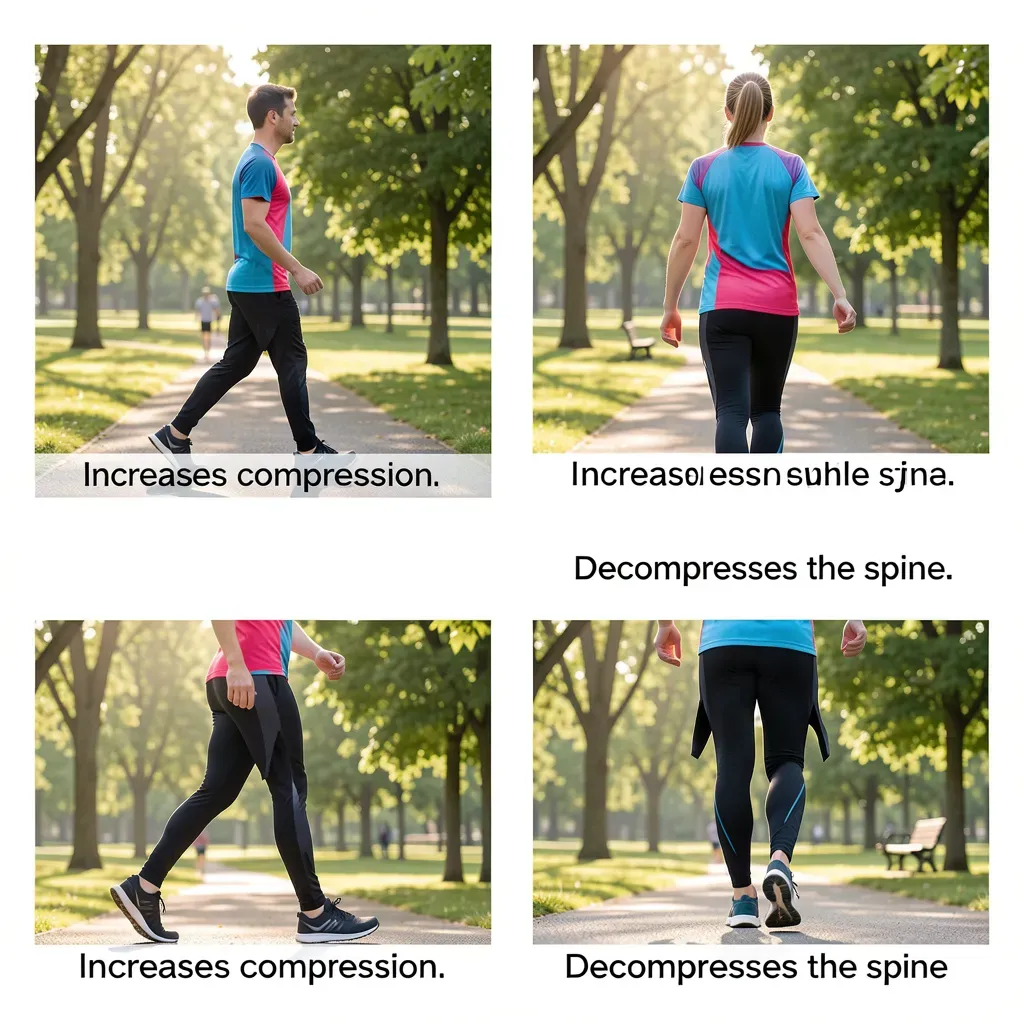
If a purposeful pace feels better: Use a relaxed arm swing and the fastest comfortable pace you can sustain without a lasting flare. A response to walking speed does not confirm a disc diagnosis.
For stenosis/arthritis: Speed is less important than duration management. Walk at a comfortable pace and respect your intervals.
Arm Swing
Let your arms swing naturally and opposite to your legs (right arm forward with left leg). This rotation occurs at the SHOULDERS — not the spine. It creates a beneficial anti-rotation challenge for the core.
If your arms aren't swinging naturally, you're walking too slowly or too stiffly.
Foot Strike
- Land with a heel strike
- Roll through the midfoot
- Push off through the toes
- Full stride length (don't shuffle)
Use a comfortable stride rather than forcing a particular foot strike or step length.
The Park Bench Method
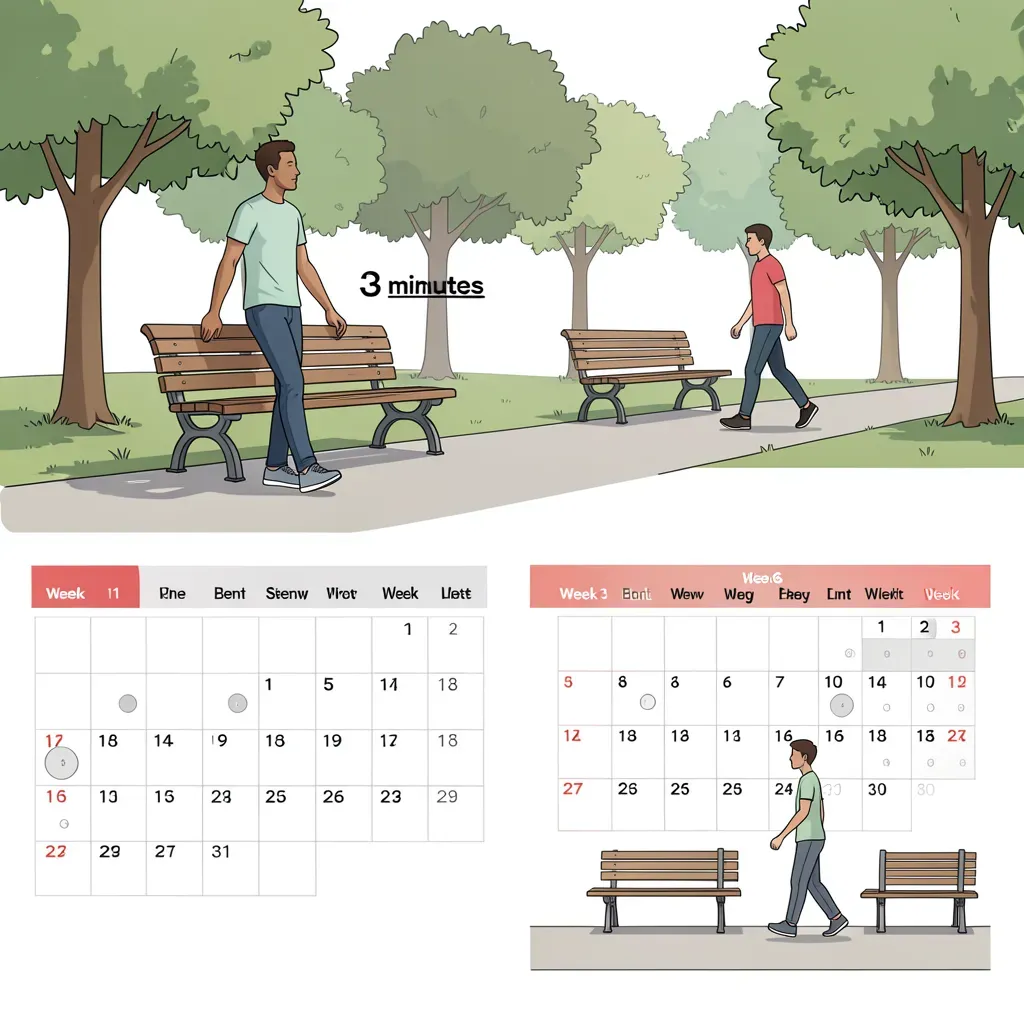
Find a route with regular resting spots (park benches, walls, fences to lean on). This gives you:
- A defined walking distance between rest points
- A comfortable place to perform relief postures
- Measurable progress (one bench → two benches → three benches)
The Decompression Stretch at the Bench
- Stand facing the bench back (or a railing)
- Grip it at waist height
- Step back, bend at the hips until arms are straight
- Let your spine decompress — you'll feel a gentle traction
- Hold for 15-20 seconds
- Resume walking when the discomfort has cleared
Specific Conditions
Disc Bulge Walkers
- Walk fast with deliberate arm swing
- Avoid hills initially (uphill increases extension, downhill increases flexion)
- If pain increases, stop and perform a standing extension (hands on low back, gentle backward lean)
- Flat terrain is ideal
Stenosis Walkers
- Pain typically builds with duration, relieved by sitting
- Use the interval method strictly
- Lean slightly forward on a shopping cart or walker if needed initially
- Sitting or slight flexion at rest stops
Sciatica Walkers
- Start with very short intervals
- If walking triggers leg pain, STOP and perform a standing decompression
- Wall-walking drill: walk along a wall, periodically stopping to lean back against it with slight knee bend
- Progress distance only when leg symptoms are controlled
The Daily Walking Prescription
Minimum: Walk 3 times per day at your current tolerable duration
Goal: Build to one continuous 30-minute brisk walk daily
Rules:
- Keep symptoms within an agreed, recoverable range; stop for escalating or spreading symptoms
- Use relief postures between intervals
- Progress one variable at a time according to your response
- Walk on flat terrain first, add hills later
- Good shoes with moderate cushioning (not minimalist shoes initially)
Walking can remain part of long-term physical activity if you enjoy it. Public-health activity targets are useful goals, but the route to them can include walking, cycling, swimming, strength training, or other tolerable activities.
Tracking Progress
Keep a simple log:
- Date
- Duration/distance walked
- Pain level during (0-3 scale: none, awareness, mild, stop)
- Pain level next morning
Review weekly. You should see a clear trend: walking longer with less pain. If not, you're progressing too fast or have an unaddressed pain trigger in your other daily activities.
The Mechanic's Brief
- Choose a duration that ends before symptoms escalate, even if the first interval is very short.
- Repeat tolerable intervals and increase only one variable - time, distance, or pace - at once.
- Use relaxed arm swing and a natural stride rather than bracing as hard as possible.
- Judge progress by walking ability and recovery afterward, not by one unusually good or bad session.