Back to Basics: Know Your Spine
Essential anatomy and biomechanics — how your spine works and what actually causes pain.
The Neutral Spine
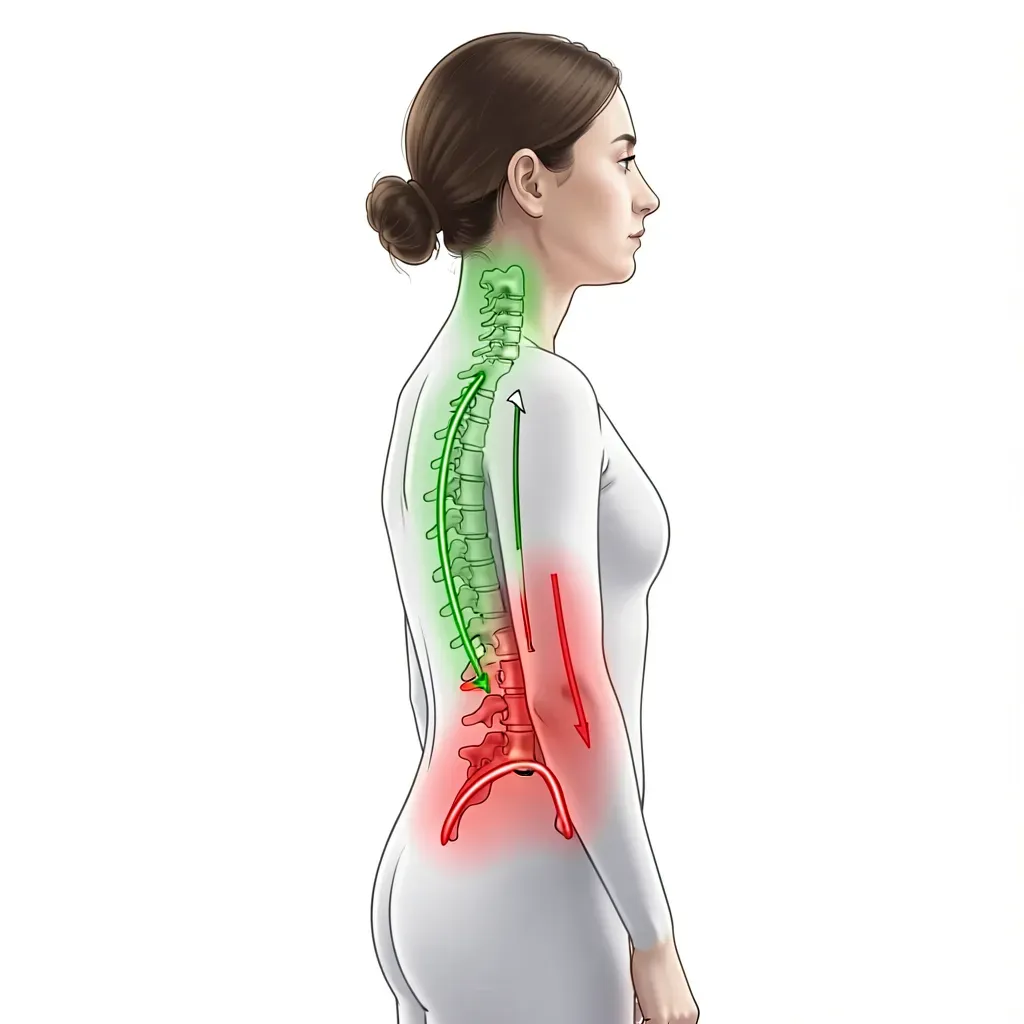
The spine is not a freestanding pillar. Think of it like a radio tower stabilized by guy-wires connected to the ground. The network of muscles and ligaments around your spinal column provides strength, support, and mobility.
When healthy and in its "neutral" position, three natural curves are present:
- Cervical spine (neck) — curves gently inward toward the front of the body (lordosis)
- Thoracic spine (mid-back) — curves outward away from the lungs (kyphosis)
- Lumbar spine (low back) — curves inward towards the abdominal organs (lordosis)
When we "stand up straight," we're actually "standing up neutral" — good posture involves the presence of all three natural curves. The spine is at its strongest, most resilient, and most supported position when it is in neutral.
Discs: The Hydraulic Spacers
Between each vertebra are discs — not bones, but "bone spacers." Each disc has tough outer rings of collagen (like the layers of an onion) and contains a pressurized gel called the nucleus. Think of a car tire whose internal air pressure allows it to support the weight of the car.
Key facts about your discs:
- They are hydrophilic — they absorb water overnight and lose height during the day
- This is why you're taller in the morning and your back is stiffer
- They get nutrition through movement and load cycling, not blood supply
- Repeated bending eventually cracks the disc layers, like bending a wire coat hanger back and forth
Larger spines crack sooner because bending stresses are higher. You can bend a thin willow branch much more than a thick branch. This is why people with thicker spines get back damage faster from sit-ups, while a slightly built person may survive longer. Exercises affect different body types very differently.
How Muscles Really Work (It's Not What You Think)
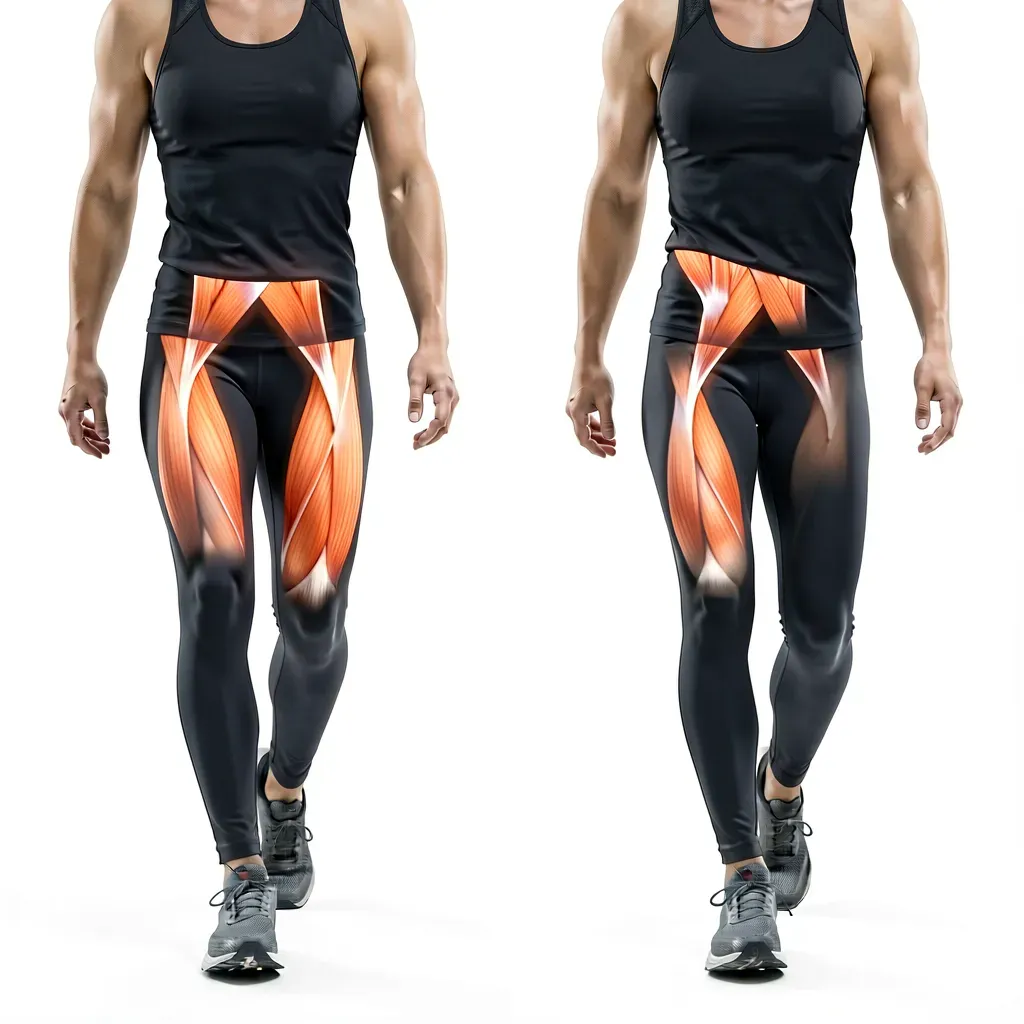
Here's the crucial insight most people miss: torso muscles primarily STOP motion, while limb muscles CREATE motion.
Consider walking: leg movement would not be possible without stiffness and stability to prevent motion in the spine. The spine muscles "fix" the pelvis so one leg can swing forward while the other supports body weight.
This means:
- The muscles of the limbs (and hips) are designed to create motion
- The muscles of the core are designed to stop motion
- Training the core follows different rules than training limbs
This is why sit-ups and crunches are counterproductive — they train the core to create motion when its real job is to prevent motion.
What Is Load?
When you hold 5 pounds (2.2 kg) in your hand, your elbow flexor muscles must create 75 pounds (34 kg) of force because of their mechanical disadvantage. The spine experiences the same load magnification.
Bending forward with just body weight results in about one-third of a ton of force on the spine. This is why it's critical to:
- Keep objects close to the body when lifting
- Be aware of repeated and sustained postures
- Bend about the hips rather than the spine
A 10 kg box held at arm's length creates the same spinal compression as a 50 kg box held against your chest. The distance of the load from your spine is the critical variable.
How Posture Determines Pain
Compression forces squeeze the joints and are largely the result of muscle force. This is why posture and movement choice are so important.
Shear forces are perpendicular to compression — they cause joints to rub across one another. These develop from certain postures and are lessened by maintaining a neutral spine.
Bending causes the spine to act like a bending rod. The discs deform to allow motion. Eventually, repeated bending causes disc fibers to crack and the inner gel to seep through the outer wall. This is the source of pain in many people under 55.
The Key to Avoiding Pain: Hips, Not Spine
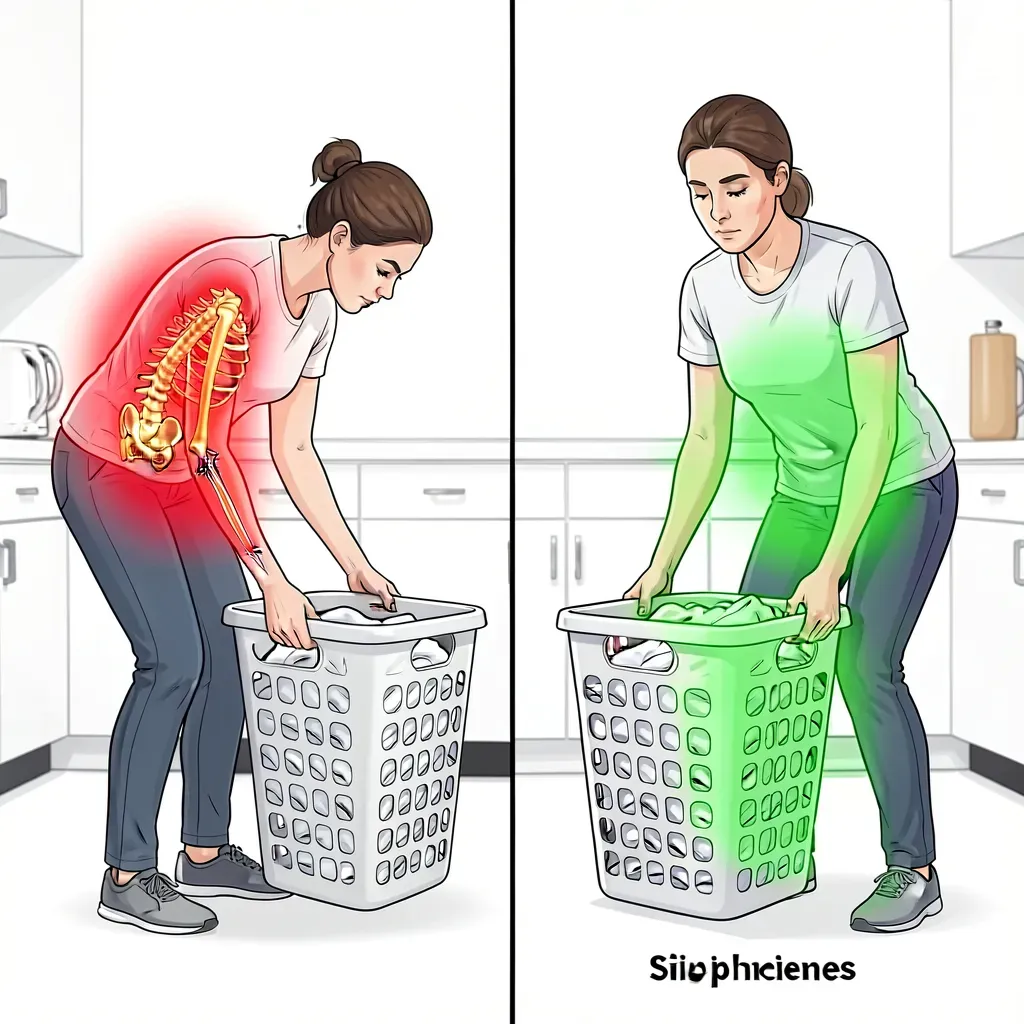
The hips are ball-and-socket joints designed to bend. The spine is a flexible rod that becomes painful with repeated bending. The avoidance strategy is simple in concept:
Bend at the hips, not the spine.
This single principle — when applied consistently to every daily task — eliminates the mechanism of injury for the majority of back pain sufferers.
Understanding Common Injuries
Disc Bulges
Three types exist:
- Focused bulge — from repeatedly bending the spine. Dynamic and controllable through movement choices
- Flattened disc bulge — from a disc losing height. More difficult but manageable
- Disc tear — from excessive twisting. Solution: avoid twisting
Sciatica
Pain originating from the spine but felt along the sciatic nerve into the buttocks and down the leg. Caused by the nerve being pinched — usually by a disc bulge in younger patients, or a bone spur in older patients.
The Degenerative Cascade
A back injury can trigger a chain reaction: endplate injury → disc bulge → flatter disc → narrowed joint space → trapped nerve → more load on facet joints → arthritis. But the pain can be managed through posture and movement control. After approximately ten years of proper management, the joint stiffens naturally and pain disappears.
Most people have less pain around retirement age. They report their worst symptoms during their thirties and forties. Nature eventually stiffens the joints and reduces painful micro-movements. The goal is to manage the pain NOW while this natural process occurs.