Special Conditions & Modifications
Targeted strategies for sciatica, stenosis, kyphosis, and other specific back conditions — plus sleep, bed, and daily living adjustments.
Sciatica: The Nerve Pain Protocol
Sciatica is pain that radiates from the spine into the buttock and down the leg, caused by a nerve being pinched — usually by a disc bulge pressing on the nerve root.
Identifying Sciatica
- Pain, tingling, or numbness traveling below the knee
- Worse with sitting, bending forward, or coughing/sneezing
- Often relieved by standing or walking (but not always)
- The "slump test": sit on a chair, slouch, then straighten the affected leg — this often reproduces the pain
The Sciatica Recovery Protocol
Step 1: Stop flexion immediately. No sitting without lumbar support. No bending forward. No stretching knees to chest.
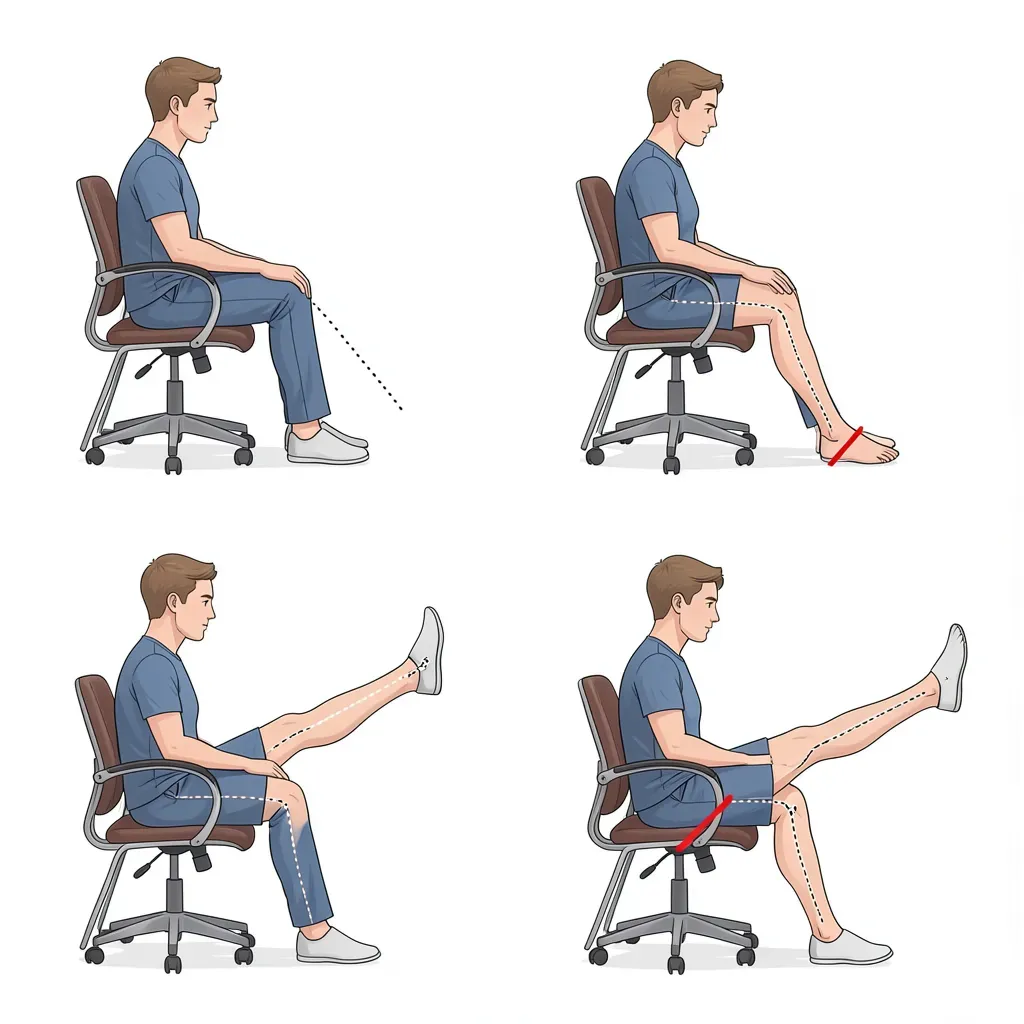
Step 2: The nerve floss. Gentle, pain-free nerve gliding to reduce adhesions:
- Sit on a chair edge with good posture
- Slowly extend the affected leg (straighten the knee)
- Stop BEFORE pain starts — just to the point of tension
- Flex the ankle (toes toward shin)
- Hold 3 seconds. Return. Repeat 5 times.
- Progress range ONLY when the previous range is pain-free
Step 3: Extension-based relief. The tummy lie and progressive extension (prone on elbows → prone press-up) can centralize the pain — meaning leg pain migrates upward toward the back. Centralization is GOOD — it means the disc is retracting.
Step 4: Walking. Fast walking with arm swing. Short intervals. The pumping action helps move inflammation away from the nerve.
Track pain location. If your leg pain is moving UPWARD (from calf → thigh → buttock → back), you're improving even if the back pain temporarily increases. Centralization = the disc is moving away from the nerve.
Stenosis: The Narrowed Canal
Spinal stenosis means the canal housing the spinal cord or nerve roots has narrowed — usually from arthritic bone growth. It's most common over age 55.
Key Features
- Pain builds with standing and walking
- Relief comes from sitting or leaning forward
- Legs may feel heavy, weak, or numb after walking a specific distance
- Bending forward over a shopping cart provides relief
The Stenosis Strategy
1. Interval Walking (Critical) Walk only within your pain-free window. Rest in a seated or flexed position. Resume when symptoms clear. This is NOT about pushing through — it's about accumulating pain-free distance.
2. Decompression Stretches
- Standing: grip a counter or railing, step back, hinge at hips with arms straight. Let spine elongate for 20-30 seconds.
- Wall-walking: walk along a wall. Periodically lean back against it with slight knee bend to decompress.
3. The Big 3 (Modified)
- Curl-up: standard technique applies
- Side bridge: from knees initially
- Bird-dog: standard — this is especially important for stenosis because it builds extension endurance
4. DO NOT over-flex. Many therapists teach stenosis patients to "stay in flexion." While flexion provides temporary relief, sustained flexion INCREASES spinal loading and worsens the condition long-term. Use flexion only as brief rest-stop relief, not as a posture.
The stenosis paradox: flexion feels good but causes more compression over time. Extension feels uncomfortable but maintains the space around the nerves. Trust the process — short-term discomfort reduction through flexion is trading future capacity for present comfort.
Kyphosis: The Rounded Upper Back
A rounded thoracic spine (hyper-kyphosis) causes back muscle overactivation, cramping, and compromised shoulder mechanics. Common in desk workers, runners, and texters.
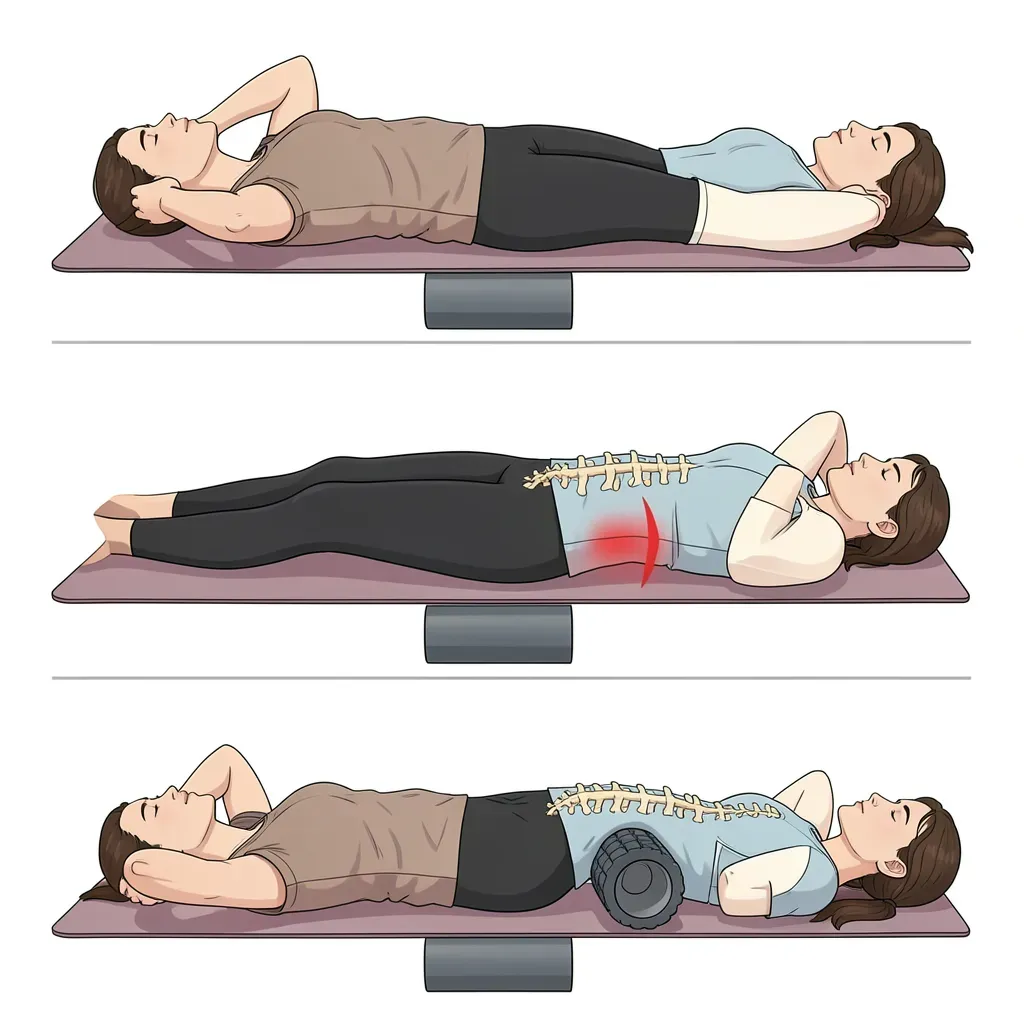
The Thoracic Extension Stretch
You'll need a partner or a foam roller:
Partner version:
- Sit on the floor with legs extended
- Partner stands behind you
- Interlace your fingers behind your head
- Partner places their knee between your shoulder blades as a fulcrum
- Partner gently pulls your elbows backward
- You extend around the fulcrum point
- Hold 5 seconds. Repeat 5 times.
Foam roller version:
- Place a foam roller perpendicular to your spine at mid-back level
- Interlace fingers behind head
- Extend backward over the roller
- Move the roller to different thoracic levels and repeat
- 3-5 extensions at each level
Posture Correction
- Pull shoulders back by engaging lower trapezius (think: "put shoulder blades in your back pockets")
- Lift sternum (chest bone) slightly
- Keep chin tucked (not poking forward)
- Practice the "wall angel" — back against wall, arms slide up and down in a snow-angel pattern
Sleep and Bed Choices
Finding Your Sleep Position
Back sleepers:
- Maintain the natural lumbar curve — a small rolled towel under the waist can help
- Avoid thick pillows that push the head forward
- A pillow under the knees helps some hip pain but may WORSEN back pain in many people — test it
Side sleepers:
- Place a pillow between the knees (keeps pelvis neutral)
- Maintain some hip flexion BUT keep the lumbar spine neutral — don't curl into full fetal position
- If you have a large natural lumbar hollow, you need mattress support that fills it
Stomach sleepers:
- Generally acceptable if it doesn't cause pain
- May not need a pillow — a flat or no pillow prevents neck extension
- A thin pillow under the pelvis can reduce lumbar extension
Mattress Selection
- Angular/bony body types: firmer foundation with moderate cushion top
- Curvy/heavier body types: firm foundation with thicker pillow top (allows hips and shoulders to sink in)
- Large lumbar curve: need support that fills the hollow; too-firm mattresses leave a gap
- Flat back: firmer mattresses tend to work better
If you wake stiff every morning, your mattress is a contributing factor. The test: sleep one night on a different surface (guest bed, floor with padding). If you wake better, your mattress needs changing.
Getting In and Out of Bed
Getting in:
- Sit on the bed edge
- Lower sideways onto your shoulder (log-roll technique)
- Bring legs up simultaneously
- Spine stays neutral throughout
Getting out:
- Roll to your side (log-roll — move as a unit)
- Use your bottom arm to push your torso up as legs swing off the bed edge
- This eliminates the sit-up motion that loads the spine first thing in the morning
Your spine is MOST vulnerable in the first hour after waking. Discs are fully hydrated and expanded, meaning they're under more internal pressure. Avoid flexion (especially under load) during this hour. No morning toe-touches, no bending to put on shoes from the floor.
Acute Flare-Up Protocol
When a flare-up hits despite your best efforts:
-
Don't panic. A flare-up doesn't mean you've re-injured yourself. It often means you accumulated too much load the previous day.
-
Find a relief position. Usually the tummy lie. Sometimes standing. Experiment quickly.
-
Use the relief position frequently. Every 20-30 minutes for the first day.
-
Walk in short intervals. Even 30-second walks between relief positions.
-
Do NOT stretch. The knees-to-chest reflex will give temporary relief but worsen the flare.
-
Reduce Big 3 to Stage 1 levels. Maintain the habit but reduce volume dramatically.
-
Review your log. What did you do in the 24-48 hours before the flare? That's your culprit.
-
Give it 48-72 hours. Most flare-ups resolve completely if you remove the trigger and maintain spine hygiene.
Long-Term Perspective
Most back pain naturally resolves over a period of years as the spine stiffens with age. People report their worst symptoms in their 30s and 40s, with significant improvement by their 50s and 60s.
Your job is to manage the pain NOW — reduce sensitivity, build capacity, avoid re-injury — while nature slowly stabilizes the joints on its own. The program in this guide doesn't just manage pain. It accelerates the stabilization process by building the muscular support system that mimics what nature will eventually provide through bone stiffening.