Acupuncture for Back Pain
What the research shows about acupuncture, why the sham-controlled trials are complicated, and how to think about it as a complementary tool.
The Research Landscape
Acupuncture is one of the more studied complementary therapies for back pain — and also one of the most scientifically complicated to evaluate. The challenge is not a lack of trials but a fundamental methodological problem: designing a true placebo control for acupuncture is extremely difficult, and the attempts that have been made reveal something interesting about the nature of the therapy.
The headline findings: a 2013 Cochrane review and subsequent meta-analyses consistently find that acupuncture is more effective than no treatment or standard care alone for chronic low back pain. It is also, in most trials, more effective than sham acupuncture — though the margin is smaller. These findings have held up reasonably well across multiple high-quality trials and meta-analyses.
The question is what this means.
The Sham Problem
Sham acupuncture — the control condition used in most trials — involves inserting needles at non-acupuncture points, or using retractable needles that do not actually penetrate the skin. The premise is that sham acupuncture is inert: a believable placebo.
But research suggests sham acupuncture may not be truly inert. Even a retractable needle pressed against the skin activates mechanoreceptors and triggers neurological responses. Needles at "wrong" anatomical locations still generate tissue responses, connective tissue winding, and potentially some of the same neurological effects as "correct" points. If the control is not truly inactive, the small gap between real and sham acupuncture may understate the true effect of the biological components of real acupuncture.
This does not invalidate the comparison. It means interpreting the effect size against sham requires caution — and that the large benefit over "no treatment" is likely the more reliable signal.
In the Acupuncture Trialists' Collaboration individual patient data meta-analysis (2012, updated 2018 — one of the largest acupuncture datasets ever compiled), acupuncture showed statistically and clinically significant superiority over both sham acupuncture and no-acupuncture control for chronic back pain. The authors concluded: "Acupuncture is more than a placebo and should be considered in management of chronic pain."
Western Acupuncture vs Traditional Chinese Acupuncture
It is worth distinguishing two related but distinct practices:
Traditional Chinese acupuncture uses needles at meridian points selected according to traditional Chinese medicine theory — an energetic framework not compatible with Western anatomy. The theoretical framework (qi, meridians) is not supported by modern physiology. However, the practice has evolved substantially, and many practitioners now combine traditional point selection with a working knowledge of anatomy.
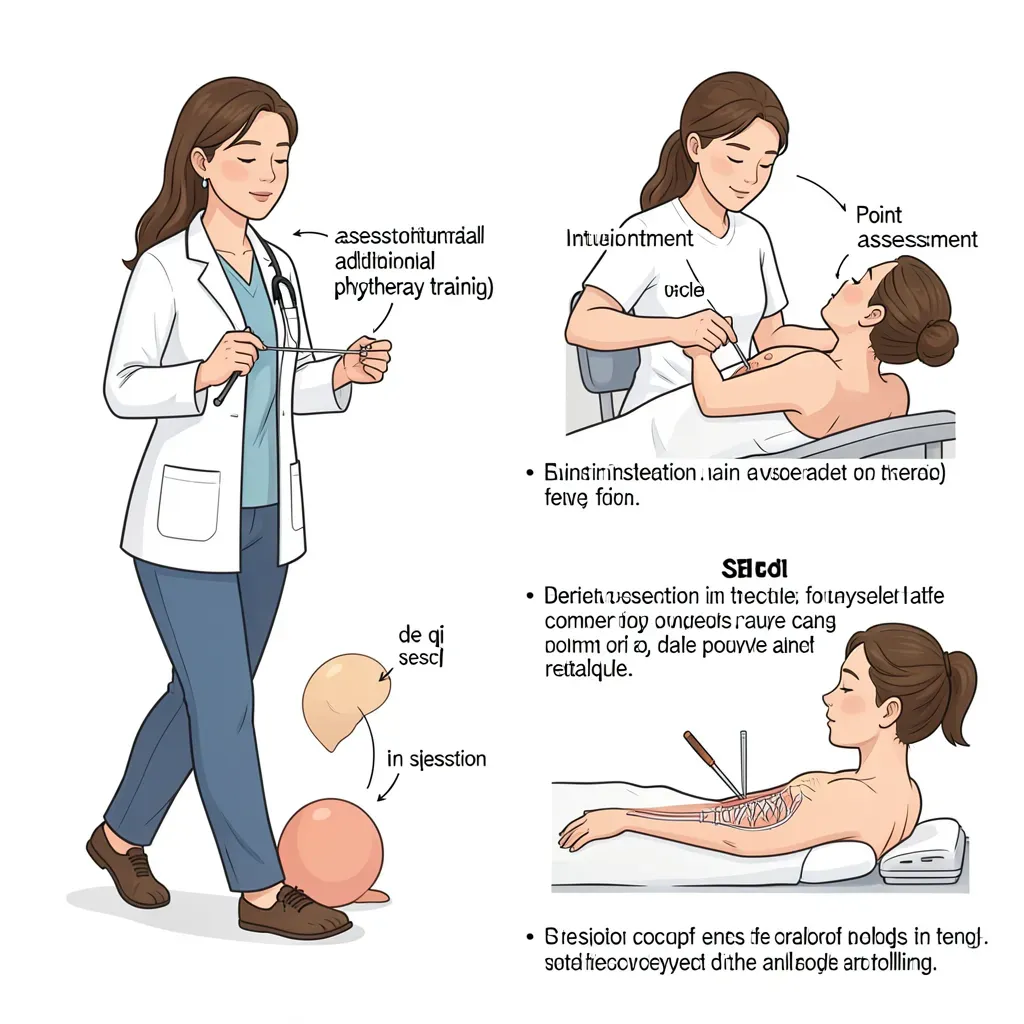
Western acupuncture (dry needling) applies needles at trigger points and anatomically defined locations using a Western physiological rationale — targeting muscle hypertonicity, connective tissue planes, and known neurological pathways. This is the form most commonly practiced by physiotherapists.
The clinical outcomes across both approaches are similar in head-to-head trials, which suggests the theoretical framework matters less than the needling itself.
Proposed Mechanisms
Several plausible mechanisms are supported by current research:
Endogenous opioid release: needle insertion triggers release of endorphins, enkephalins, and dynorphins. Blocking opioid receptors with naloxone partially attenuates acupuncture's analgesic effect in controlled studies, providing some mechanistic support.
Connective tissue stimulation: the "de qi" sensation (a deep ache or heaviness during acupuncture) correlates with mechanical winding of connective tissue around the needle. This connective tissue response produces a cascade of cellular signaling that may have anti-inflammatory effects.
Local blood flow changes: needle insertion increases local microcirculation and may reduce ischemic pain in chronically contracted muscle tissue.
Autonomic modulation: acupuncture stimulation has measurable effects on autonomic tone — reducing sympathetic activity and increasing parasympathetic activity in a manner consistent with a general stress-response reduction.
None of these mechanisms require meridian theory to explain the observed effects.
Acupuncture cannot change disc herniation, alter bony stenosis, or address the mechanical causes of radicular pain. It is a pain modulation tool, not a structural treatment. If someone claims acupuncture will heal your disc prolapse or cure your spondylolisthesis, this is not accurate.
Who Responds Best
The evidence suggests acupuncture's benefit is greatest in presentations with a significant central sensitization component — where the nervous system has amplified pain processing beyond what local tissue damage would predict. This includes most cases of chronic back pain, particularly where:
- Pain has been present for more than 3 months
- Pain is widespread, diffuse, and variable in location
- Sleep disruption, anxiety, and catastrophizing are prominent features
- Previous passive treatments have produced only temporary relief
Patients who respond positively to touch-based therapies generally — who find massage, manual therapy, or even simply being examined therapeutically beneficial — tend to respond better to acupuncture. This may reflect a particular responsiveness to non-specific therapeutic touch effects.
Safety
Acupuncture in trained hands is extremely safe. Systematic reviews of adverse events find:
- Mild adverse events: very common (30–40%) — localized bruising, soreness at needle sites, mild lightheadedness during treatment
- Moderate adverse events: uncommon — worsening of pain for 1–2 days post-treatment (usually settles), occasional fainting
- Serious adverse events: very rare — pneumothorax from incorrect thoracic needling, infection from non-sterile equipment. Serious events are overwhelmingly associated with inadequately trained practitioners or non-sterile single-use needles
Ensure your practitioner uses single-use, sterile needles (standard in most countries). Verify appropriate training and registration.
Practical Considerations
A typical acute course is 6–10 sessions over 4–8 weeks. For chronic pain, a trial of 6 sessions before evaluating response is reasonable. Sessions cost approximately $60–$150 depending on location and provider. Acupuncture is covered by some health insurance systems and private plans — check your coverage.
In Review
- Cochrane review and large meta-analyses find acupuncture superior to no treatment and modestly superior to sham for chronic low back pain
- The sham comparison is complicated because sham acupuncture may not be truly inert
- Mechanisms include endogenous opioid release, connective tissue stimulation, local blood flow changes, and autonomic modulation — not meridian theory
- Western acupuncture (dry needling at trigger points) and traditional acupuncture produce similar outcomes in comparative trials
- Best suited to chronic pain with central sensitization features, not acute structural pathology
- Cannot change disc herniation or structural anatomy
- Extremely safe in trained hands with single-use sterile needles
- A trial of 6–10 sessions is reasonable before evaluating whether the approach is working for you