Anti-Inflammatory Nutrition
How diet affects disc health, inflammation, and pain sensitivity — with practical food swaps and hydration guidance.
Diet Doesn't Fix a Mechanical Problem
Before anything else: nutrition doesn't replace spine hygiene, the Big 3, or movement. No food eliminates a disc herniation. No supplement reverses facet arthritis.
What nutrition does is modulate the inflammatory environment in which your spine operates. Pain is partly a mechanical problem and partly a chemical one. The inflammatory state of your tissues determines how much pain a given mechanical stimulus produces, how quickly damaged tissue repairs, and how reactive your nervous system remains. Diet is a meaningful lever on all three.
The goal of this article is not dietary perfection — it's identifying the highest-impact changes with the lowest friction.
The Inflammation-Pain Connection
When tissue is damaged, the immune system releases pro-inflammatory signaling molecules (cytokines: IL-1β, IL-6, TNF-α). These sensitize local nerve endings, increasing pain signal output from the injured area.
A diet high in inflammatory substrates chronically elevates these same cytokines at low levels throughout the body — a persistent low-grade state that:
- Lowers the threshold for pain signal generation
- Slows tissue repair
- Interferes with sleep quality
- Exacerbates the central sensitization process
The effect sizes are modest — diet won't halve your pain scores in a week. But over months, the compounding effect of a lower inflammatory baseline is meaningful.
Research examining pro-inflammatory dietary patterns found significantly higher rates of disc degeneration and spinal pain in populations consuming high-glycemic, high-processed food diets — independent of body weight. The effect exists beyond the mechanical load contribution of excess weight.
Pro-Inflammatory Foods: What to Reduce
Refined Sugars and High-Glycemic Carbohydrates
Rapidly absorbed sugars trigger insulin spikes and glycation processes that directly upregulate inflammatory cytokine production. They promote NF-κB pathway activation — one of the primary molecular switches for inflammatory gene expression.
Practical reduction targets:
- Sugary beverages (regular soda, fruit juice, sweetened coffee drinks)
- White bread, white rice, conventional breakfast cereals
- Baked goods with high sugar content
- Candy and sweets as daily staples
This doesn't require elimination — reducing frequency and portion size has a real effect.
Industrial Seed Oils (Omega-6 Overload)
The ratio of omega-6 to omega-3 fatty acids in the diet drives prostaglandin production. Prostaglandins are direct mediators of inflammation and pain sensitization. The ancestral human diet had a ratio roughly 4:1 (omega-6 to omega-3). Modern Western diets commonly reach 15:1 to 20:1, driven primarily by seed oils (corn, soybean, sunflower, cottonseed, canola) ubiquitous in processed and restaurant food.
Practical reduction:
- Cook with olive oil, avocado oil, coconut oil, or butter instead of seed oils
- Reduce fried restaurant food, which is nearly always prepared in seed oils
- Read labels on condiments — most commercial mayonnaise, dressings, and sauces are seed-oil dominant
Ultra-Processed Foods
Beyond specific macronutrients, ultra-processed foods (products with long ingredient lists containing emulsifiers, artificial flavors, modified starches) are associated with elevated inflammatory markers independently of macronutrient content. A working rule: if it has more than 5 ingredients and most are unrecognizable, it's ultra-processed.
Anti-Inflammatory Foods: What to Add
Omega-3 Fatty Acids
Omega-3s (EPA and DHA in marine sources; ALA in plant sources) compete with omega-6s for the same enzymatic pathways, reducing pro-inflammatory prostaglandin production. The evidence for omega-3s reducing inflammatory markers is among the strongest in nutritional research.
Sources:
- Fatty fish 2-3 times per week: salmon, mackerel, sardines, herring, anchovies
- Walnuts and flaxseed (ALA — conversion to EPA/DHA is limited but additive)
- Algae-based omega-3 supplements (direct DHA/EPA — useful for non-fish eaters)
Polyphenols and Flavonoids
Plant pigments with anti-inflammatory and antioxidant activity. They reduce cytokine production, inhibit the COX-2 enzyme (the same enzyme targeted by ibuprofen), and support vascular health relevant to disc nutrition.
High-polyphenol sources:
- Berries (blueberries, strawberries, blackberries)
- Dark leafy greens (spinach, kale, arugula)
- Green tea and black tea
- Extra virgin olive oil (oleocanthal has measurable COX-2 inhibitory activity)
- Dark chocolate (>70% cocoa, minimal sugar)
- Colorful vegetables broadly
Leafy Greens and Magnesium
Dark leafy greens provide magnesium (involved in muscle relaxation and neuromuscular signaling), vitamin K (relevant to bone density), and anti-inflammatory phytochemicals. Magnesium deficiency is common in modern populations and is associated with increased muscle tension, poor sleep quality, and heightened pain sensitivity.
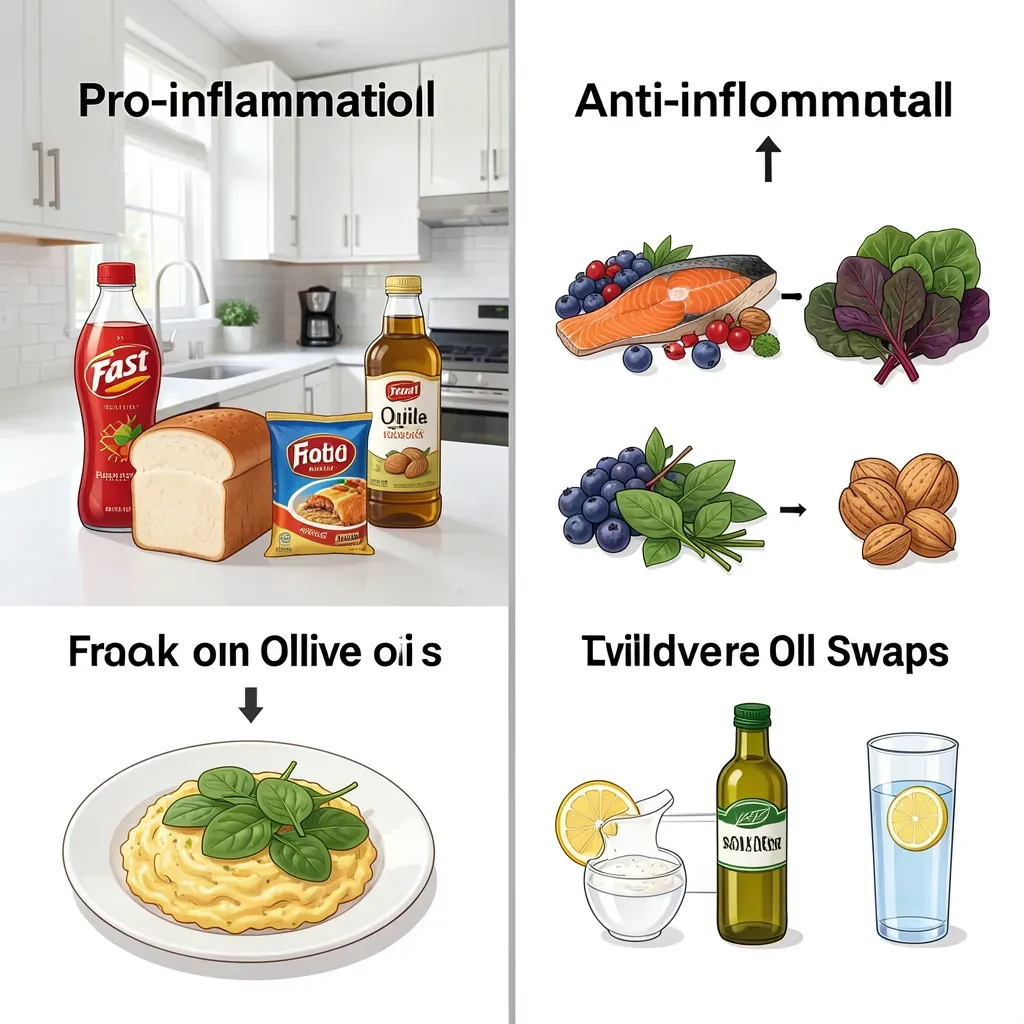
If you're only making one dietary change, adding a large daily serving of dark leafy greens is likely the highest-leverage single action — it addresses polyphenols, magnesium, and micronutrient density simultaneously. A handful of spinach in eggs at breakfast costs almost nothing in time or money.
Disc Hydration and Water Intake
Intervertebral discs are 70-90% water by composition (varying by age and disc health). Disc nutrition depends on fluid movement — nutrients diffuse in and waste products diffuse out through the end plates, driven partly by hydrostatic pressure changes during loading and unloading. Chronic dehydration compromises this process.
There is no magic number for daily water intake — needs vary by body size, temperature, and activity level. The practical target: pale yellow urine throughout the day.
Common failure modes:
- Relying on thirst — thirst lags behind hydration need, particularly in older adults
- Consuming fluids primarily as coffee or tea — these count, but shouldn't be your only source
- Inadequate intake during travel or air-conditioned environments (both increase insensible water loss)
Collagen and Connective Tissue Support
Collagen makes up approximately 50% of disc dry weight and is the primary structural component of annular fibers, ligaments, and tendons. Collagen synthesis requires vitamin C as a cofactor and amino acid precursors (glycine, proline, hydroxyproline).
Evidence-based support:
- Vitamin C from whole food sources (citrus, bell peppers, kiwi) is sufficient for most people
- Bone broth, collagen peptide supplements, and gelatin provide concentrated glycine and proline — evidence for clinical benefit is early-stage but mechanistically plausible
- The main evidence for collagen supplements is in osteoarthritis and tendinopathy; direct disc evidence is limited but the rationale is sound
Supplement Evidence
| Supplement | Evidence Level | Dose | Notes | |------------|---------------|------|-------| | Fish oil (EPA+DHA) | Strong | 2-3g/day | Multiple RCTs; look for third-party tested products | | Curcumin | Moderate | 500-1000mg with piperine | Bioavailability is poor without black pepper extract | | Magnesium glycinate | Moderate | 200-400mg at night | Better tolerated than magnesium oxide | | Vitamin D | Relevant if deficient | 2000-4000 IU/day | Get blood tested before supplementing at high doses |
If you are taking NSAIDs or blood thinners, consult your prescriber before adding fish oil or curcumin — both have modest anticoagulant effects that can compound medication action. Use products with third-party certification (NSF, USP, Informed Sport).
In Review
- Diet modulates the inflammatory environment in which your spine operates — it doesn't fix structural problems but meaningfully affects pain sensitivity and tissue repair rate.
- Reduce refined sugars, high-glycemic processed foods, and industrial seed oils — these chronically elevate baseline inflammatory cytokines.
- Add fatty fish (2-3 times per week), colorful vegetables, dark leafy greens, and extra virgin olive oil.
- Keep urine pale yellow throughout the day — disc nutrition depends on adequate hydration.
- Of supplement options, fish oil (2-3g EPA+DHA) and magnesium glycinate (200-400mg at night) have the best evidence-to-risk ratio; vitamin D only if blood testing confirms deficiency.
- The Mediterranean dietary pattern — more fish, vegetables, olive oil, legumes; less ultra-processed food — is the single most evidence-consistent approach without requiring rigid tracking.