Sleep Disorders and Back Pain: The Bidirectional Relationship
How poor sleep amplifies pain sensitivity, and how pain disrupts sleep — the vicious cycle and evidence-based strategies for both.
The Cycle That Keeps Back Pain Chronic
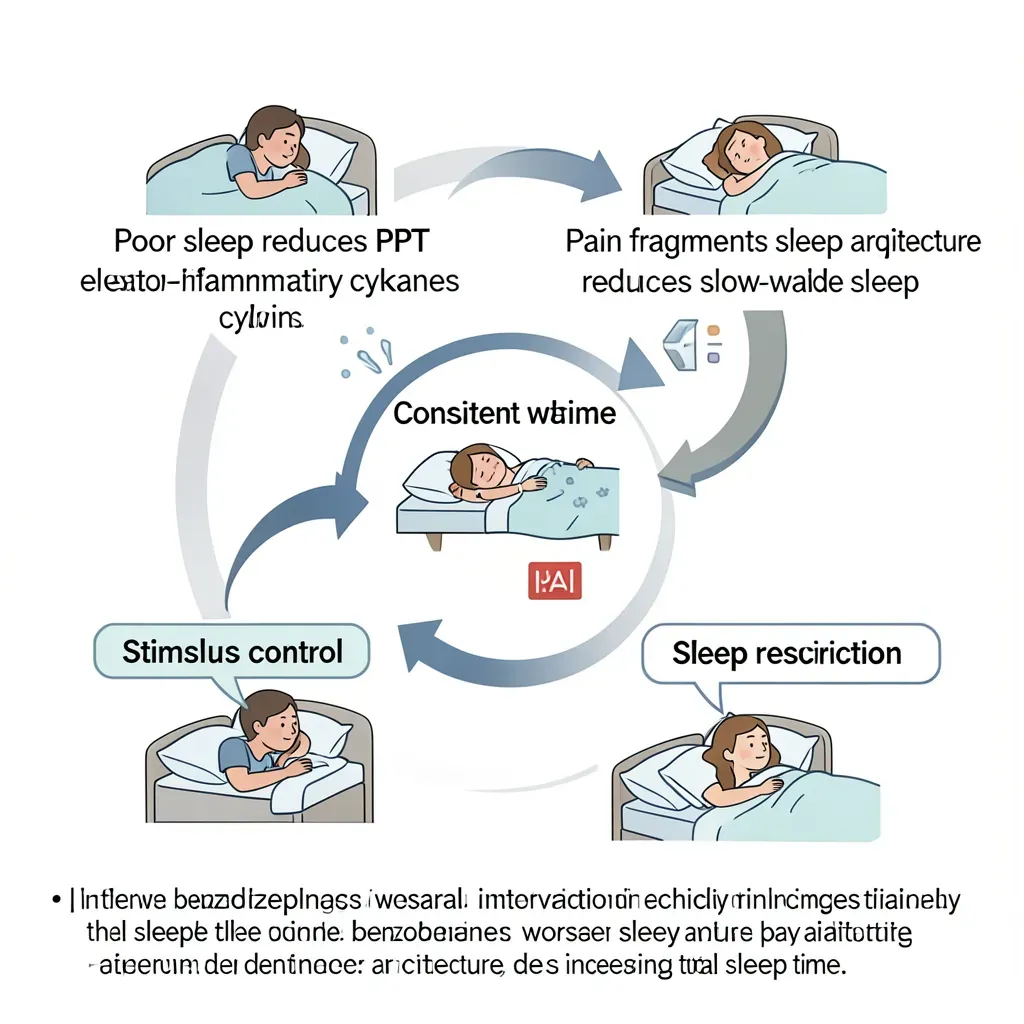
For a significant proportion of people with chronic back pain, sleep disruption is not a peripheral complaint — it is a central mechanism in the maintenance of their pain. The relationship between sleep and pain is bidirectional: pain disrupts sleep, and disrupted sleep amplifies pain sensitivity. Each makes the other worse, creating a self-sustaining cycle that conventional back pain treatment — focused primarily on the spine itself — often fails to address.
This article examines the physiological mechanisms of this relationship, the evidence on what happens to pain thresholds when sleep is disrupted, and the specific strategies that address the sleep dimension of chronic back pain. If you have been working on rehabilitation exercises and structural management but your pain remains intractable, the quality of your sleep is one of the highest-leverage variables left to address.
What Sleep Deprivation Does to Pain Sensitivity
The most direct evidence on sleep and pain comes from experimental sleep deprivation studies in healthy participants — people with no pre-existing pain condition. These studies measure pressure pain thresholds (PPT): the minimum pressure that a subject reports as painful when applied to a standardized body location. PPT is an objective measure of pain sensitivity that bypasses self-report bias.
The findings are consistent and striking. A single night of partial sleep deprivation — reducing sleep from a normal 7-8 hours to 4-6 hours — measurably lowers pressure pain thresholds within 24 hours. Participants become more sensitive to the same objective painful stimulus after one night of inadequate sleep. Studies by Matthew Walker's group at Berkeley and others have documented this effect with increasing precision: total sleep time, sleep quality, and the proportion of deep (slow-wave) sleep are each independently associated with PPT the following day.
The mechanism involves multiple pathways. Central sensitization — the amplification of pain processing by the central nervous system — is exacerbated by sleep loss. Specifically, slow-wave sleep appears to be particularly important: this is the phase during which descending pain inhibitory pathways are most active and the nervous system "resets" its excitability baseline. Deprive the system of this reset and the baseline shifts toward higher sensitivity.
Importantly, this is not simply a matter of mood — a sleepy, irritable person reporting everything as more painful. Studies controlling for mood and affect still find the PPT reduction from sleep deprivation, indicating a genuine neurological mechanism rather than reporting bias.
Cytokines, Inflammation, and Sleep
Sleep deprivation also drives changes in the inflammatory environment that are directly relevant to back pain. During normal sleep — particularly slow-wave sleep — anti-inflammatory cytokines including IL-10 and TGF-beta are produced, and the activity of pro-inflammatory pathways is suppressed. This is one of the reasons adequate sleep is restorative at a cellular level.
When sleep is disrupted, this regulation is reversed. Pro-inflammatory cytokines — particularly IL-6, IL-1beta, and TNF-alpha — are produced at elevated levels in association with sleep deprivation. These are the same cytokines that mediate the inflammatory component of disc degeneration, nerve root irritation, and musculoskeletal pain.
For someone with a painful spinal condition, this means that ongoing sleep deprivation is maintaining or worsening the inflammatory environment that drives their pain, while also reducing the central nervous system's capacity to inhibit pain signals. The structural problem and the sleep problem compound each other.
A particularly relevant finding is that chronic partial sleep restriction — getting 6 hours instead of 8 for multiple consecutive nights — is cumulative in its effect on both cytokine production and pain sensitivity. Many people with back pain chronically restrict their sleep without recognizing it as a significant factor.
The research on sleep deprivation and cytokines has direct implications for tissue repair. Most of the growth hormone secretion that drives tissue repair happens during slow-wave sleep. Disc tissue, ligaments, and muscles all depend on sleep-timed anabolic processes for their maintenance and recovery. Consistently disrupted sleep slows the structural repair of spinal tissue at the same time as it amplifies pain sensitivity — a double burden that pure daytime rehabilitation cannot fully compensate for.
How Back Pain Disrupts Sleep Architecture
The bidirectional half of this relationship is equally well-documented. Chronic back pain characteristically disrupts the architecture of sleep — not only reducing total sleep time, but altering the distribution of sleep stages in ways that specifically impair the restorative functions described above.
Key findings from sleep architecture studies in chronic pain populations include:
Increased sleep-onset latency. People with back pain take longer to fall asleep, often due to pain that is prominent when lying still and when the distracting demands of the day are removed. The subjective experience of pain is frequently reported as more intense in bed at night than during active daytime hours — an artifact of the reduction in competing sensory input, not a genuine worsening of the underlying pathology.
Reduced slow-wave sleep. Studies using polysomnography in chronic low back pain patients consistently find reduced proportions of Stage 3 NREM sleep (slow-wave or deep sleep) compared to age-matched healthy controls. Since slow-wave sleep is the phase most associated with pain inhibition and growth hormone release, this deficit is mechanistically significant.
Alpha-delta sleep intrusion. Some chronic pain patients show an abnormal EEG pattern in which alpha wave activity (typical of waking) intrudes on delta-wave (slow-wave) sleep. This pattern, first described in fibromyalgia but observed in other chronic pain conditions including back pain, is associated with non-restorative sleep — the subjective experience of not feeling rested despite adequate time in bed.
Increased nocturnal awakening. Pain-related arousals — brief or full awakenings triggered by pain during position changes or by the transition between sleep stages — fragment sleep and further reduce the proportion of restorative deep sleep obtained.
The result is that many back pain patients are spending the time in bed without receiving the sleep quality their nervous system needs, regardless of how many hours they nominally "sleep."
Sleep Hygiene for Back Pain: What Actually Helps
The term "sleep hygiene" refers to behavioral and environmental practices that support sleep quality. Standard sleep hygiene recommendations are applicable to back pain patients, but several considerations are specific to this population.
Sleep position matters for pain, but not in a one-size-fits-all way. The evidence that any single sleep position is universally superior for back pain is weak. What matters is that the position maintains a relatively neutral spinal alignment and that pressure points are adequately supported. For most people with low back pain, side-lying with a pillow between the knees or supine with a pillow under the knees provides adequate support. Prone (face-down) sleeping is generally the least favorable for lumbar back pain because it produces lumbar extension. Experiment systematically rather than accepting inherited advice about back sleeping.
Mattress firmness. A 2003 randomized controlled trial by Kovacs et al. — one of the few well-designed mattress studies — found that medium-firm mattresses were superior to firm mattresses for people with chronic low back pain, both for pain intensity and disability. Extremely soft mattresses that allow excessive spinal sag are not well-supported. Medium-firm is a defensible evidence-based recommendation.
Bedroom temperature. Core body temperature naturally drops at sleep onset, and the sleep environment should facilitate rather than impede this. A room temperature of approximately 16-19°C (60-67°F) is associated with better sleep architecture across the general population. This is relevant for back pain patients who may use heated electric blankets or heating pads at night — these can interfere with the thermoregulatory component of sleep architecture even as they reduce pain.
Consistent sleep and wake times. The circadian rhythm regulates not only sleep timing but also pain sensitivity through its control of inflammatory cytokine production and descending pain inhibition. Irregular sleep schedules (weekend "catch-up" sleep, variable wake times) undermine circadian regularity and maintain the inflammatory environment associated with pain. A consistent wake time is the single most powerful behavioral regulator of circadian rhythm.
If back pain regularly wakes you during the night, keep the strategy for returning to sleep simple: a brief change of position, a relaxation technique, or quiet non-stimulating activity if awake for more than 20 minutes. Watching the clock, catastrophizing about lost sleep, or reaching for your phone amplifies arousal and makes return to sleep harder. The technical term for clock-watching during nocturnal awakening is sleep effort — the ironic state where trying harder to sleep makes it less achievable.
Cognitive Behavioral Therapy for Insomnia (CBT-I)
CBT-I is the first-line treatment for chronic insomnia according to every major clinical guideline, including those from the American College of Physicians, the American Academy of Sleep Medicine, and the British Association for Psychopharmacology. It is superior to medication in head-to-head trials for both short-term outcomes and long-term durability — medication effects are not maintained after discontinuation, while CBT-I benefits are sustained at 12-month follow-up.
CBT-I comprises several components, each with its own evidence base:
Sleep restriction therapy. Paradoxically, initially reducing time in bed to slightly less than actual sleep time (based on a sleep diary baseline) consolidates fragmented sleep, rapidly increases sleep efficiency, and restores the sleep drive that maintains sleep continuity. This component is uncomfortable in the first week but is among the most powerful in the protocol.
Stimulus control. The bed and bedroom are restricted to sleep and sex only — reading, screens, and waking activity are moved out of the bedroom. The goal is to re-associate the bed with sleep rather than with wakefulness, anxiety, or arousal.
Cognitive restructuring. Identifying and revising unhelpful beliefs about sleep (catastrophic thinking about the consequences of poor sleep, misattributing all pain to poor sleep, etc.) reduces the hyperarousal and performance anxiety that maintains insomnia.
Relaxation training. Progressive muscle relaxation, diaphragmatic breathing, and imagery-based techniques reduce physiological arousal at sleep onset — particularly relevant for back pain patients whose pain itself contributes to sleep-onset tension.
For people with both chronic back pain and chronic insomnia, the evidence specifically supports CBT-I as an effective intervention. A 2019 RCT by Vitiello et al. found that CBT-I delivered to older adults with comorbid chronic pain produced improvements in both sleep and pain at 9-month follow-up — even when the trial was not specifically targeting pain. Treating the insomnia improved the pain.
When Sleep Disorders Need Separate Treatment
Chronic insomnia in the context of back pain may coexist with — or be driven by — a diagnosable sleep disorder that requires its own evaluation and management.
Obstructive sleep apnea (OSA) is common in the general population (estimated 15-30% prevalence in middle-aged adults) and is significantly underdiagnosed. OSA produces fragmented sleep architecture, reduced slow-wave sleep, and elevated systemic inflammation — all of the same consequences as chronic sleep deprivation from pain. The combination of back pain and undiagnosed sleep apnea is particularly common in the back pain population, which skews toward middle-aged, overweight individuals — the primary OSA demographic. If you snore, wake with headaches, experience excessive daytime sleepiness, or your partner reports apnea episodes, formal sleep study evaluation is warranted.
Restless leg syndrome (RLS) is estimated to affect 7-10% of adults and is characterized by uncomfortable sensations in the legs at rest and an urge to move them. It is particularly prominent in the evening and disrupts sleep onset. RLS can overlap clinically with back pain that produces leg symptoms, making accurate diagnosis important.
Both OSA and RLS require clinical evaluation and have specific treatments (CPAP for OSA; dopaminergic agents, iron supplementation, or lifestyle modifications for RLS) that are separate from and complementary to back pain rehabilitation.
Medication Risks: Benzodiazepines and Muscle Relaxants
Two drug classes commonly prescribed for back pain — benzodiazepines and skeletal muscle relaxants — are routinely used to address sleep problems alongside pain. The evidence for this practice is substantially more problematic than their widespread use suggests.
Benzodiazepines (diazepam, lorazepam, temazepam, clonazepam) do reduce sleep latency and increase total sleep time, but they dramatically suppress slow-wave sleep and REM sleep — the stages most important for pain inhibition and restorative function. Users often sleep longer but wake less rested. In back pain populations, this tradeoff — more total sleep time but worse sleep architecture — can paradoxically worsen pain sensitivity over time. Dependence risk is substantial with regular use, and withdrawal insomnia (rebound insomnia that is worse than pre-treatment) reliably occurs after discontinuation.
Muscle relaxants (cyclobenzaprine, carisoprodol, metaxalone) share similar concerns. Cyclobenzaprine, the most commonly prescribed muscle relaxant for back pain, is structurally related to tricyclic antidepressants and has significant sedating effects. Like benzodiazepines, it suppresses slow-wave and REM sleep. Short-term use (3-7 days) for acute muscle spasm has a reasonable evidence base; routine use for chronic back pain or as a chronic sleep aid does not.
If you are currently taking a benzodiazepine or muscle relaxant regularly for sleep, do not discontinue abruptly without medical guidance. Benzodiazepine withdrawal can be medically serious and requires a supervised taper. The point here is not to stop medication unilaterally but to have a frank conversation with your prescriber about whether long-term use is consistent with your recovery goals and what a plan for tapering might look like.
A Practical Starting Point
If sleep is consistently disrupted by back pain, the approach most likely to produce meaningful improvement combines the following:
Start a sleep diary for two weeks: record time in bed, estimated sleep onset, nocturnal awakenings, final wake time, and a 1-10 subjective rating of sleep quality. This baseline creates the data needed for sleep restriction therapy if you pursue CBT-I and quantifies the problem before beginning to address it.
Apply stimulus control immediately: the bedroom is for sleep only, no screens in bed, get up after 20 minutes of waking rather than lying in bed ruminating.
Establish a consistent wake time and defend it regardless of when sleep happened or how much was obtained. This single behavioral change exerts more regulatory influence on circadian rhythm and sleep quality than any other in the sleep hygiene toolkit.
If insomnia persists after four weeks of consistent behavioral approaches, seek a clinician trained in CBT-I, or use a validated digital CBT-I program (Sleepio and Somryst are two with RCT evidence) — both outperform medication in long-term outcomes.
In Review
- Sleep deprivation lowers pressure pain thresholds within a single night through central sensitization mechanisms, with slow-wave sleep being particularly important for maintaining pain inhibitory pathways
- Sleep deprivation elevates pro-inflammatory cytokines (IL-6, IL-1beta, TNF-alpha) that directly worsen the inflammatory environment driving back pain, creating a structural and neurological double burden
- Chronic back pain disrupts sleep architecture by reducing slow-wave sleep, increasing sleep-onset latency, and causing nocturnal awakenings — meaning time in bed does not reliably translate to restorative sleep
- CBT-I is the first-line evidence-based treatment for insomnia, outperforming medication in durability; it has been shown to improve pain outcomes as well as sleep in chronic pain populations
- Sleep apnea and restless leg syndrome are common, underdiagnosed comorbidities in back pain populations that require separate evaluation and treatment
- Benzodiazepines and muscle relaxants suppress slow-wave sleep and REM sleep despite increasing total sleep time — regular use may worsen the pain-sleep cycle while creating dependence
- A consistent wake time, stimulus control, and a two-week sleep diary are the practical starting point before escalating to formal CBT-I