Return-to-Running Program
A 12-week progressive return-to-running plan for back pain patients — walk-run intervals, pace guidelines, and weekly progression.
Prerequisites Before You Start
Do not begin this program because your back feels okay today. Begin it because you have built the foundation that makes running safe. Three non-negotiable prerequisites:
Pain-free walking for 30+ consecutive minutes. If walking for half an hour produces pain during or within 24 hours after, running will produce more. Walking is the entry-level loading test for running return.
McGill Big 3 endurance targets met. The muscular endurance to hold a birddog, side bridge, and curl-up for the target durations means you have the spinal stabilization capacity to manage repetitive impact loading. Without this, running repeatedly overloads passive structures.
Pain-free hip extension in daily life. The running gait requires hip extension at push-off. If stepping off a curb, climbing stairs, or reaching one leg behind you while standing produces pain, the hip extension demand of the running stride will do the same — with impact added.
If all three are confirmed, you are ready to start Week 1.
There is no shortcut into this program. Beginning running before these prerequisites are met virtually guarantees a setback that resets your progress further than the time you saved by starting early. Meeting the prerequisites is not optional.
The Governing Rules
Two rules apply throughout all 12 weeks:
The 2/10 rule during a run. If pain exceeds 2 on a 10-point scale at any point during a run interval, stop the run interval and return to walking. That session is complete. Do not attempt to push through.
The 72-hour test. Your progression decision is made 72 hours after a session, not during it. If pain or stiffness is elevated at 72 hours post-run compared to before the session, that week's load exceeded your tolerance. Repeat the week rather than progress.
The 12-Week Program
Weeks 1–2: First Contact
Session structure: 30-minute total session — 25 minutes brisk walking + 5 × 1-minute run intervals dispersed evenly through the walk
Pace: Fully conversational. You should be able to speak complete sentences without breathing difficulty. If you cannot, slow down.
Frequency: 3 sessions per week, never on consecutive days.
The run intervals in Weeks 1–2 feel trivially easy for most people. This is correct. The purpose is not fitness stimulus — it is neurological and connective tissue preparation. Running creates repetitive impact loading that tendons, ligaments, and intervertebral discs have not experienced. Five one-minute bouts signal the tissues to adapt. Two weeks of this before progressing.
Weeks 3–4: Extending the Interval
Session structure: 30-minute total session — 20 minutes walking + 5 × 2-minute run intervals
Pace: Conversational throughout. Same rule, same standard.
Monitor: Morning-after stiffness is normal and expected. What you are watching for is stiffness or pain that has not resolved by 72 hours post-session.
Weeks 5–6: Three-Minute Intervals
Session structure: 30-minute total session — 15 minutes walking + 5 × 3-minute run intervals
The total running time is now 15 minutes. You have crossed the threshold where running time exceeds walking time within sessions. Monitor carefully at this transition — it is where many people first experience symptom elevation.
Weeks 7–8: The Bridge to Continuous Running
Session structure: 30-minute total session — 15 minutes walking + 1 × 15-minute continuous run
This is the critical transition week. Moving from intervals with walking recovery to a continuous 15-minute run is a significant step change in cumulative spinal loading. The 72-hour test is particularly important here.
If the jump from 5 × 3-minute intervals to a continuous 15-minute run feels too large, insert an intermediate step: one week of 3 × 5-minute run intervals before attempting the continuous 15-minute run. There is no penalty for taking an extra week. There is a significant penalty for a setback.
Weeks 9–10: Building Continuous Duration
Session structure: 5-minute walk warm-up + 20–25 minute continuous run + 5-minute walk cool-down
Pace: Still conversational. You should not be racing these runs.
At 20–25 minutes of continuous running, you are approaching a meaningful fitness threshold. Resist the urge to introduce pace work here. Duration before pace — always.
Weeks 11–12: Full Return Target
Session structure: 5-minute walk warm-up + 30-minute continuous run + 5-minute walk cool-down
Thirty minutes of continuous, conversational running is the completion target for this program. If you reach Week 12 running 30 minutes without symptom elevation at 72 hours post-session, you have successfully returned to running.
What happens after Week 12 — pace work, distance increases, interval training — follows standard training principles with a 10% weekly mileage increase cap.
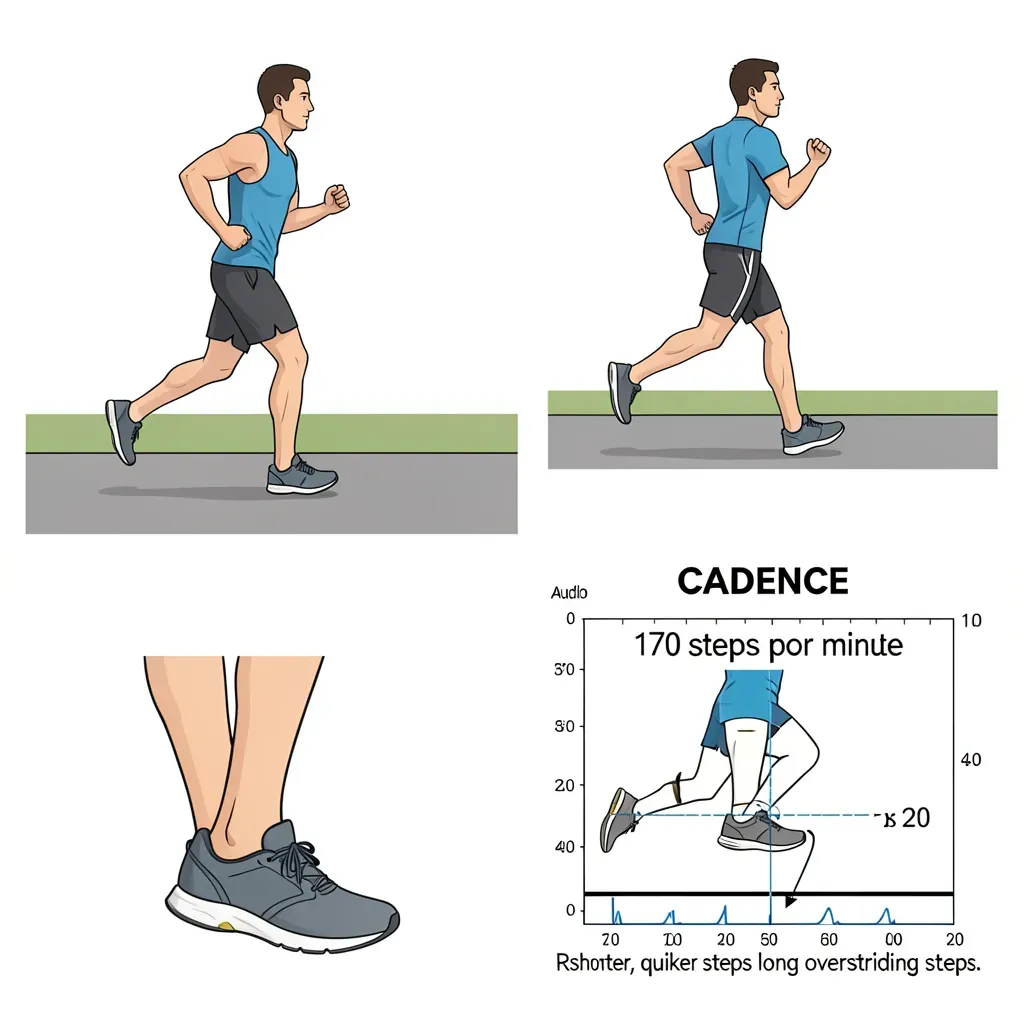
Surface Progression
Run surfaces affect spinal loading through impact force variation and terrain unpredictability:
Start on a treadmill — consistent surface, controlled pace, easy to stop, slight cushioning from the belt. Ideal for the first 4 weeks.
Progress to flat trail or packed gravel — slightly varied surface begins to introduce proprioceptive challenge. More natural than a treadmill. Weeks 5–8.
Road running — harder surface, more consistent footing than trail. Most people's long-term running environment. Week 7 onward.
Hills — uphill running increases hip extension demand and changes spinal loading mechanics. Downhill running significantly increases eccentric impact force. Both are advanced surfaces. Introduce after Week 10 only if the flat run is symptom-free.
Concurrent Strength Training
Do not stop your hip-dominant strength work while following this program. Two sessions per week of Romanian deadlifts, hip bridges, and single-leg work maintain the posterior chain support that running demands. The running alone does not build this — it requires it.
Schedule strength sessions on non-running days where possible, or at least separate from running sessions by several hours. The combination of strength and running on the same day accumulates more total spinal load.
When to Stay at a Week
Remain at the current week if any of the following occurred in the previous week:
- Pain above 2/10 during any run interval
- Symptom elevation at 72 hours that had not resolved by the next scheduled session
- Protective guarding or gait changes during run intervals (limping, trunk listing)
- Morning stiffness worse than your pre-program baseline on the day after running
When to Go Back a Week
Drop back one week if:
- You stayed at the same week for two consecutive weeks due to symptoms
- A session produced a flare that required more than 72 hours to resolve
- You notice consistently changing gait mechanics during run intervals
Going back a week is not a failure — it is the program working correctly. The program is designed with progression built in; going back a week means you are managing load more accurately than someone who blindly progresses. The athlete who completes 14 weeks with one step back is in a better position than the athlete who completes 12 weeks with a 3-week setback in the middle.
In Review
- Prerequisites before starting: 30+ minutes pain-free walking, Big 3 endurance targets met, pain-free hip extension in daily life
- The 2/10 rule governs in-session decision-making: stop run intervals if pain exceeds this threshold
- The 72-hour test governs progression: if symptoms are elevated at 72 hours post-run, repeat the week
- Weeks 1–6 use walk-run intervals with progressively longer run bouts, starting at 1 minute and reaching 3 minutes
- Weeks 7–8 bridge to continuous running with the first 15-minute continuous run
- Weeks 9–12 build continuous running duration to 30 minutes at a conversational pace
- Surface progresses from treadmill to flat trail to road; hills come after Week 10 only
- Maintain 2× weekly hip-dominant strength training throughout; do not trade it for running sessions
- Staying at a week is correct management; going back a week beats a 3-week setback every time