Top Anti-Inflammatory Foods Ranked
A ranked breakdown of the most evidence-supported anti-inflammatory foods — what each does, why it works, and how much you need.
Why Food-Based Anti-Inflammation Matters
Pharmaceutical anti-inflammatories work by blocking specific enzymes — COX-1, COX-2, and LOX — that produce inflammatory prostaglandins and leukotrienes. Whole foods contain compounds that work through many of the same molecular pathways, often with fewer side effects and with cumulative benefit when consumed consistently over weeks and months. This is not alternative medicine — the mechanisms are well-characterized in peer-reviewed research. What follows is a ranked breakdown of the foods with the strongest evidence, the mechanisms behind them, and practical daily doses.
1. Fatty Fish and Fish Oil
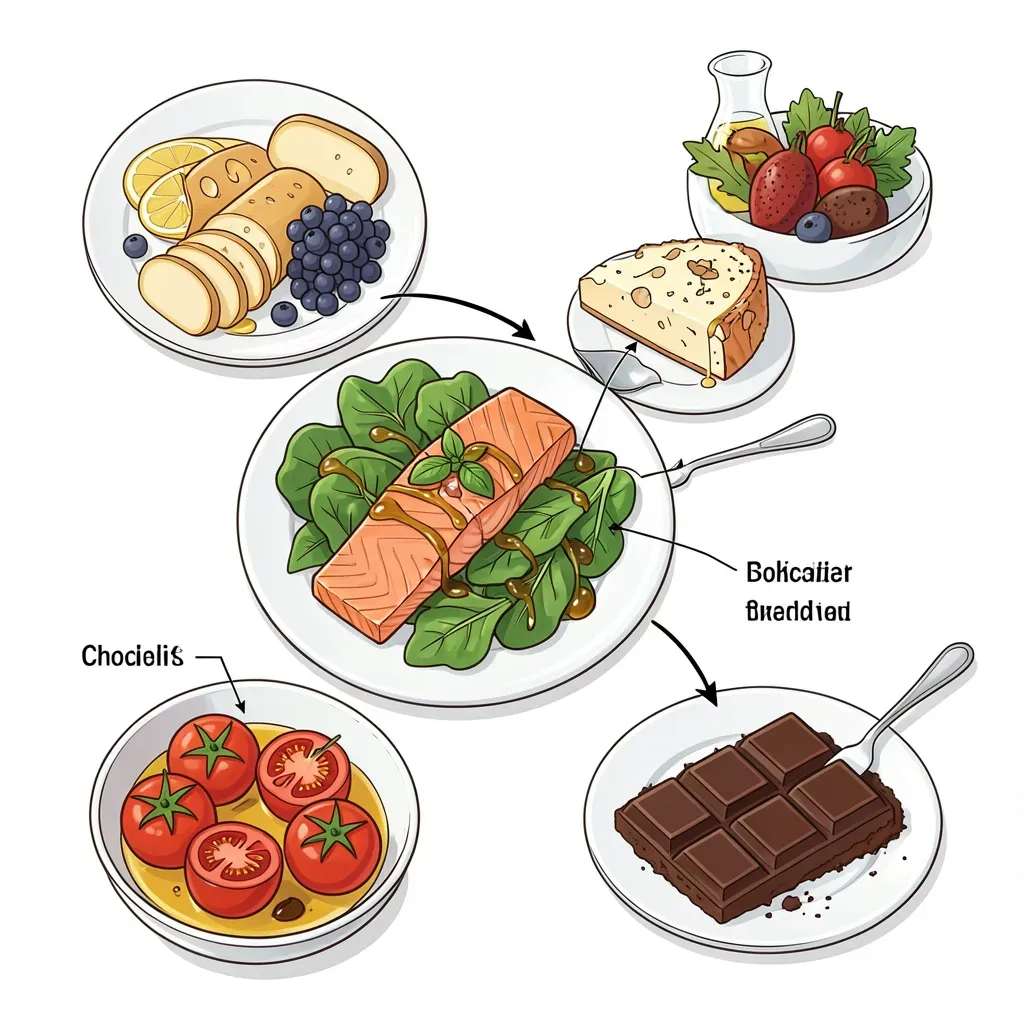
Mechanism: EPA (eicosapentaenoic acid) and DHA (docosahexaenoic acid) are omega-3 fatty acids that compete with arachidonic acid for COX and LOX enzymes, reducing the production of pro-inflammatory eicosanoids. They also generate specialized pro-resolving mediators (SPMs) — resolvins, protectins, and maresins — that actively switch off inflammation.
Practical dose: 2-3 servings of oily fish per week (salmon, sardines, mackerel, herring). If supplementing fish oil, clinical trials showing benefit for pain have generally used 2-4g of combined EPA+DHA daily. Look for a supplement that specifies EPA and DHA content separately, not just "fish oil."
2. Extra Virgin Olive Oil
Mechanism: EVOO contains oleocanthal, a phenolic compound that inhibits both COX-1 and COX-2 enzymes — the same targets as ibuprofen. Research by Gary Beauchamp at the Monell Chemical Senses Center established that 4 tablespoons of high-quality EVOO delivers approximately 10mg of ibuprofen-equivalent anti-inflammatory effect. EVOO also contains oleacein and oleuropein, which reduce NF-κB activity (a master inflammatory regulator).
Practical dose: 3-4 tablespoons daily in cooking, dressings, or drizzled over vegetables. The key is quality — oleocanthal degrades in low-grade or old olive oil. Fresh, cold-pressed EVOO with a peppery, slightly bitter finish indicates higher phenolic content.
3. Blueberries and Dark Berries
Mechanism: Anthocyanins — the pigments that give these fruits their deep color — inhibit NF-κB and reduce the expression of inflammatory cytokines including IL-6 and TNF-α. They also cross the blood-brain barrier and have been shown to reduce neuroinflammation, which is relevant to central sensitization in chronic pain.
Practical dose: 150-200g (roughly one cup) daily. Frozen berries retain their anthocyanin content well and are often more practical year-round. Blackberries, raspberries, and cherries are comparable in potency.
4. Leafy Greens (Spinach, Kale, Swiss Chard)
Mechanism: Two primary pathways. First, magnesium — leafy greens are among the best dietary sources, and magnesium deficiency upregulates NF-κB and increases inflammatory cytokine production. Second, polyphenols including kaempferol and quercetin, which inhibit inflammatory enzymes and mast cell activation.
Practical dose: 2-3 cups of leafy greens daily. Cooking spinach and kale significantly increases the bioavailable magnesium by reducing oxalates that bind to it in the raw form. Rotate between varieties to diversify phytochemical intake.
5. Walnuts
Mechanism: The only tree nut with meaningful ALA (alpha-linolenic acid) content — a plant-based omega-3. ALA is a precursor to EPA, though conversion is inefficient (roughly 5-10%). Walnuts also contain ellagic acid and other polyphenols that reduce oxidative stress independently of the ALA pathway.
Practical dose: 30g (about 7 whole walnuts) daily. This is one of the easier anti-inflammatory habits to build — a small handful as a snack or added to oatmeal.
6. Turmeric with Black Pepper
Mechanism: Curcumin, the active polyphenol in turmeric, inhibits NF-κB, COX-2, and the NLRP3 inflammasome. The critical caveat: curcumin has extremely poor bioavailability on its own — it is rapidly metabolized and poorly absorbed. Piperine (the active compound in black pepper) inhibits glucuronidation of curcumin and increases its bioavailability by approximately 2000% according to a widely cited pharmacokinetic study.
Practical dose: 1-2 teaspoons of turmeric powder with a generous pinch of black pepper, consumed with a fat-containing meal (curcumin is also fat-soluble). If supplementing, look for formulations that include piperine or use phospholipid-complexed curcumin (such as Meriva).
7. Ginger
Mechanism: Gingerols and shogaols inhibit COX and LOX enzymes, reducing both prostaglandin and leukotriene synthesis. Ginger also inhibits the synthesis of inflammatory cytokines at the gene expression level. A 2015 meta-analysis found ginger supplementation significantly reduced markers of systemic inflammation compared to placebo.
Practical dose: 1-2g of dried ginger or 5-10g of fresh ginger daily. Easily incorporated into tea, smoothies, stir-fries, or warm water with lemon in the morning.
8. Green Tea
Mechanism: EGCG (epigallocatechin-3-gallate) is the primary bioactive catechin in green tea. It inhibits NF-κB activation and reduces the expression of pro-inflammatory genes. EGCG also has antioxidant activity roughly 25-100 times more potent than vitamins C and E on a molar basis.
Practical dose: 3-4 cups daily to reach clinically studied EGCG levels. Matcha contains 3-5x the EGCG of steeped green tea. Avoid adding milk, which may bind catechins and reduce absorption.
9. Dark Chocolate (>70% Cacao)
Mechanism: Flavanols in dark chocolate — particularly epicatechin — reduce inflammatory cytokine production and improve endothelial function. The threshold matters: milk chocolate has too little cacao and too much sugar to be anti-inflammatory. 70% is the minimum; 85%+ is better.
Practical dose: 20-30g daily (one or two small squares). More than this brings in meaningful caloric load and diminishing returns on flavanol content per calorie.
10. Tart Cherries
Mechanism: High anthocyanin content (similar to dark berries) plus melatonin — tart cherries are one of the few dietary sources of melatonin. Melatonin has direct anti-inflammatory properties and improves sleep architecture. Since sleep deprivation dramatically amplifies pain perception, the dual mechanism (direct anti-inflammatory + sleep improvement) makes tart cherry particularly relevant for back pain recovery.
Practical dose: 30ml of tart cherry concentrate (diluted) or 240ml tart cherry juice twice daily. Timing the evening dose 1-2 hours before bed optimizes the melatonin benefit.
11. Garlic
Mechanism: Allicin and organosulfur compounds formed when garlic is crushed or chopped inhibit NF-κB and reduce production of TNF-α and IL-6. The key is preparation: allicin forms only when the enzyme alliinase is activated by crushing. Let crushed garlic sit for 10 minutes before cooking to maximize allicin formation.
Practical dose: 1-2 cloves daily, crushed and rested before use. Aging garlic (aged black garlic) produces different compounds with complementary but somewhat less well-studied effects.
12. Cooked Tomatoes
Mechanism: Lycopene, the carotenoid that gives tomatoes their red color, is a potent antioxidant that reduces oxidative-stress-driven inflammation. Critically, lycopene is fat-soluble and its bioavailability increases dramatically when tomatoes are cooked in oil. A cooked tomato with olive oil delivers several times more bioavailable lycopene than a raw tomato.
Practical dose: 100-200g of cooked tomato products (tomato sauce, roasted tomatoes) several times per week, prepared in olive oil for optimal absorption.
In Review
- Fatty fish (2-3x/week) or fish oil (2-4g EPA+DHA daily) is the single highest-leverage anti-inflammatory food intervention
- 4 tablespoons of high-quality EVOO daily delivers a measurable ibuprofen-equivalent effect via oleocanthal
- Turmeric requires black pepper (or a piperine-containing supplement) to achieve meaningful absorption — without it, most curcumin passes through unabsorbed
- Tart cherry is uniquely valuable for back pain because it addresses both inflammation and sleep quality simultaneously
- Cooking tomatoes in olive oil dramatically increases lycopene bioavailability compared to raw consumption
- These foods work cumulatively — building a daily dietary pattern that includes several of them consistently produces greater effect than occasional consumption of any one