Chiropractic: Evidence & Limitations
What the research shows about spinal manipulation, when it helps, when it doesn't, and the important safety considerations.
What Chiropractors Actually Do
Chiropractors are licensed healthcare practitioners whose primary technique is spinal manipulation therapy (SMT) — high-velocity, low-amplitude thrusts applied to specific spinal segments, producing the characteristic "crack" or cavitation sound. They also typically advise on exercise, posture, and lifestyle, and many incorporate soft tissue techniques, dry needling, and rehabilitation exercises.
The profession has a complicated history. It was founded on the concept of "subluxations" — misalignments of vertebrae thought to interfere with nerve flow and cause disease throughout the body. This theoretical framework is not supported by modern anatomy or neuroscience. However, separating chiropractic theory from chiropractic technique is important: the fact that the founding theory is wrong does not automatically mean that spinal manipulation is ineffective for musculoskeletal pain.
What the Evidence Shows for Back Pain
The Cochrane Collaboration has reviewed spinal manipulation for low back pain multiple times. The most recent review found: SMT produces small, short-term reductions in pain and disability for acute low back pain, comparable to other recommended treatments such as supervised exercise, NSAIDs, and physiotherapy. It is not superior to these alternatives. There is no clear evidence of benefit beyond 6 weeks.
For chronic low back pain, the evidence is weaker and more inconsistent. Some trials show benefit; others show no advantage over sham manipulation or other active care. Effect sizes are generally small.
What the evidence does not support: manipulation changing the structural anatomy of the spine, resolving disc herniations, or producing lasting benefit through a unique mechanism that other treatments cannot.
A 2017 JAMA systematic review (one of the largest to date) found that spinal manipulation is associated with modest reductions in pain and function for acute low back pain — the improvements were real but small, and comparable to NSAIDs and exercise therapy. It concluded SMT is a reasonable option but not a superior one.
Why It Sometimes Feels Dramatically Better
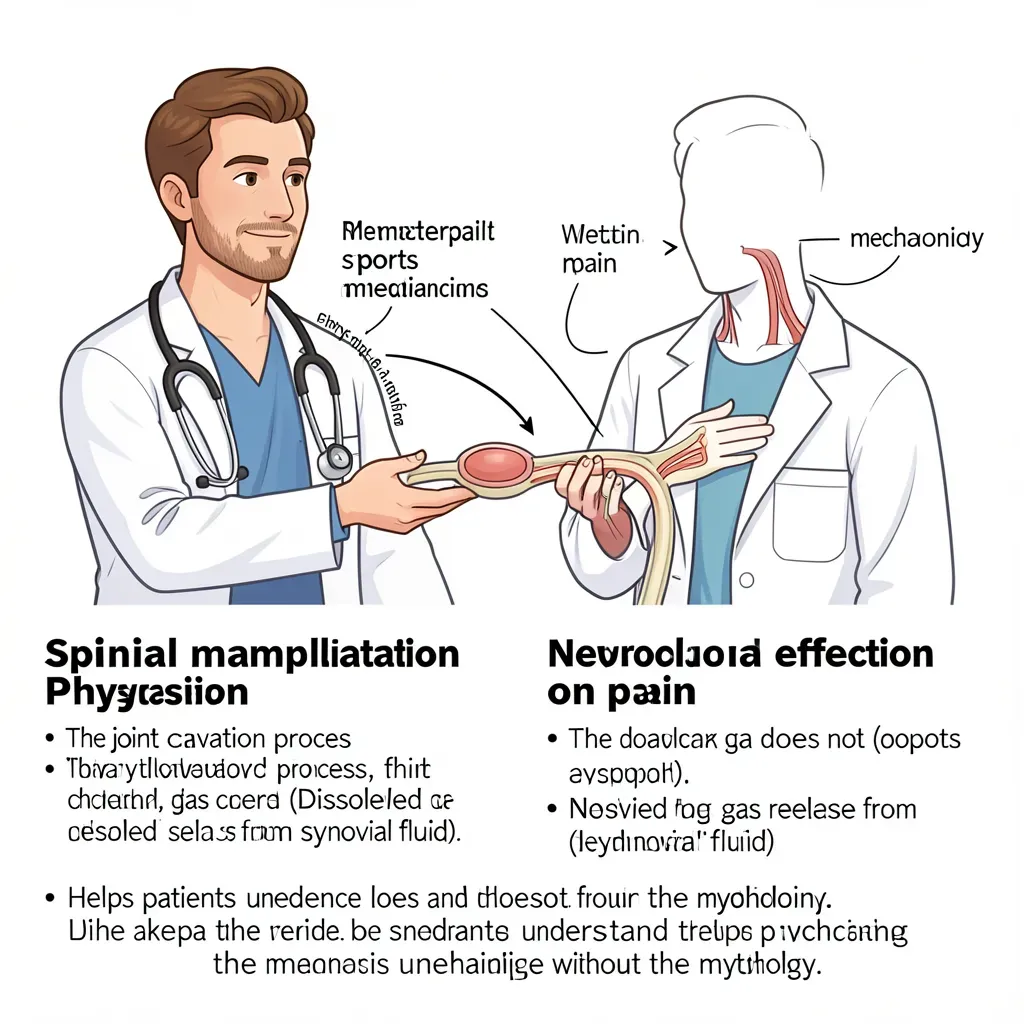
The immediate post-adjustment relief many patients report is real — but its mechanism is neurological, not structural. SMT activates mechanoreceptors in joint capsules and surrounding tissues, triggering reflex muscle relaxation and a temporary increase in endorphin and serotonin levels. The joint is not being "put back in place" — joints don't stay in positions that require repeated adjustment. The relief is a neurological reflex effect that can also be achieved through other forms of manual therapy and exercise.
This is not a reason to dismiss the benefit. Short-term pain relief has value: it allows movement, reduces protective guarding, and can create a window for exercise and rehabilitation. The problem arises when the neurological relief is misinterpreted as structural correction, leading to indefinite repeat visits.
What Evidence-Based Chiropractors Do
Chiropractors who practice within an evidence-informed framework share several features: they use manipulation as one tool among several, not the only tool; they emphasize active care (exercise and self-management) alongside passive treatment; they explain the actual mechanism of their treatment; they have a discharge plan and actively work toward it; and they do not claim to treat conditions beyond the musculoskeletal system.
Be skeptical of "maintenance care" — a program of adjustment visits every 2–4 weeks indefinitely, even when you are not in pain. The evidence for maintenance SMT to prevent recurrence is very limited. Similarly, claims that chiropractic adjustments can treat asthma, ear infections, ADHD, or other non-musculoskeletal conditions are not supported by evidence and should be a reason to find a different practitioner.
The Cervical Manipulation Safety Question
The most important safety concern in chiropractic is cervical (neck) manipulation and its association with vertebral artery dissection (VAD) — a tear in the vertebral artery that can cause stroke. This risk is real but rare. Current estimates range from 1 in 100,000 to 1 in 1,000,000 cervical manipulations, though the exact incidence is debated because some dissections may occur spontaneously before the manipulation visit (rather than being caused by it).
Upper cervical manipulation (C1-C2) carries higher risk than lower cervical manipulation. The association between cervical manipulation and VAD in patients under 45 is the subject of ongoing research. For lumbar manipulation, the risk profile is considerably more favorable.
If you are considering cervical manipulation, this risk should be discussed explicitly with your practitioner, particularly if you have any vascular risk factors.
The Subluxation Theory
The original chiropractic theory — that vertebral subluxations (misalignments) interfere with neural pathways and cause disease — is not supported by anatomical evidence. The spinal cord does not work this way. Vertebrae that require weekly realignment would represent a severe structural pathology, not a routine maintenance problem. This theory is rejected by mainstream medicine and by many chiropractors themselves, who have moved toward a musculoskeletal, evidence-based model.
How to Find a Chiropractor with an Evidence-Based Approach
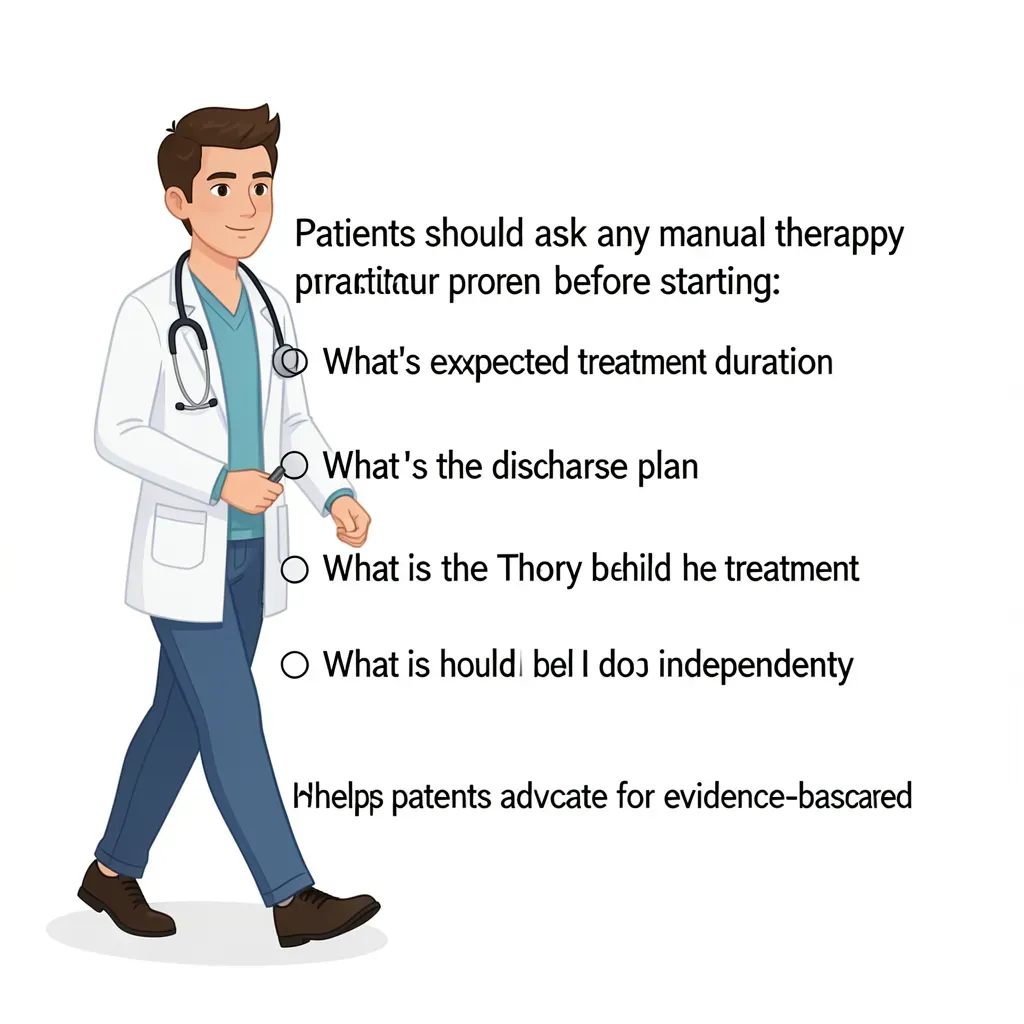
Ask them directly: what is your theory of why spinal manipulation helps? An evidence-based answer will reference short-term pain relief, neurological reflex effects, and the facilitation of movement. A non-evidence-based answer will reference subluxation correction or nerve flow. Ask how many sessions they expect you to need and what your discharge plan looks like. If they are reluctant to commit to a treatment endpoint, or suggest indefinite maintenance, consider a different provider.
In Review
- SMT has genuine but small short-term benefits for acute low back pain, comparable to NSAIDs and physiotherapy — not superior to them
- The mechanism is neurological (reflex effects, endorphin release), not structural correction
- Chronic pain evidence is weaker and inconsistent
- Evidence-based chiropractors use SMT as one tool, emphasize active care, and have a discharge plan
- Red flags: indefinite maintenance care, treating non-musculoskeletal conditions, subluxation-based explanations
- Cervical manipulation carries a rare but real risk of vertebral artery dissection; discuss explicitly if neck manipulation is proposed
- The subluxation theory that founded chiropractic is not supported by anatomical evidence