Inflammatory Foods
A detailed breakdown of the foods that drive chronic inflammation — the mechanisms behind each category, hidden sources, and a practical elimination protocol.
Why This Deserves Its Own Chapter
Article 23 introduced the inflammation-pain connection and gave a high-level overview of what to add and what to reduce. This chapter goes deeper on the removal side — because for most people, eliminating the biggest inflammatory drivers produces faster results than adding anti-inflammatory foods on top of a still-inflammatory diet.
Think of it like a leaking bucket. Adding water (anti-inflammatory foods, supplements) helps. But the bigger lever is plugging the holes.
The foods covered here are not marginal contributors. They are the primary dietary drivers of chronic low-grade inflammation in modern populations, with the strongest evidence base and the most direct relevance to musculoskeletal pain, nerve sensitization, and disc health.
Category 1: Refined Carbohydrates and Added Sugars
The Mechanism
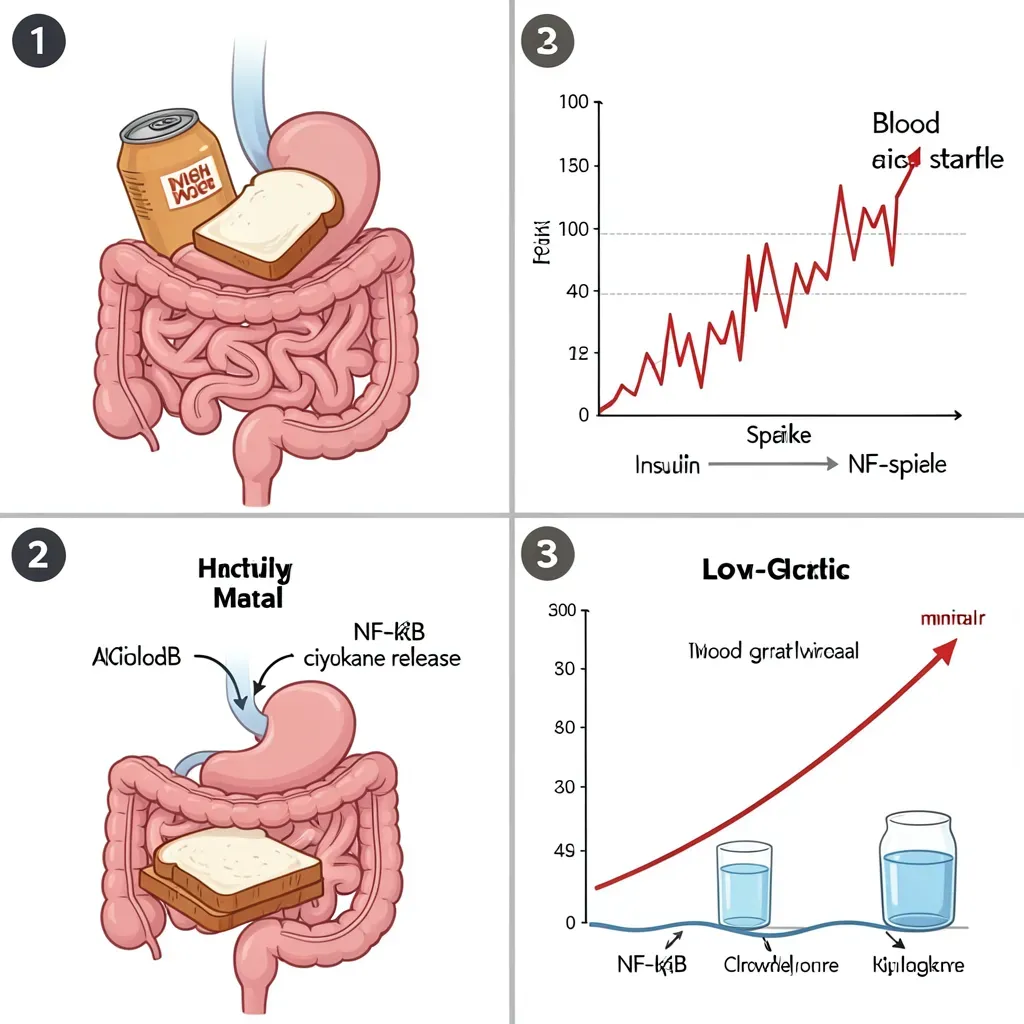
Rapidly digested carbohydrates — white bread, white rice, pastries, breakfast cereals, sugary drinks — spike blood glucose. The body responds with insulin. When this cycle repeats frequently, cells begin to downregulate insulin receptors (insulin resistance begins). Elevated blood glucose directly glycates proteins (attaches glucose molecules to structural proteins), damaging collagen, disc tissue, and vascular endothelium.
Simultaneously, high glucose activates NF-κB — the master transcription factor for inflammatory gene expression. NF-κB upregulates production of TNF-α, IL-6, and IL-1β: the same cytokines that sensitize nerve endings and impair tissue repair.
Added sugar (sucrose, high-fructose corn syrup) has an additional pathway. Fructose is metabolized primarily in the liver, where excess fructose generates uric acid and activates the NLRP3 inflammasome — a molecular complex that triggers a particularly aggressive inflammatory cascade.
What This Looks Like in Practice
The most inflammatory refined carbohydrate sources in the typical Western diet, ranked by glycemic impact:
- Sugary beverages — regular soda, fruit juice, sports drinks, sweetened coffee drinks. Liquid sugar bypasses satiety signals and delivers glucose faster than almost any solid food.
- Breakfast cereals — most conventional cereals are 25-40% sugar by weight, often with added refined flour.
- White bread and rolls — the refining process removes fiber and germ, leaving a product that digests almost as fast as pure glucose.
- Packaged baked goods — cookies, muffins, pastries, donuts. Combine refined flour with added sugar and often with seed oils (see Category 2).
- Flavored yogurts — marketed as healthy, but many contain 15-20g of added sugar per serving.
- Condiments — ketchup, barbecue sauce, teriyaki sauce, and most commercial salad dressings contain substantial added sugar.
Fruit juice deserves special attention. Orange juice contains approximately the same sugar load as Coca-Cola — roughly 26g per 240ml serving. The vitamins do not offset the glucose spike. Whole fruit is different: fiber slows absorption dramatically. Juicing removes the fiber while concentrating the sugar.
The Threshold Effect
Occasional sugar consumption does not produce chronic inflammation. The problem is chronicity — when elevated blood glucose and insulin resistance become the background state. Research consistently shows that populations consuming more than 50g of added sugar per day (roughly the amount in two cans of soda plus a flavored yogurt) show significantly elevated inflammatory markers compared to those under 25g per day.
Category 2: Industrial Seed Oils
The Mechanism
This is the most underappreciated driver of dietary inflammation. Industrial seed oils — corn oil, soybean oil, sunflower oil, safflower oil, cottonseed oil, canola oil — are extremely high in linoleic acid, an omega-6 polyunsaturated fatty acid (PUFA).
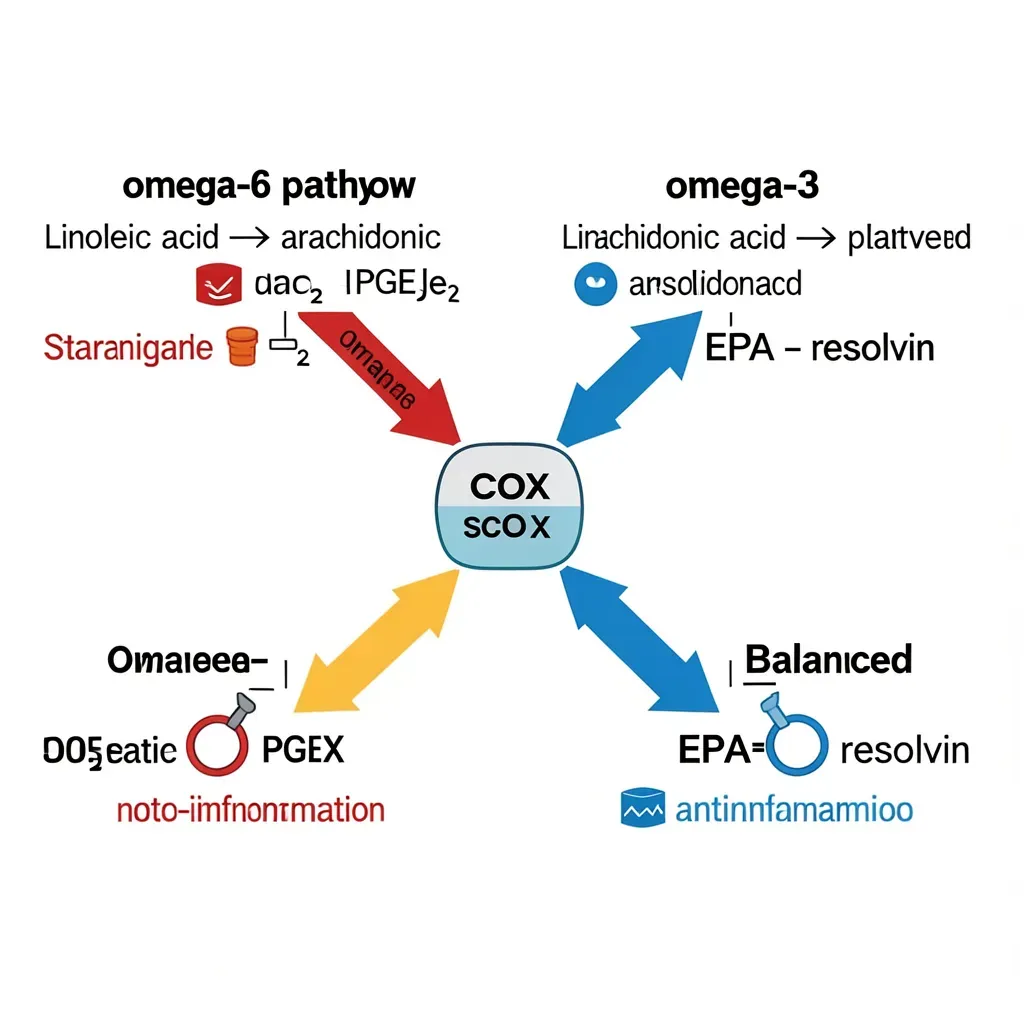
Omega-6 and omega-3 fatty acids compete for the same enzymes (COX and LOX) that produce eicosanoids — signaling molecules that regulate inflammation. Omega-6 eicosanoids (primarily prostaglandin E2 and leukotriene B4) are pro-inflammatory. Omega-3 eicosanoids are anti-inflammatory or resolution-promoting.
When the diet is dominated by omega-6, the COX and LOX enzymes are saturated producing pro-inflammatory eicosanoids. There is no enzymatic capacity left over for the anti-inflammatory omega-3 pathways.
The ancestral human omega-6:omega-3 ratio was approximately 4:1. The average modern Western diet sits at 15:1 to 20:1 — almost entirely because of seed oil consumption, which increased dramatically with industrialization in the 20th century.
Why Seed Oils Are Everywhere
Seed oils are cheap to produce, shelf-stable, and flavorless — ideal for processed food manufacturers. They appear in:
- Restaurant food — virtually all commercial frying is done in soybean or canola oil. A meal of fries, fried chicken, and a bun at a fast food restaurant delivers 10-20g of linoleic acid.
- Packaged snacks — crackers, chips, popcorn, pretzels. Check the ingredient list: soybean oil, sunflower oil, or canola oil appears in almost all of them.
- Commercial mayonnaise and salad dressings — most brands are 80-90% soybean oil.
- Margarine and "vegetable oil" spreads — partially or fully hydrogenated seed oils.
- Bread and baked goods — soybean or canola oil is a standard ingredient in commercial bread.
- Protein bars and "health" foods — many contain sunflower or safflower oil.
Canola oil occupies a grey area. It has a better omega-6:omega-3 ratio than corn or soybean oil, and some research suggests it is less inflammatory than other seed oils at moderate consumption. However, the refining and deodorizing process used to produce commercial canola oil generates oxidized fatty acids and trans fat traces that are potentially problematic. Cold-pressed canola is different from refined commercial canola. For cooking purposes, olive oil and avocado oil are more defensible choices with cleaner production processes.
Oxidation: The Additional Problem
Polyunsaturated fatty acids are chemically unstable — they oxidize when exposed to heat, light, or oxygen. Oxidized linoleic acid metabolites (OXLAMs) are directly cytotoxic and pro-inflammatory, beyond the eicosanoid pathway mechanism. When seed oils are used for high-heat cooking (frying, sautéeing), the oxidation products generated are significantly more inflammatory than the unheated oil.
This is why the combination of seed oils + high heat (commercial frying) is particularly damaging.
Category 3: Trans Fats
The Mechanism
Artificial trans fats (partially hydrogenated vegetable oils) are no longer legal in most Western countries, but trace amounts persist in commercial fried foods, some margarines, and packaged goods that list "partially hydrogenated" oils. Natural trans fats exist in small amounts in ruminant animal products (beef, lamb, dairy) and appear to be neutral or mildly beneficial — this section concerns the industrial artificial variety.
Artificial trans fats directly elevate LDL cholesterol, reduce HDL cholesterol, and upregulate the production of C-reactive protein (CRP) and IL-6 — two of the most reliable blood markers of systemic inflammation. Even small intakes (2-3g per day, easily achievable with commercial fried food) produce measurable inflammatory effects.
Where they still appear:
- Commercial fried foods in countries without full bans
- Some imported packaged foods
- Products listing "partially hydrogenated" in any form
Reading ingredient labels remains important even where bans exist, as "0g trans fat" labeling is permitted when content is below 0.5g per serving — meaning a product could legally claim zero trans fats while containing nearly half a gram per serving.
Category 4: Ultra-Processed Foods
What "Ultra-Processed" Actually Means
The NOVA classification system divides foods into four groups. Ultra-processed foods (Group 4) are industrial formulations using ingredients not typically found in home kitchens: emulsifiers, modified starches, protein isolates, artificial flavors, colors, sweeteners, and preservatives — assembled into products designed to be hyper-palatable and shelf-stable.
The inflammation concern goes beyond just their sugar, seed oil, and trans fat content. Studies on gut microbiome and systemic inflammation consistently show that emulsifiers — particularly polysorbate 80 and carboxymethylcellulose, found in the majority of ultra-processed foods — disrupt the intestinal mucus layer. This allows bacterial endotoxins (lipopolysaccharide, LPS) to cross the gut lining into circulation. LPS is one of the most potent triggers of the innate immune system, producing a substantial pro-inflammatory response at nanogram concentrations.
This mechanism — sometimes called "leaky gut" in popular press, more accurately called intestinal permeability — is not a fringe concept. It is a well-documented pathway in peer-reviewed gastroenterology and immunology research and is increasingly linked to chronic musculoskeletal pain conditions.
Identifying Ultra-Processed Foods
Practical markers:
- More than five ingredients on the label
- Ingredients you would not find in a home kitchen (xanthan gum, carrageenan, polysorbate 80, sodium stearoyl lactylate, acesulfame potassium, DATEM, TBHQ)
- Marketed with health claims (ironically, the more health claims on packaging, the more likely it is ultra-processed — real whole foods need no marketing)
- Long shelf life at room temperature without being a naturally preserved food (honey, dried beans, olive oil)
The five-ingredient rule is a useful heuristic, not a hard law. Pesto from a jar might have six ingredients, all of which are real food. A "protein bar" might have thirty ingredients including five different industrial additives. Read the ingredients list, not just the count.
Category 5: Alcohol
The Mechanism
Alcohol (ethanol) is metabolized primarily in the liver, generating acetaldehyde — a directly toxic compound that impairs hepatic function and promotes local inflammation. At moderate-to-high intakes, alcohol increases intestinal permeability (the same LPS-leakage mechanism described above), elevates circulating LPS, and directly upregulates NF-κB and TNF-α production.
Chronic alcohol use suppresses the immune system's resolution phase — the process by which acute inflammation is turned off. This is particularly relevant for back pain patients: tissue damage requires not just an inflammatory response but a resolution response to heal properly. Alcohol impairs resolution.
The threshold: Research suggests that two or more standard drinks per day produces measurable increases in CRP and IL-6. One drink per day sits in a more ambiguous zone — some studies show neutral effects, some show modest harm. The safest position for someone actively recovering from back pain is to treat alcohol as a variable to minimize, not eliminate, and to track whether consumption correlates with pain flares.
Alcohol also directly disrupts sleep architecture — reducing REM sleep and causing early-morning waking. Sleep is when tissue repair occurs and when the nervous system downregulates sensitization. The inflammatory effect of alcohol is partly mediated through sleep disruption, meaning even a drink or two the night before can produce a worse pain morning independently of any direct inflammatory mechanism.
Category 6: Processed Meat
The Mechanism
Processed meats — bacon, sausage, hot dogs, deli meats, salami, pepperoni — contain high levels of:
- Nitrates and nitrites (used as preservatives and color fixatives) which generate nitrosamine compounds that upregulate NF-κB
- Advanced glycation end-products (AGEs) — produced during high-heat processing, these cross-link proteins and activate the RAGE receptor, a direct pro-inflammatory signal
- Saturated fat at levels that promote LDL oxidation and macrophage activation
Unprocessed red meat at moderate consumption is a much weaker inflammatory signal than processed meat. The processing — curing, smoking, high-heat rendering — generates the most inflammatory compounds. The distinction matters: grilled beef is not equivalent to a hot dog in terms of inflammatory potential.
The Elimination Protocol
Rather than changing everything simultaneously (which rarely sticks), a stepwise elimination approach:
Week 1-2: Remove liquid sugar Eliminate all sugary beverages. Replace with water, sparkling water, black coffee, or unsweetened tea. This single step is often sufficient to produce a noticeable reduction in baseline pain within two weeks in people with high consumption.
Week 3-4: Audit cooking oils Identify every seed oil in your kitchen (check every bottle, every packaged food you cook with). Replace with olive oil for low-to-medium heat and avocado oil for high heat. Stop eating fried food from restaurants for this period.
Week 5-6: Read packaged food labels Apply the five-ingredient rule. For two weeks, don't buy anything with more than five ingredients unless each ingredient is recognizable as real food.
Ongoing: Reduce but don't obsess The goal is to shift your diet's inflammatory load significantly lower — not to achieve purity. An occasional glass of wine, a piece of birthday cake, or a restaurant meal with unknown cooking oils does not meaningfully affect chronic inflammation. What matters is the baseline pattern across hundreds of meals, not any single meal.
Tracking symptom response during elimination is more useful than blood tests for most people. Keep a simple log: morning pain score, afternoon energy, sleep quality. If removing a specific category produces a noticeable pattern of improvement within 2-3 weeks, you have found a meaningful personal contributor. Everyone's inflammatory response profile is somewhat individual — these categories are population-level signals, not guaranteed personal triggers.
Hidden Sources Summary
| Inflammatory Ingredient | Most Common Hidden Sources | |------------------------|---------------------------| | Added sugar | Bread, condiments, flavored yogurt, protein bars, sauces | | Soybean/corn/sunflower oil | Restaurant food, crackers, dressings, commercial bread | | Refined flour | "Wheat" bread (check if whole grain is listed first), coatings, soups | | Emulsifiers | Ice cream, non-dairy milk, salad dressing, plant-based meat | | Nitrates/nitrites | "Uncured" meats (often contain celery powder, a natural nitrate source) | | Trans fats (trace) | Commercial fried food, imported packaged baked goods |
In Review
- Refined carbohydrates and added sugars activate NF-κB, glycate structural proteins, and through fructose, trigger the NLRP3 inflammasome — keeping the inflammatory system chronically primed.
- Industrial seed oils (corn, soybean, sunflower, safflower) dominate the modern diet and shift the omega-6:omega-3 ratio to 15-20:1, saturating the COX and LOX enzymes with pro-inflammatory eicosanoid production.
- Trans fats elevate CRP and IL-6 even at low intakes; read labels for "partially hydrogenated" regardless of front-of-pack claims.
- Ultra-processed food emulsifiers disrupt intestinal barrier integrity, allowing bacterial endotoxins into circulation and triggering innate immune activation — an under-recognized mechanism for chronic pain.
- Alcohol impairs the inflammation resolution phase and disrupts sleep, both of which are essential to tissue repair after back injury.
- Processed meats contain nitrites, AGEs, and high saturated fat at levels that activate the RAGE receptor and NF-κB.
- Use the stepwise elimination protocol — liquid sugar first, then cooking oils, then packaged food auditing — rather than changing everything at once.
- Track your personal symptom response; population-level evidence identifies the categories most likely to matter, but individual response varies.