Intermittent Fasting & Back Pain
The evidence for intermittent fasting on inflammation, weight, and pain — and how to implement it safely during back pain recovery.
What Intermittent Fasting Actually Is
Intermittent fasting (IF) is not a specific diet — it is a pattern of cycling between periods of eating and not eating. Unlike caloric restriction, which focuses on reducing how much you eat, IF focuses on when you eat. The distinction matters because the two approaches activate somewhat different physiological pathways, though they often overlap in practice.
The main IF protocols studied in the clinical literature:
16:8 — fasting for 16 hours and eating within an 8-hour window. The most widely practiced and the most practical for most people. A common implementation is eating between noon and 8pm, meaning breakfast is skipped.
5:2 — eating normally 5 days per week and restricting to 500-600 calories on 2 non-consecutive days. Produces meaningful metabolic effects with less daily disruption.
Alternate-day fasting — alternating full eating days with fasting or very low-calorie days. The most studied protocol in clinical trials but the least sustainable for most people in daily life.
Why Intermittent Fasting Is Relevant to Back Pain
The relevance runs through four distinct mechanisms, each with clinical evidence:
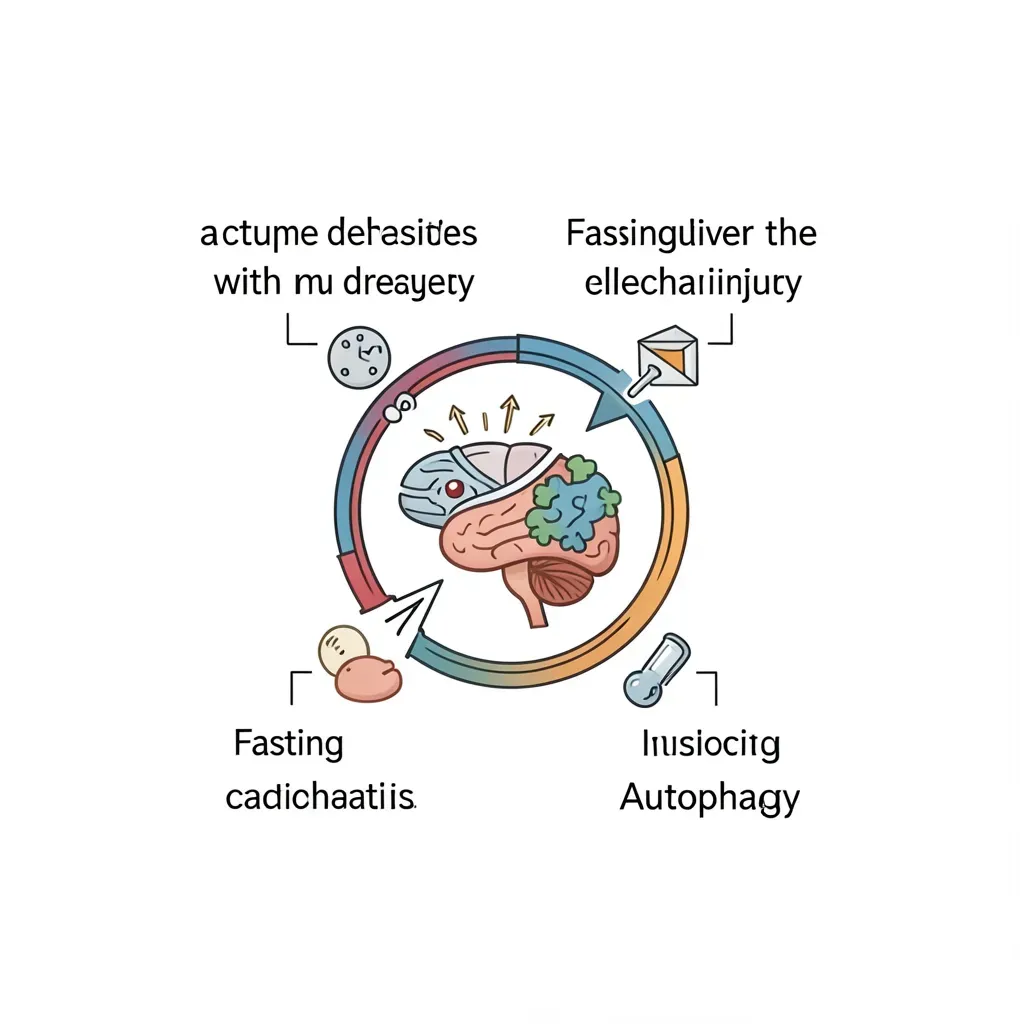
Autophagy. During fasting periods — particularly beyond 14-16 hours — the body activates autophagy, a cellular cleanup process in which damaged proteins, organelles, and inflammatory debris are degraded and recycled. In the context of back pain, autophagy is relevant because accumulated cellular debris in disc cells and spinal tissue contributes to the inflammatory environment. Autophagy is suppressed by insulin — which is why the fasting period (not just caloric restriction) is necessary to activate it robustly.
mTOR downregulation. The mechanistic target of rapamycin (mTOR) is a cellular growth regulator. Chronic mTOR activation, common with frequent eating and high caloric intake, promotes inflammatory signaling. Fasting periods downregulate mTOR, reducing the inflammatory tone this pathway contributes to.
Visceral fat reduction. Visceral adipose tissue — fat deposited around the abdominal organs rather than subcutaneously — is metabolically active and releases inflammatory cytokines continuously. IF is more effective at reducing visceral fat specifically than equivalent caloric restriction without a fasting component, based on comparative studies. Since visceral fat is a direct contributor to the systemic inflammatory background in which back pain operates, reducing it has direct implications for pain levels.
Insulin sensitivity. Insulin resistance is associated with increased inflammatory tone — elevated insulin drives NF-κB activation and increases inflammatory cytokine production. IF improves insulin sensitivity through multiple mechanisms, reducing this inflammatory pathway.
The Inflammation Evidence
A 2019 review in the New England Journal of Medicine by de Cabo and Mattson synthesized the clinical and mechanistic evidence for IF. Key findings relevant to pain: IF reliably reduces circulating inflammatory markers, improves metabolic health parameters, and activates cellular stress resistance pathways (including autophagy) that appear to have neuroprotective and anti-nociceptive effects.
A 2020 Ramadan fasting study found that CRP decreased by an average of 28% after 4 weeks of daily fasting — a model that naturally produces 16+ hour daily fasts — alongside significant reductions in other inflammatory markers, independent of weight loss.
The Muscle Mass Caveat
This is the most important caution for back pain patients considering IF. Extended fasting periods combined with caloric restriction can accelerate muscle protein catabolism — the breakdown of muscle tissue for energy. For back pain patients, maintaining (and ideally building) paraspinal and core muscle mass is a primary recovery objective. Losing muscle mass is a step backward.
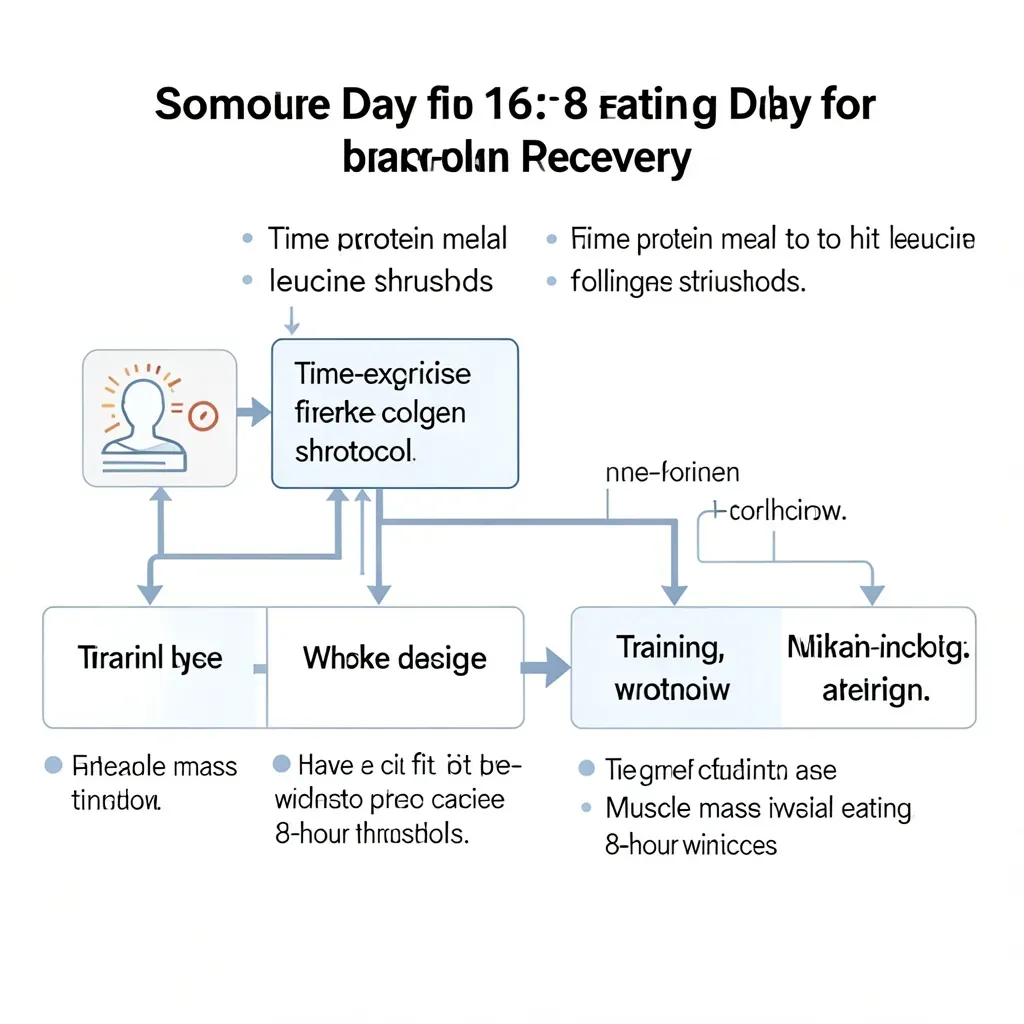
The critical issue is practical: hitting 140g+ of protein daily within an 8-hour eating window requires deliberate planning. Many people in a 16:8 protocol inadvertently under-eat protein because they have fewer eating opportunities.
Exercise and Fasting During Recovery
For general healthy populations, exercising in a fasted state is not harmful and may have some metabolic advantages. For people in active back pain recovery where tissue repair is the primary goal, the calculus is different.
Tissue repair — collagen synthesis, muscle protein synthesis, disc matrix remodeling — is substrate-dependent. Training in a fasted state reduces the availability of amino acids during the period of mechanical loading when these repair processes are most responsive. The Shaw et al. collagen synthesis study that informs the pre-exercise collagen protocol specifically used a fed (not fasted) condition.
Practical guidance: if you train in the morning within a 16:8 protocol, consider a small pre-workout protein window (15-20g of protein, or the collagen + vitamin C protocol, 45-60 minutes before training) before starting the main eating window. This limits the fasted training compromise without abandoning the overall protocol.
Implementing 16:8 for Back Pain Recovery
16:8 is the most practical protocol because:
- The 16-hour fast overlaps substantially with sleep, meaning only morning represents a genuine behavioral change (skipping breakfast or delaying it significantly)
- An eating window from noon to 8pm fits most work and social schedules
- Overnight fasting supports growth hormone release and overnight tissue repair processes that are consistent with recovery goals
- It is sustainable: the 5:2 and alternate-day protocols have higher dropout rates in most studies
Starting strategy: if you currently eat breakfast immediately after waking, push your first meal back by 30-60 minutes per week until you reach your target eating window start time. Abrupt transitions tend to produce more hunger and compliance issues than gradual shifts.
Who Should Not Fast
IF is not appropriate for everyone. Clear contraindications: a history of disordered eating or eating disorder diagnosis; pregnancy or breastfeeding; type 1 diabetes or insulin-dependent type 2 diabetes on medications that require consistent carbohydrate intake to prevent hypoglycemia; certain medications that require food. If in doubt, discuss with your physician before starting.
For most otherwise healthy adults with back pain and no listed contraindications, 16:8 is a low-risk intervention with a meaningful inflammatory benefit.
In Review
- Intermittent fasting reduces CRP, IL-6, and TNF-α in clinical trials — through autophagy, mTOR regulation, visceral fat reduction, and improved insulin sensitivity
- 16:8 (noon to 8pm eating window) is the most practical protocol for back pain patients and aligns with overnight recovery processes
- Protein targets are harder to hit in a compressed eating window — plan deliberately to ensure 3-4 meals each reaching the leucine threshold
- Avoid combining aggressive caloric restriction with IF during active recovery — muscle mass preservation is a recovery priority
- Training fasted during active recovery is suboptimal for tissue repair; a small pre-workout protein window is a reasonable compromise
- IF is contraindicated with eating disorder history, pregnancy, and certain medications — consult your physician if in doubt