Managing Setbacks
How to handle a pain flare without catastrophising — the psychology and practical steps for getting back on track after a regression.
Setbacks Are Part of the Process
One of the most important things to understand about back pain recovery is that setbacks are not evidence of failure. They are a normal, predictable, and almost universal feature of the recovery timeline. Research on chronic musculoskeletal pain consistently shows that non-linear recovery — including periodic flares — is the norm, not the exception.
The problem is that most people do not know this going in. When a flare occurs after weeks of good progress, the psychological response is almost always disproportionate to the physical reality. The pain feels like proof that something is seriously wrong, that the program has failed, or that full recovery is impossible. None of these interpretations is typically accurate.
Understanding setbacks as expected data points, rather than catastrophic events, is one of the most protective psychological shifts you can make in long-term back pain management.
Predictable Triggers
Most setbacks have identifiable causes, even if those causes are not obvious in the moment. The most common triggers are: significant overload in the 24-48 hours before onset (a gardening session, an unusual amount of driving, lifting that was heavier or more awkward than usual), a spike in psychological stress, disrupted sleep over several nights, illness (even a mild cold increases systemic inflammation and lowers pain thresholds), and exposure to activities your spine is not yet conditioned for.
The 24-48 hour lag between trigger and onset is particularly important. Pain that appears on Tuesday is often caused by what you did on Sunday. Without this awareness, people frequently attribute their flare to whatever they did immediately before — which may have had nothing to do with it.
Keep a brief log when setbacks occur. Write down what you did in the 48 hours before onset, your sleep quality, and your stress level. After two or three setbacks, patterns usually become clear. This information transforms setbacks from random misfortunes into predictable, manageable events.
The Emotional Response Pattern
The typical emotional sequence following a setback is: shock, frustration, fear, and — in people with a history of chronic pain — catastrophising. All of these responses are understandable. None of them are useful, and the last one actively prolongs recovery.
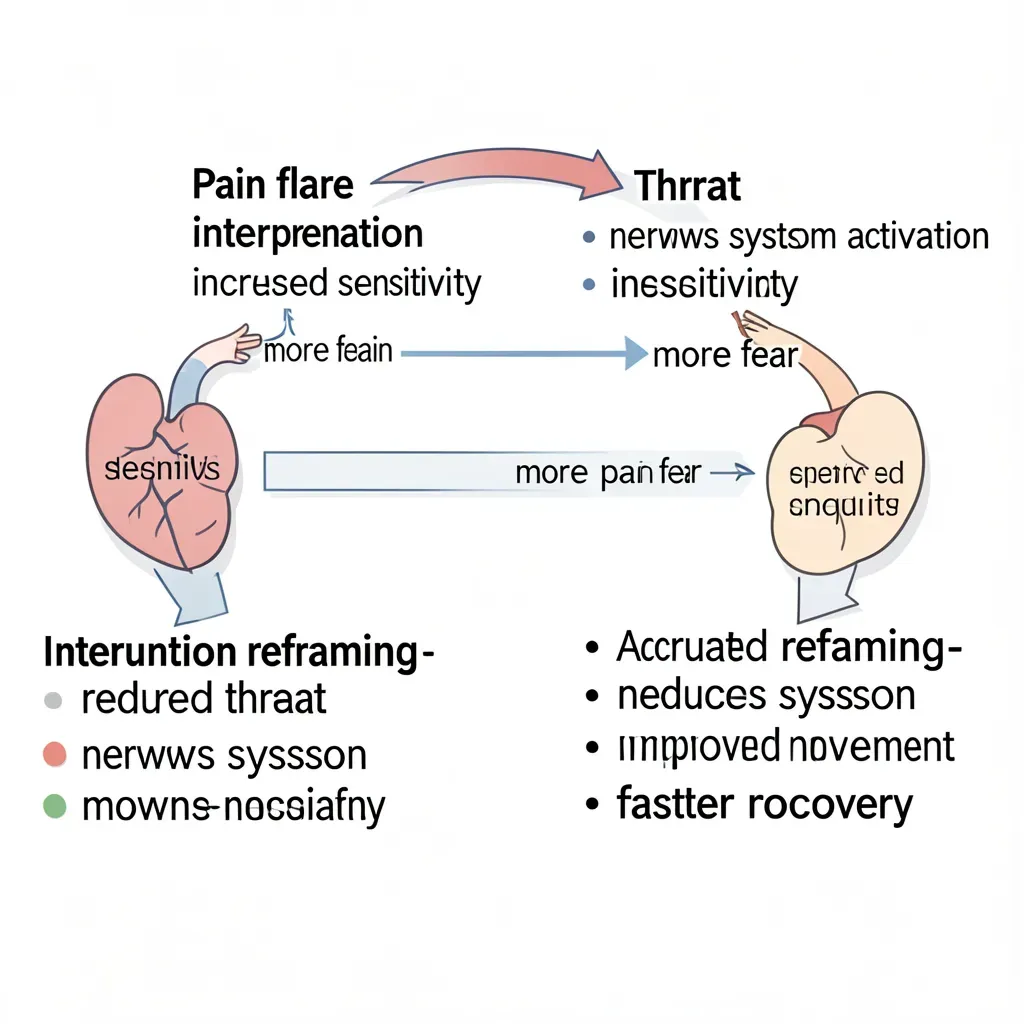
Catastrophising — interpreting a pain flare as evidence of permanent damage or an irreversible reversal — is one of the most well-documented psychological predictors of poor back pain outcomes. It activates the nervous system's threat response, which increases pain sensitivity and reduces movement, which leads to deconditioning, which makes the next flare more likely. The cycle is self-reinforcing.
The antidote is not positive thinking. It is accurate thinking. A flare is a temporary increase in symptom intensity. It does not mean the disc has re-herniated, that the injury is getting worse, or that recovery is off track. In the vast majority of cases, the physical change is minimal — what has changed is the nervous system's sensitivity setting.
The Four-Step Response Protocol
When a setback occurs, a structured response prevents the cascade from taking hold.
Step 1: Identify the trigger if possible. Review the previous 48 hours. Was there unusual physical load? Poor sleep? High stress? A specific movement or activity that felt wrong at the time? Identifying the trigger reduces the sense of randomness and unpredictability that feeds fear.
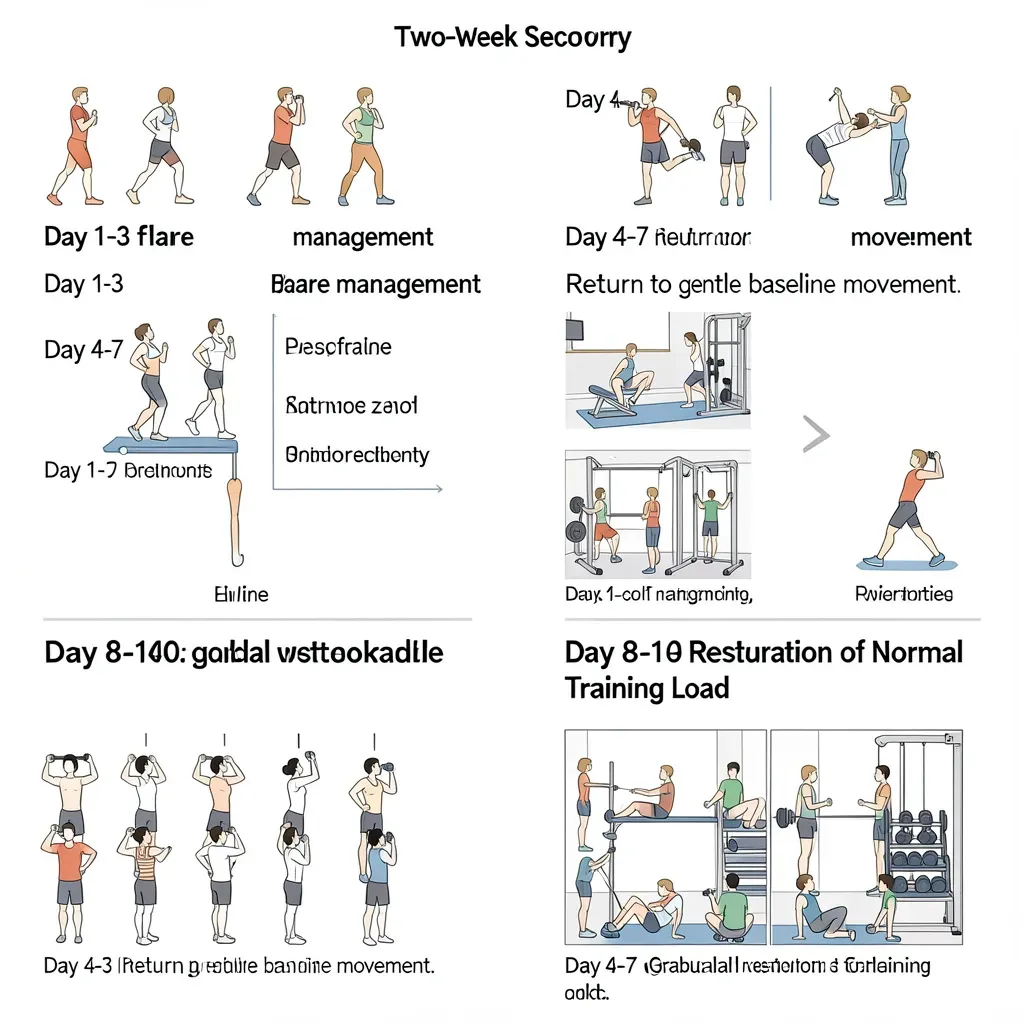
Step 2: Implement the flare-up management protocol. Relative rest (not bed rest — movement is still important), heat or ice according to preference, anti-inflammatory medication if appropriate and if prescribed, and temporary reduction in exercise intensity. The goal is to reduce the acute irritation, not to stop moving entirely.
Step 3: Reduce training load to a comfortable baseline. This means returning to an earlier, well-tolerated level of the programme — not stopping altogether. The Big 3 at reduced hold times, walking at reduced distance, and removing any loaded or advanced exercises until the acute phase passes.
Step 4: Resume normal progression when the acute phase clears. Most setbacks resolve to pre-flare baseline within 1-2 weeks. At that point, you return to where you were in the programme — you do not start from scratch.
A setback is not the same as a new injury. Review the red flags list from Chapter 5 when a flare occurs: new or worsening bladder or bowel dysfunction, saddle anaesthesia, rapidly progressive neurological deficit (foot drop, spreading numbness), or fever with back pain all warrant urgent medical attention. These are not typical setback presentations. If red flags are absent, conservative management is appropriate.
Setbacks as Diagnostic Data
Beyond the immediate management response, a setback contains valuable information about your rehabilitation. The trigger, if identified, tells you something about a capacity gap. An overload from gardening suggests that forward-bent sustained postures under load are still an exposure that needs to be built more gradually. A stress-related flare suggests that your pain threshold is still significantly affected by psychological state — which is a target for further work.
Over months and years, tracking setbacks reveals patterns that would otherwise remain invisible. Which activities reliably precede flares? What lifestyle factors (sleep, stress, travel) consistently increase your vulnerability? How long do setbacks typically last for you specifically? This information makes long-term self-management progressively more precise.
Building Setback Resilience
The diminishing frequency and severity of setbacks over time is one of the clearest measures of genuine progress in back pain recovery. People who are truly recovering do not stop having setbacks entirely — but they have them less often, they recover from them more quickly, and they respond to them with less fear.
This resilience is built by three things: accumulated physical conditioning (a stronger, better-conditioned spine has a higher load threshold before symptoms trigger), accumulated psychological experience (having navigated multiple setbacks and recovered from all of them builds genuine confidence), and refined self-management skills (knowing exactly what to do when a flare occurs removes the helplessness that amplifies distress).
In Review
- Setbacks are a normal and expected feature of back pain recovery — not evidence that the programme has failed
- The 24-48 hour lag between trigger and pain onset means the cause is often the previous day's activity, not what you did immediately before the flare
- The four-step response: identify trigger, implement flare protocol, reduce to comfortable baseline, resume normal progression when clear
- Catastrophising is the single most counterproductive psychological response to a setback — accurate thinking, not positive thinking, is the antidote
- Review red flags at every setback to distinguish a typical flare from a new or worsening injury requiring medical attention
- Most setbacks resolve to pre-flare baseline within 1-2 weeks; tracking them over time reveals patterns and builds genuine long-term resilience