The Long-Term Maintenance Program
What a sustainable, years-long spine health program looks like — minimum effective dose, periodic testing, and how to adapt as life changes.
The Maintenance Mindset
Recovery from back pain is not a destination you arrive at and then stop. It is a management system you build and refine over years. This distinction matters enormously because people who treat recovery as a finish line tend to abandon their habits once symptoms subside — and then wonder why the pain returns six months later.
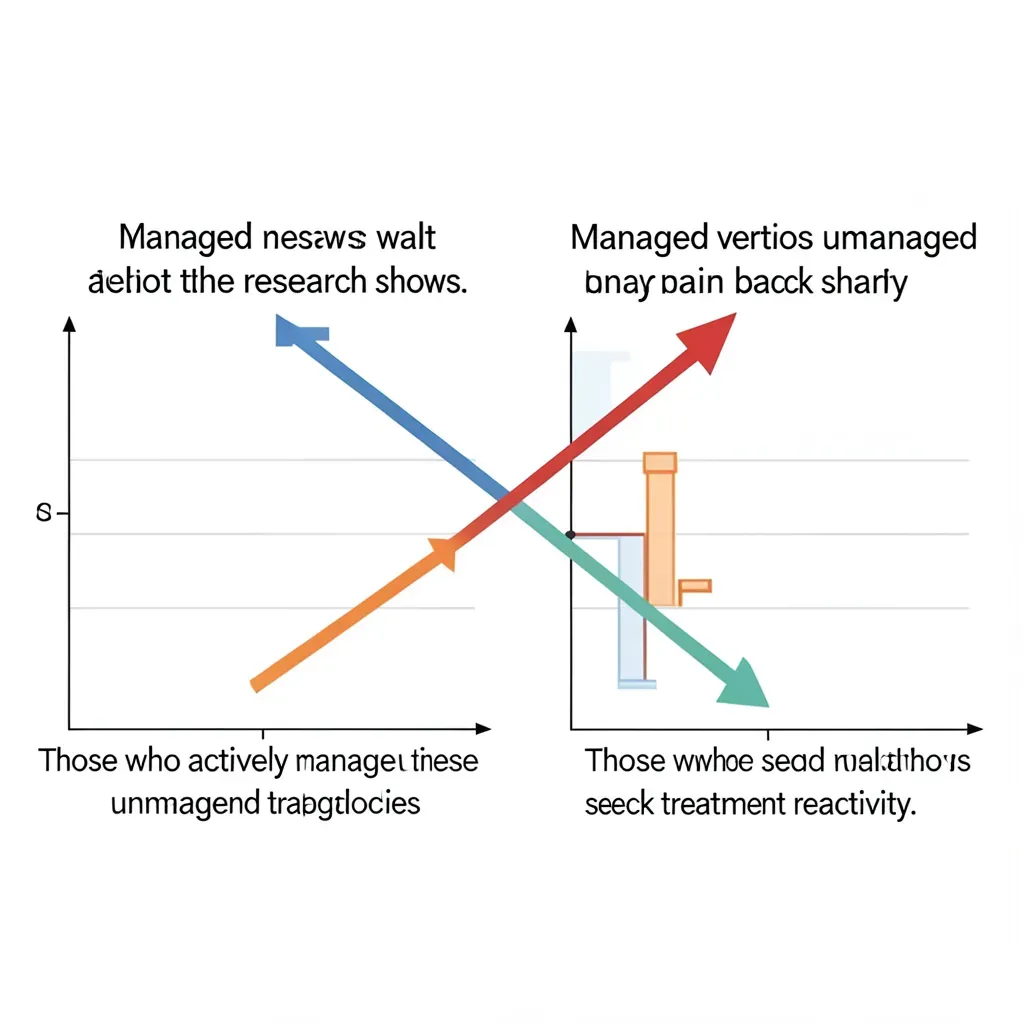
The research is clear: the single strongest predictor of long-term back pain outcomes is whether a person continues active self-management after the acute phase resolves. Those who do have dramatically better ten-year trajectories than those who seek treatment only when symptoms flare. The goal of this chapter is to help you design a program you will actually sustain for years, not weeks.
The spine deconditioning timeline is more forgiving than most people expect. Research shows that 1-2 weeks of inactivity has minimal lasting effect on spinal stability. It takes 4-6 weeks of consistent inactivity before meaningful deconditioning begins. This means missing a week when life gets difficult is not a crisis — it is a normal part of long-term management.
The Minimum Effective Dose
The most common reason maintenance programs collapse is that they are too ambitious. People design elaborate 60-minute daily sessions that are incompatible with a normal life. The minimum effective dose for maintaining spine health — once you have built a solid foundation — is considerably lower than you might think.
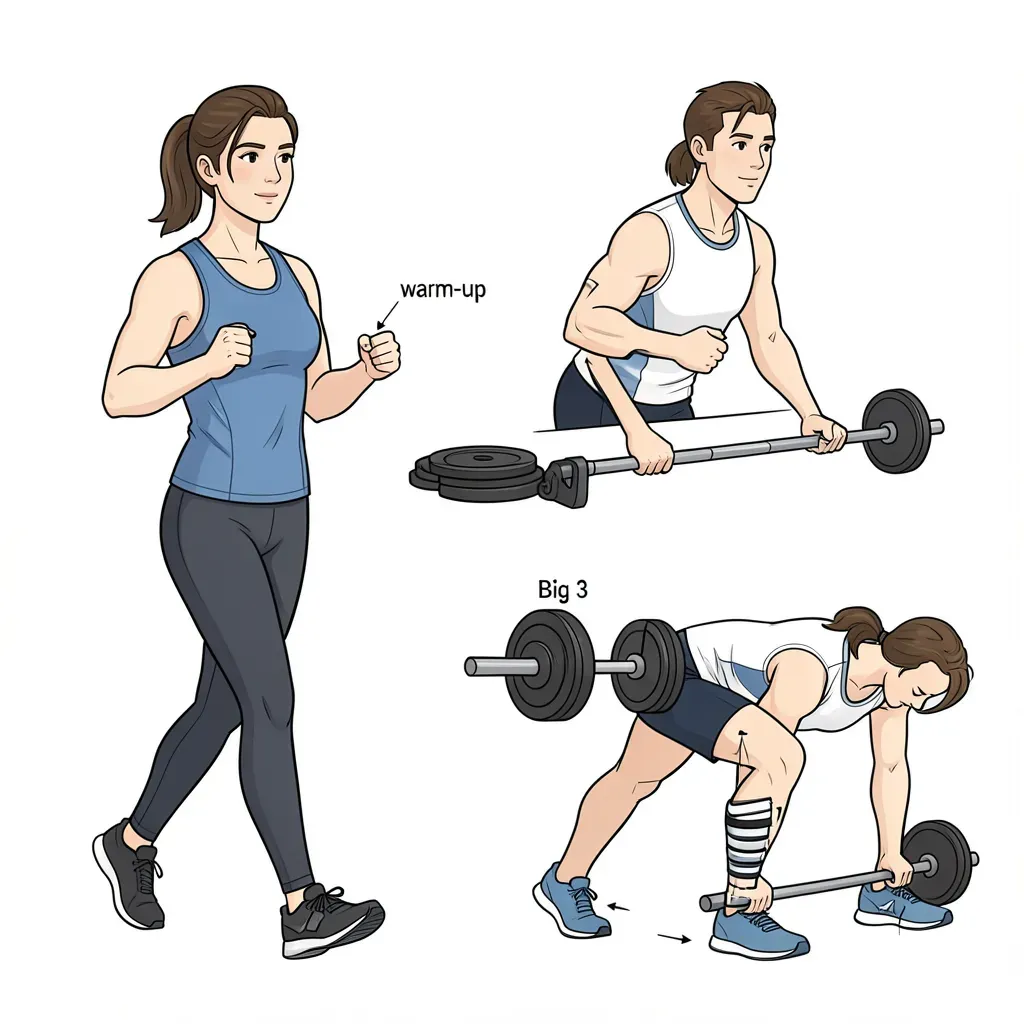
The evidence-based minimum looks like this: the McGill Big 3 performed three times per week, 20-30 minutes per session. Daily walking of at least 20-30 minutes. Consistent application of the spine hygiene habits from earlier chapters — how you sit, lift, bend, and sleep. That is the core. Everything else is supplementary.
This takes roughly 90 minutes of dedicated exercise per week. Most people can find this even in demanding seasons of life. The key is to protect this minimum fiercely while allowing yourself flexibility about everything beyond it.
The Annual Physical Reassessment
Once per year, formally test yourself against the benchmarks from your rehabilitation. This is not about performance anxiety — it is early warning detection. Most regressions begin gradually and are invisible until they have accumulated into a problem. Annual testing catches the drift before it becomes a crisis.
Test the following: Big 3 hold times (curl-up, side bridge, bird-dog — compare to your established baselines), 30-minute walking capacity without symptom onset, your pain-free activity range (can you still do everything you were doing at your best?), and hip mobility benchmarks if you have been working on those. Document the results somewhere you can compare year over year.
If you find regression in any area, that is not failure — it is the system working. Increase focus on that element for 6-8 weeks and retest.
Adjusting for Life Events
The most stable maintenance programs are the ones that flex rather than break under life pressure. New jobs, new babies, illness, injury, moving house, aging parents — all of these will disrupt your routine at some point. The question is not whether disruptions will happen but how you respond to them.
The principle is to scale down to the minimum effective dose during high-demand periods, rather than abandoning the program entirely. Three Big 3 sessions per week and daily walking can be maintained through almost any life event. Full programs can be restored once the disruption passes.
Aging requires its own form of adjustment. The good news is that the natural stabilisation process in the spine means many people genuinely experience less pain in their 50s and 60s than in their 30s and 40s. The adaptation is to maintain load management while allowing recovery periods to lengthen slightly as the decades pass.
Habit Stacking for Long-Term Adherence
The most reliable way to maintain a spine exercise program is to attach it to habits that already exist in your life. This is called habit stacking, and it dramatically reduces the decision-making burden of exercise adherence.
Common habit stacks that work well: Big 3 immediately after morning coffee before the workday starts; walking as a commute element or lunch break; hip mobility work during the first 10 minutes of television in the evening. The specific stack matters less than its consistency. Choose one and repeat it until it requires no deliberation.
The 80/20 Rule in Spine Management
Eighty percent of your long-term benefit comes from twenty percent of your program. Identifying which habits provide the highest return on investment — and protecting those above all others — is the strategic skill of long-term management.
For most people, the highest-value habits are: the Big 3 (core stability), daily walking (disc nutrition and load variation), and avoiding sustained end-range flexion (spine hygiene). Everything else builds on this foundation. When time is short, protect these three and let the rest flex.
Write down your three highest-value spine habits and put the list somewhere visible. When life gets demanding and the full program becomes impossible, these three do not get skipped. Everything else is negotiable.
The Ten-Year Horizon
The evidence on long-term back pain outcomes is genuinely encouraging for people who engage in active self-management. Studies following patients with disc herniations and chronic low back pain over 10 years show that those who adhere to exercise-based management report significantly lower pain levels, better function, and lower healthcare utilisation than matched groups who relied on passive treatments.
The spine is not fragile. It is a structure designed to load, move, and adapt. A well-managed spine can become more resilient than before the original injury. The goal is not to protect a damaged structure — it is to build a capable one.
In Review
- The minimum effective dose for maintenance is Big 3 three times per week, daily walking, and consistent spine hygiene habits — approximately 90 minutes of dedicated exercise per week
- Test your benchmarks annually to catch regression before it accumulates into a problem
- Scale to minimum dose during high-demand life periods rather than abandoning the program entirely
- Habit stacking — attaching spine exercises to existing daily routines — dramatically improves long-term adherence
- The 80/20 rule: identify your three highest-value spine habits and protect them above all others
- Ten-year outcome data strongly favours active self-management over reactive, passive treatment seeking