Back Pain in Manual Workers
Construction, nursing, warehouse, and agricultural workers — the specific spine demands of physical jobs and practical strategies to manage them.
The Manual Work Back Pain Problem
Manual workers have a 3-4 times higher rate of clinically significant disc herniation compared to office workers. Back pain is the leading cause of work-related disability across all occupational categories, and in manual occupations it is not simply the most common problem — it is frequently the career-ending one. A nurse or construction worker who cannot lift safely cannot work. The stakes are qualitatively different from those facing a desk worker with back pain.
The challenge is compounding: the physical demands that cause the injury are the same demands that the worker must return to. Rehabilitation that works for a sedentary worker — gradual return to light activity — is insufficient preparation for a nurse who will be patient-handling on their first day back. Understanding the specific demands of manual occupations is essential to targeted rehabilitation.
The High-Risk Task Categories
Back pain in manual work is not random — it clusters around specific task types with known biomechanical risk profiles.
Heavy lifting (> 25 kg): The acute disc injury risk increases significantly above this threshold, particularly when lifting is performed with a flexed lumbar spine, with the load held away from the body, and with rotation added. Construction workers lifting material pallets, nurses repositioning immobile patients, and warehouse workers moving heavy packages all fall into this category.
Repetitive bending: Individual low-load bends accumulate disc pressure and fatigue the lumbar extensors. A warehouse worker bending to retrieve packages at conveyor height 200-400 times per shift creates cumulative disc loading that rivals a small number of very heavy lifts. The musculature fatigues progressively through the shift, reducing the dynamic stability available for each subsequent lift.
Prolonged standing on hard surfaces: Construction workers, surgeons, nurses standing at bedsides — hard floor surfaces prevent the natural micro-movements that occur on softer ground and create sustained static loading of the posterior spinal elements. Fatigue of the spinal extensors accumulates over a shift, and workers compensate by slumping into passive ligamentous support.
Whole-body vibration: Heavy machinery operators (excavators, trucks, agricultural equipment) experience vibration transmitted through the seat into the lumbar spine at frequencies (4-12 Hz) that overlap with the natural resonant frequency of the lumbar spine. This is a specific occupational exposure associated with accelerated disc degeneration and a higher rate of disc herniation. Anti-vibration seating significantly reduces but does not eliminate this exposure.
Whole-body vibration from heavy machinery is an independent risk factor for accelerated lumbar disc degeneration, separate from the heavy lifting risk. If your work involves heavy machinery operation for more than 4 hours per day, this exposure should factor into your rehabilitation and prevention strategy. Anti-vibration seating, frequent breaks from the seat, and post-shift lumbar extension exercises are the specific countermeasures.
Nursing: The Highest-Risk Occupational Lifting Category
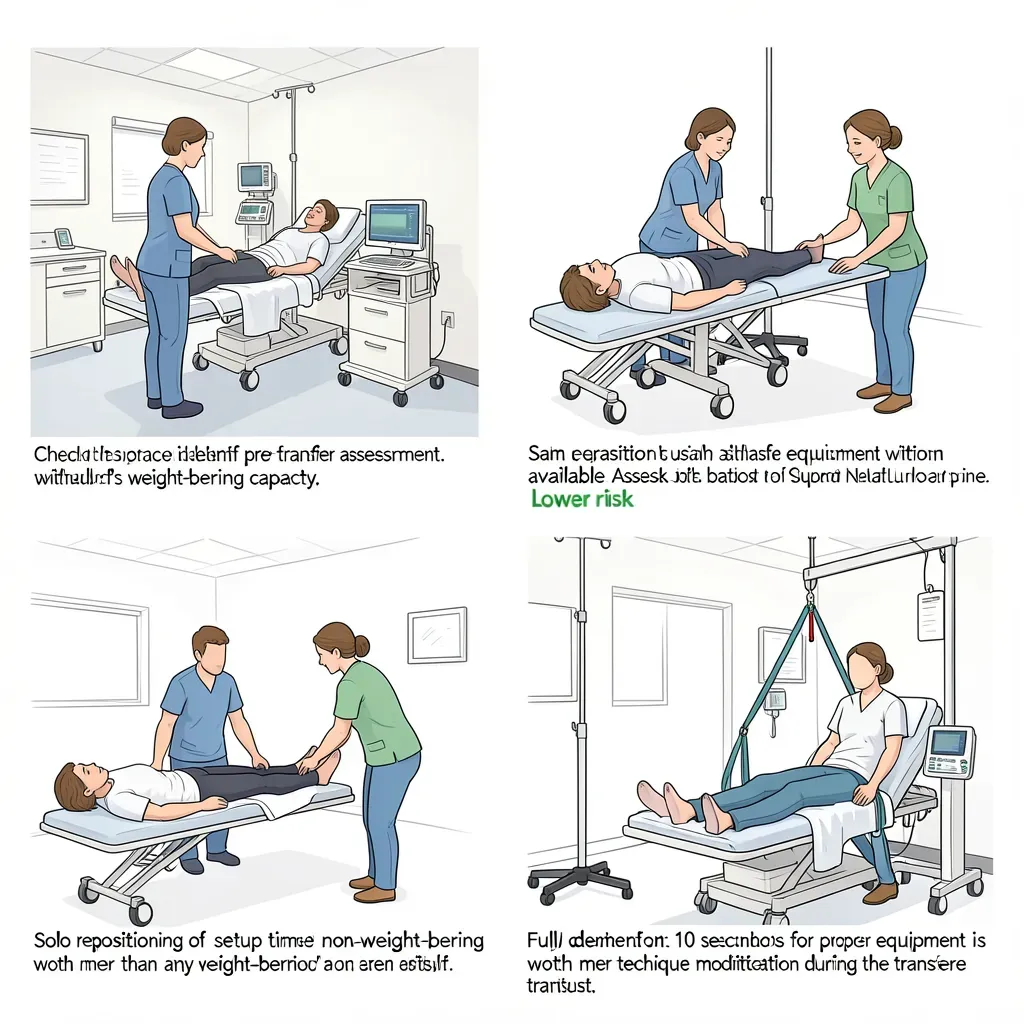
Patient handling is the single highest-risk occupational lifting category for lumbar disc injury. The reasons are compounded:
- The load (a human body) is unwieldy, unpredictable, and cannot be placed close to the handler's body in the same way as inanimate loads
- Patients who are partially mobile may shift weight unexpectedly, creating sudden dynamic loads
- The nursing ward environment — small bathrooms, narrow spaces beside beds, low toilet seats — prevents the optimal body positioning that reduces spinal load
- Staffing pressures create situations where two-person or assisted transfers are performed solo
- Nursing culture historically normalised injury risk as an occupational inevitability
Modern patient handling protocols — hoist use for all non-weight-bearing transfers, slide boards for lateral transfers, turning sheets for repositioning in bed — reduce but do not eliminate injury risk. They require time and equipment that is not always available, and they are frequently abandoned under workload pressure.
For nurses managing existing back pain: the single most important habit change is requesting assistance for any transfer that would require compromising spinal position. A moment of assessment before each patient contact — "can I do this without rounding my spine?" — is the practical habit to develop.
The cultural pressure in nursing to manage transfers without assistance, to "just get it done," is a significant injury amplifier. Back injuries in nursing are not bad luck — they are predictable consequences of unsafe patient handling. If your workplace does not provide adequate equipment or staff ratios for safe transfers, this is a workplace health and safety issue, not a personal failure of technique. Document incidents and near-misses. Request formal risk assessment of your tasks.
Construction: The Toolkit of Risk
Construction work combines almost all of the high-risk task categories simultaneously. Specific risk patterns include:
Tool carrying: A tradesperson's tool bag and belt can weigh 8-15 kg, carried for the full working day. This is sustained asymmetric loading that the body habituates to — and then pays for. Using a wheeled tool carrier for movement between sites and a properly distributed tool belt on the body (not all weight on one side) reduces the cumulative load.
Overhead work: Plastering ceilings, electrical work, framing — sustained cervical and lumbar extension combined with upper limb loading creates a distinctly fatiguing spinal position. Short work intervals with posture resets (dropping the neck to neutral, performing a standing lumbar flexion reset) prevent the progressive loss of neutral spine control that leads to injury in the sustained overhead position.
Working from awkward base positions: Confined spaces, uneven ground, kneeling on hard surfaces — construction rarely offers the ideal positioning that occupational health theory assumes. The practical skill is adjusting the available position to minimise spinal flexion and rotation under load, even when the ideal cannot be achieved.
Warehouse and Logistics Work
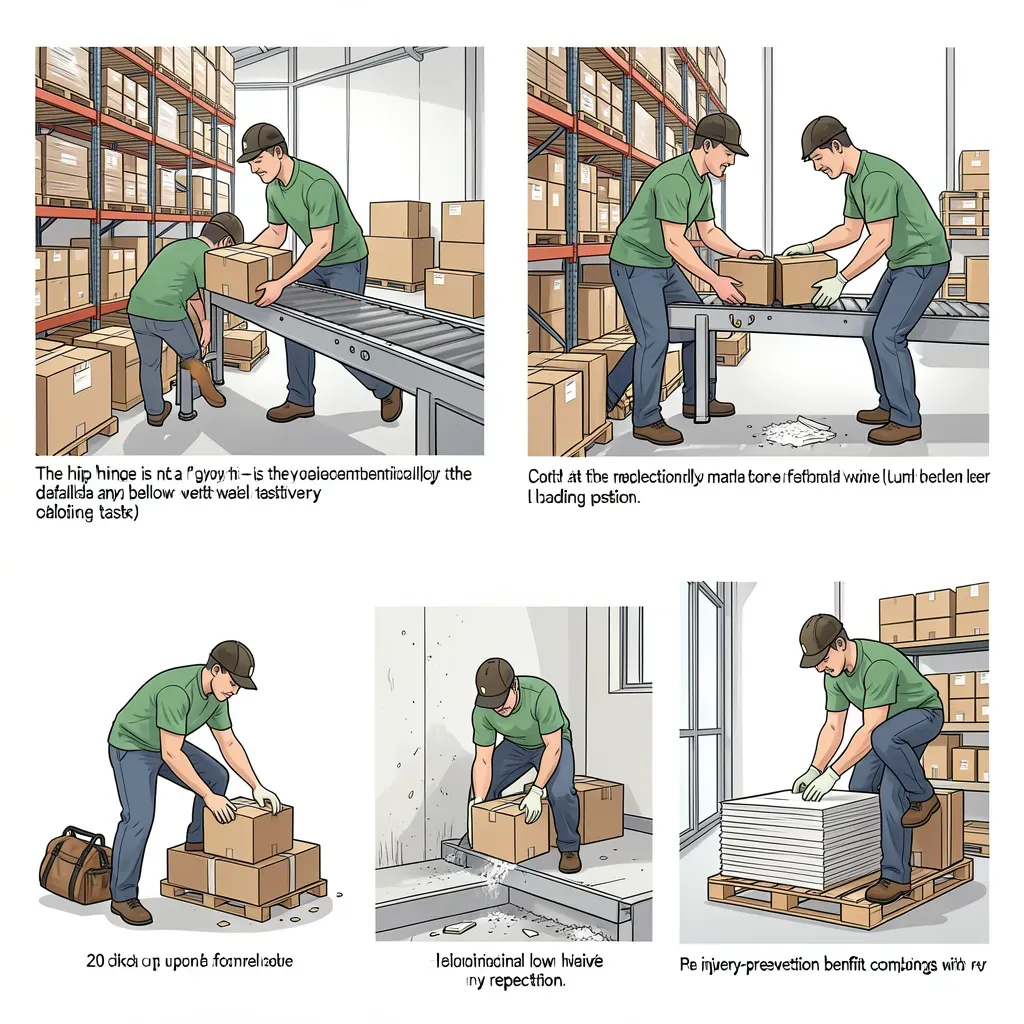
Warehouse and logistics work is frequently underestimated as a high-risk occupation because the individual packages are often light. The risk comes from volume and from fixed workstation heights that do not match worker height.
Conveyor belt height is the critical variable: a belt set too low forces repeated spinal flexion during package retrieval. A belt set at an appropriate height for one worker may be too low for a tall worker and too high for a short worker. Adjustable work surface height and the ability to rotate between different height tasks within a shift are the most effective ergonomic interventions.
For workers managing existing back pain in a warehouse role: identify the specific tasks that load the spine most — typically low-level retrieval and awkward reach — and apply the hip hinge rigorously to every repetition of these tasks. At volume, the technique saving is enormous.
Managing a Back Condition in a Manual Job
A diagnosis of disc herniation or chronic back pain does not automatically end a manual career — but it requires a clear-eyed conversation with an employer about task modification.
Task rotation is the most effective workplace modification for manual workers with back conditions: rotating between high-demand and lower-demand tasks within a shift prevents the cumulative fatigue that both increases injury risk and amplifies pain. An employer who cannot accommodate any task rotation is, effectively, not providing a safe working environment for a worker with a documented back condition.
Modified duties during active rehabilitation are a legal right in most jurisdictions for work-related injuries, and appropriate to request for non-work-related conditions in workplaces with reasonable accommodation obligations. Modified duties should be specific — not "light work" in the abstract, but identified tasks with known load demands that fall within the worker's current capacity.
Communication with the employer is the step most workers avoid, frequently to their detriment. Continuing to work at full capacity through significant pain without disclosure progressively worsens the condition and eventually forces a longer absence than earlier disclosure and modification would have required. A brief, factual conversation — "I have a disc condition that my physiotherapist is treating; these specific tasks aggravate it" — is a more productive starting point than continued concealment.
Returning to a manual job after back injury is not a binary decision between "full capacity or off sick." Work with your physiotherapist to define your current capacity specifically — what loads, postures, and durations you can safely manage — and communicate this to your employer. A graded return to manual work, starting with modified duties and progressing systematically, produces better long-term outcomes than either prolonged absence or premature full return to unrestricted duties.
In Review
- Manual workers have a 3-4 times higher disc herniation rate than office workers, and back pain is frequently the career-limiting condition in physical occupations.
- The highest-risk task categories are heavy lifting above 25 kg, repetitive bending at volume, prolonged standing on hard surfaces, and whole-body vibration from heavy machinery.
- Patient handling in nursing is the single highest-risk occupational lifting category; hoist use, slide boards, and team transfers are the evidence-based interventions — cultural pressure to manage alone is the primary barrier.
- Construction work combines multiple risk factors simultaneously; tool weight distribution, short overhead-work intervals, and hip hinge application in confined spaces are the practical countermeasures.
- Warehouse injury risk comes primarily from volume at non-optimal workstation heights; adjustable surface height and task rotation within a shift are the most effective interventions.
- Managing a back condition in a manual job requires specific communication with an employer about task rotation and modified duties — not generic "light work" but identified tasks with known load demands.
- A graded return to manual work with modified duties outperforms both prolonged absence and premature full return to unrestricted duties.