Protein & Tissue Repair
How much protein you need during back pain recovery, timing strategies, and the best sources for connective tissue repair.
Why Protein Is Non-Negotiable During Recovery
Every tissue that has been damaged in a back injury — disc annulus, ligaments, muscles, tendons, endplates — must be rebuilt from raw materials. The primary structural raw material for connective tissue is protein. Collagen, which forms the structural backbone of discs, ligaments, and tendons, is approximately 75% protein by dry weight. Muscle tissue, which provides the dynamic stabilization that offloads passive spinal structures, requires constant protein turnover. Skimping on protein during recovery is equivalent to trying to rebuild a damaged wall while rationing the bricks.
This is not a high-performance sports nutrition question. Adequate protein during injury recovery is a basic physiological requirement that most back pain patients significantly underestimate — and that many clinicians fail to discuss.
How Much Protein You Actually Need
The general population recommended dietary allowance of 0.8g of protein per kilogram of body weight was established to prevent deficiency in sedentary adults. It is not an optimal target for people with active tissue damage and ongoing repair demands.
For injury recovery, the evidence-supported range is 1.6-2.2g per kilogram of body weight per day. For a 75kg adult, this translates to 120-165g of protein daily — roughly double the general RDA.
This range is not specific to elite athletes. Multiple studies in recovery populations (post-surgical, post-injury) have found that higher protein intakes accelerate tissue repair, preserve lean mass (which tends to decline with reduced activity), and improve functional recovery outcomes compared to standard RDA-level intake.
The Leucine Threshold: Why Timing Matters as Much as Total
Not all protein timing is equivalent. Muscle protein synthesis (the process of building new muscle tissue) is maximally stimulated when each meal reaches the leucine threshold — approximately 2.5-3g of leucine per meal. Below this threshold, the anabolic signaling pathway (specifically, mTORC1 activation) is not fully triggered regardless of total daily protein.
In practice, 2.5-3g of leucine corresponds to approximately 25-40g of high-quality protein per meal, depending on the source's leucine content (animal proteins are leucine-rich; plant proteins are generally leucine-poorer).
The implication: spreading protein across 3-4 meals of 30-40g each produces greater muscle protein synthesis than consuming the same total protein skewed heavily toward one or two meals. A pattern of 10g at breakfast, 15g at lunch, and 60g at dinner is suboptimal even if the daily total is adequate.
Collagen-Specific Nutrition: A Different Type of Protein Need
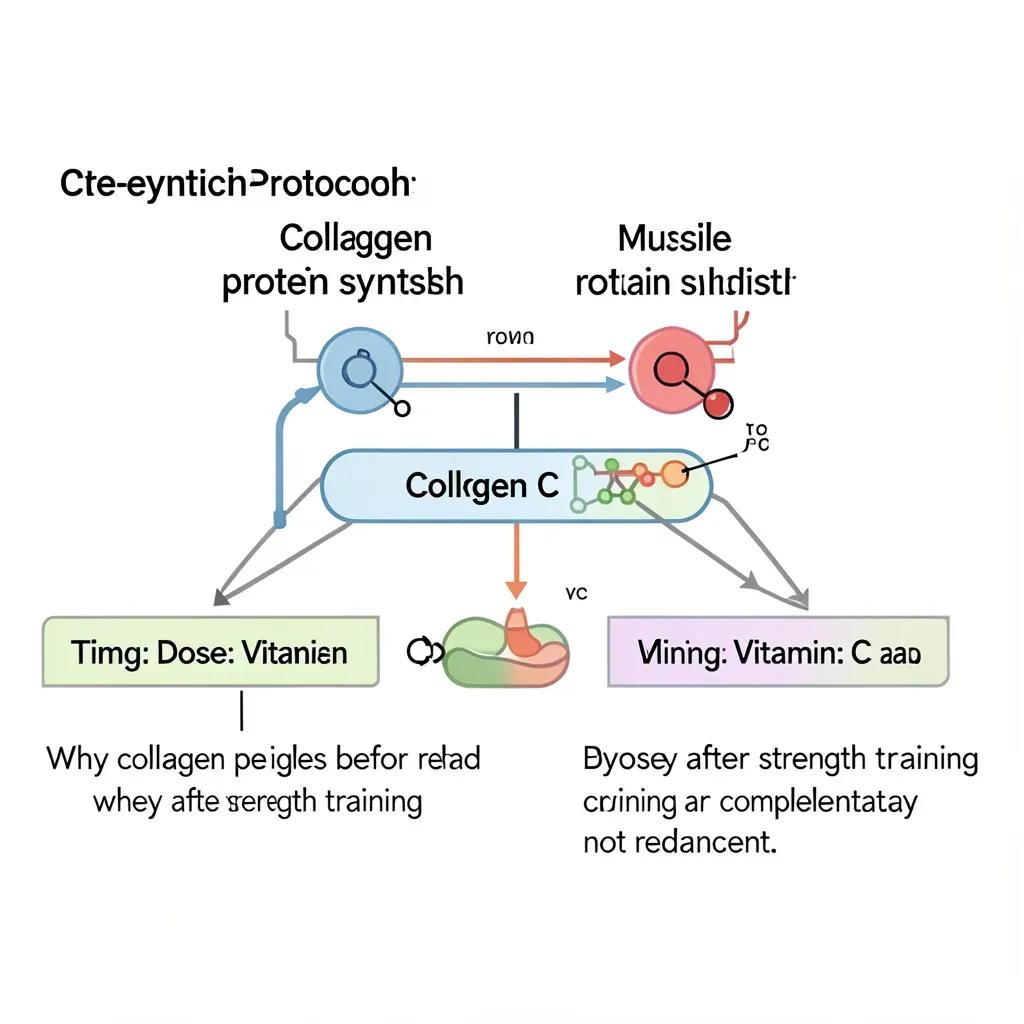
Muscle protein synthesis and collagen synthesis have different amino acid requirements. Muscle protein synthesis responds primarily to leucine. Collagen synthesis requires an abundance of glycine, proline, and hydroxyproline — amino acids that are plentiful in collagen and gelatin but relatively scarce in standard muscle-meat protein sources.
A landmark 2017 study by Shaw et al. demonstrated that consuming 15g of vitamin C-enriched gelatin (or collagen peptides) 1 hour before exercise doubled the rate of collagen synthesis in tendons and ligaments compared to a placebo control. The timing matters: taking it before loading the tissue provides the amino acid substrates during the period of mechanical stimulation, which is when collagen synthesis is most responsive.
Practical application: 10-15g of collagen peptides or a gelatin preparation with a source of vitamin C (orange juice, kiwi, or a supplement) approximately 45-60 minutes before your daily rehabilitation exercises.
Best Protein Sources for Back Pain Recovery
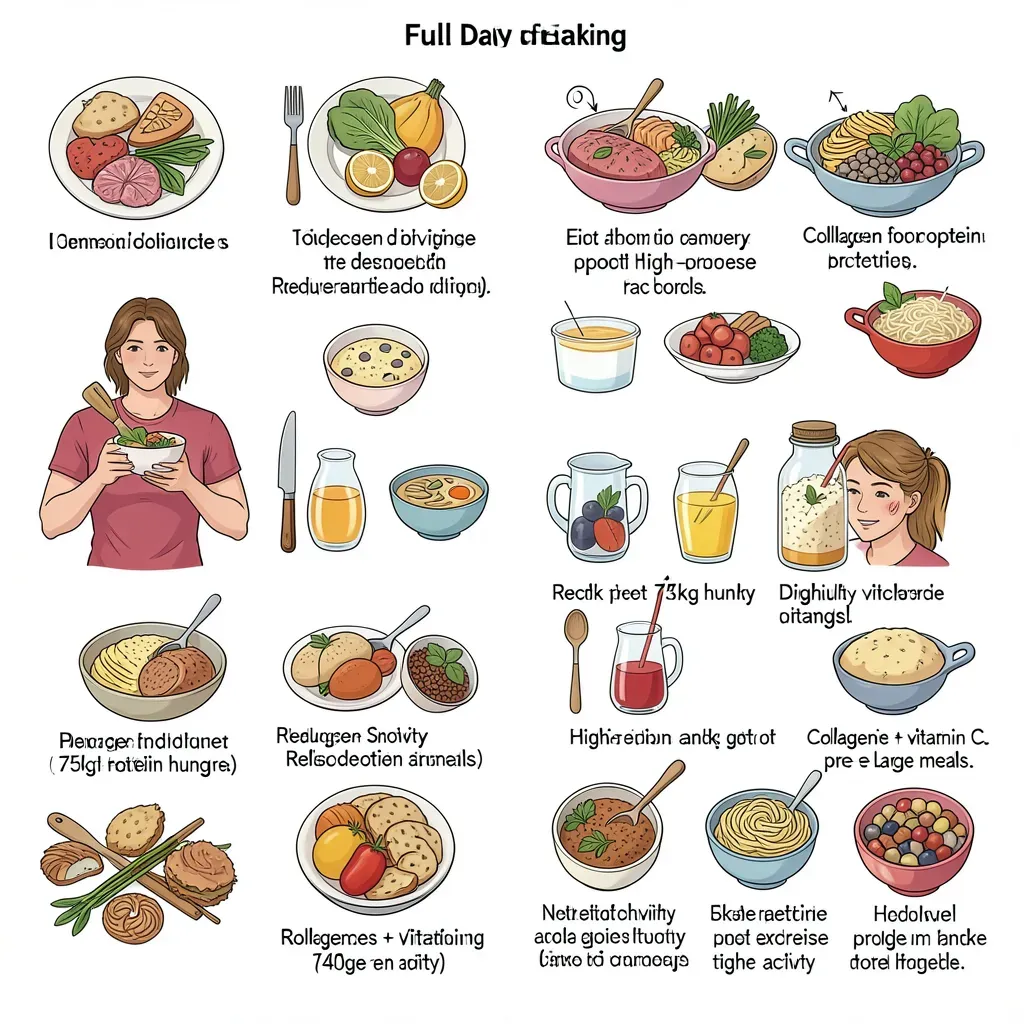
Animal protein sources provide a complete amino acid profile — all essential amino acids in amounts adequate for tissue synthesis — and are generally leucine-dense:
- Eggs are one of the most bioavailable protein sources (digestibility-corrected amino acid score near 1.0). 2 large eggs provide 12-13g of protein.
- Fish provides complete protein plus anti-inflammatory EPA/DHA — a dual benefit that makes it particularly valuable during recovery.
- Greek yogurt and cottage cheese provide casein protein, which digests slowly and provides sustained amino acid release — useful for the pre-sleep meal.
- Lean meats (chicken, turkey, lean beef) are protein-dense and practical for meeting high daily targets.
Plant protein sources can meet daily requirements with attention to combining for completeness:
- Legumes (lentils, chickpeas, black beans) are protein-rich but low in methionine — combine with grains.
- Edamame and tofu provide a complete amino acid profile among plant sources.
- Combining any legume with any grain (rice and beans, lentils and bread) creates a complete amino acid profile, though typically requires larger volumes to hit leucine thresholds.
Protein Powder: When It Helps and When It Doesn't
Protein supplements (whey, casein, egg white, pea, hemp, rice) are tools for closing gaps, not replacements for whole food. Whole food protein provides co-nutrients, greater satiety, and greater variety of bioactive compounds alongside the protein.
That said, protein powder is genuinely useful when: whole food intake is limited by reduced appetite (common in pain), meal preparation is difficult, or gaps in daily targets are otherwise hard to close. Whey protein concentrate or isolate remains the most researched and leucine-dense option. For those avoiding dairy, a combination of pea and rice protein approaches the amino acid profile of whey.
The Older Adult Consideration
After approximately age 65, anabolic resistance develops — muscle protein synthesis becomes less responsive to the same leucine stimulus that works in younger adults. This is a well-documented physiological change, not a matter of willpower or effort.
The practical consequence: older adults may need 40g of protein per meal (versus 25-30g in younger adults) to reliably cross the leucine threshold and maximally stimulate muscle protein synthesis. Total daily protein targets at the higher end of the range (2.0-2.2g/kg) are more important in this group.
In Review
- Protein needs during injury recovery are 1.6-2.2g/kg daily — roughly double the standard RDA
- Each meal should reach the leucine threshold (approximately 2.5-3g leucine, equivalent to 25-40g quality protein) to maximally stimulate tissue synthesis
- Collagen peptides (10-15g) taken with vitamin C 45-60 minutes before rehabilitation exercise specifically support disc, ligament, and tendon repair via a separate pathway from muscle protein synthesis
- Animal sources provide complete amino acid profiles and high leucine density; plant sources can achieve adequacy with intentional combining and larger volumes
- Older adults (65+) have anabolic resistance and benefit from higher per-meal protein (40g+) to achieve the same stimulus as younger adults
- High protein intake does not damage kidneys in people without pre-existing kidney disease