Depression & Back Pain
The bidirectional relationship between depression and back pain — shared biology, how each makes the other worse, and the integrated treatment approach.
Two Conditions That Feed Each Other
Between 30 and 60 percent of people with chronic back pain meet diagnostic criteria for major depression. This is not coincidence, and it is not simply an understandable reaction to suffering, though that plays a role. Depression and chronic pain share underlying biological mechanisms, and each actively worsens the other in ways that require specific, integrated treatment.
Understanding this relationship changes how you approach recovery. Treating pain without addressing depression — or treating depression without addressing pain — produces systematically inferior outcomes compared to treating both together. If you have chronic back pain, asking whether depression is also present, and taking it seriously if it is, is not a detour from physical recovery. It is part of the same road.
Shared Neurobiology
The link between depression and chronic pain is not merely psychological — it is grounded in shared neural circuitry and neurochemistry.
Serotonin and noradrenaline are neurotransmitters involved in both mood regulation and descending pain inhibition — the process by which the brain actively suppresses incoming pain signals from the spinal cord. The periaqueductal gray (PAG), a brainstem region central to descending pain control, uses serotonin and noradrenaline to dampen nociception. In depression, this descending inhibitory system is dysregulated — the brain's pain-dampening capacity is reduced. The same nociceptive input produces more pain experience when the descending inhibitory system is underperforming.
The HPA axis (hypothalamic-pituitary-adrenal axis), the stress response system, is dysregulated in both conditions. Chronically elevated cortisol promotes inflammation, disrupts sleep architecture, impairs memory and concentration, and lowers pain thresholds. The person who is depressed and in pain is operating with a biological system that is primed to experience both more intensely.
Serotonin-noradrenaline reuptake inhibitors (SNRIs) — duloxetine and venlafaxine — are the antidepressants with the strongest evidence for chronic pain independent of their antidepressant effect. If medication is appropriate for you, this class is worth discussing with your doctor specifically. SSRIs have weaker evidence for pain, though they remain useful for depression itself.
How Depression Worsens Pain
Depression does not just accompany pain passively. It actively amplifies it through several mechanisms:
Reduced descending inhibition, as described above — the brain's pain-suppression system is less active.
Increased catastrophizing — depression is characterized by a negativity bias that applies directly to pain: "This will never get better," "I cannot cope," "Nothing works." These catastrophic thoughts are not mere pessimism; they drive avoidance behavior and physiological arousal that maintain pain.
Disrupted sleep — depression profoundly impairs sleep quality, and poor sleep is an independent amplifier of next-day pain sensitivity. The relationship creates a spiral: pain → disrupted sleep → more pain → more depression → worse sleep.
Behavioral inactivity — depression is characterized by withdrawal from previously enjoyable and meaningful activities. In the context of chronic pain, this means reduced movement, reduced social connection, and reduced engagement with the graded activity and exposure work that drives recovery.
How Chronic Pain Causes Depression
The causal path also runs in the other direction, powerfully.
Chronic pain produces profound losses: loss of function, professional identity, physical capability, social participation, and the sense of a predictable future. These are genuine grief triggers, not cognitive distortions. Over time, the cumulative experience of restriction, failed treatments, and unpredictable flares produces the learned helplessness — the belief that nothing you do matters — that is central to depression.
Financial stress from reduced work capacity, relationship strain from changes in role and sexual function, and social isolation from reduced activity all compound the biological drivers. The depression that results from chronic pain is completely understandable. Understanding it does not make it less real or less treatable, but it does shape how treatment is approached: addressing the losses and their meaning is often as important as pharmacology.
Depression is frequently missed in chronic pain populations because pain itself explains the low mood, reduced energy, and withdrawal from activities that would otherwise prompt a depression screen. If you have chronic back pain and are experiencing persistent low mood, loss of interest in things that used to matter, changes in appetite or sleep, or thoughts of hopelessness or worthlessness, a PHQ-9 screen with your doctor is appropriate. These symptoms are not inevitable side effects of pain — they are treatable.
The Activity Trap
One of the most clinically important intersection points between depression and back pain is the activity trap. Depression causes inactivity — the motivational system is suppressed, movement feels effortful, the point of doing anything feels unclear. This inactivity leads to deconditioning. Deconditioning increases pain with any movement and reduces the sense of physical competence. More pain increases depression. More depression increases inactivity. The loop tightens.
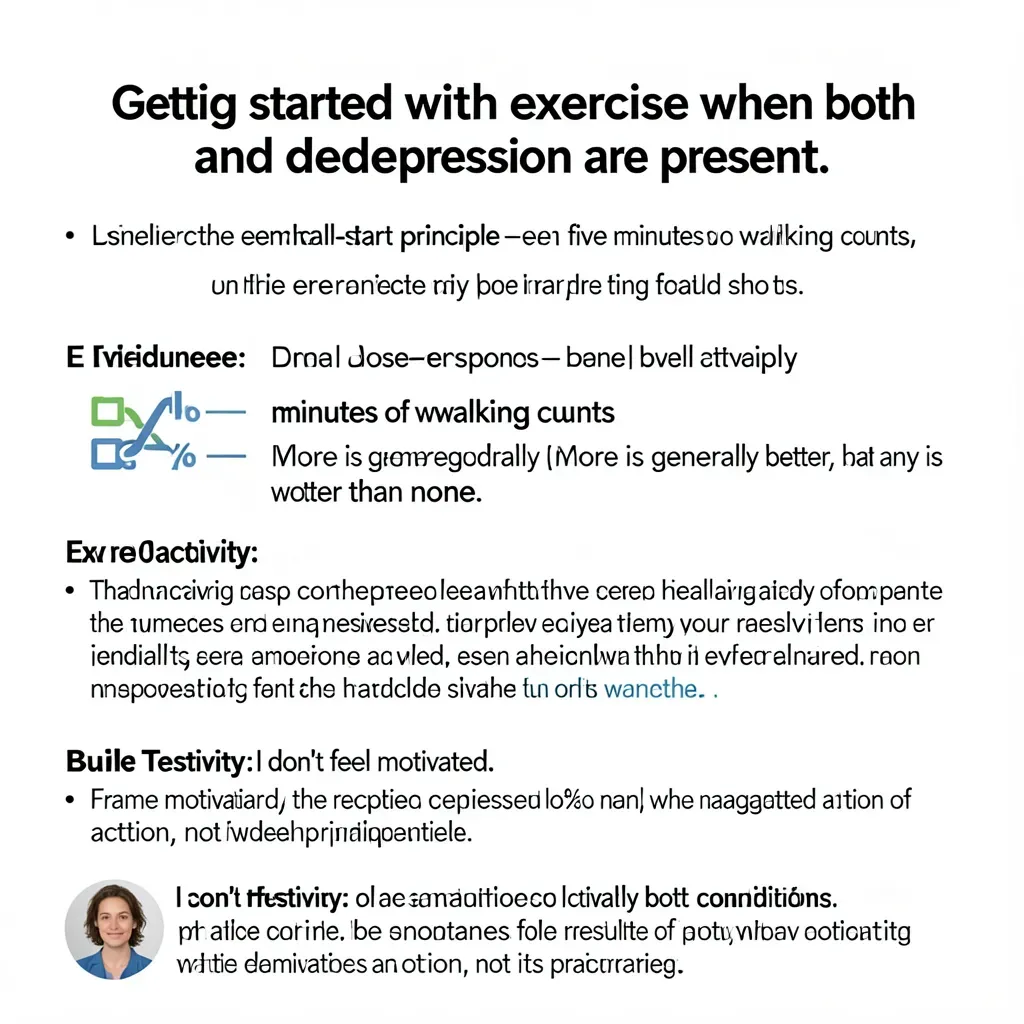
Exercise is the intervention that addresses both conditions simultaneously, and it has strong, replicated evidence for both. Moderate-intensity aerobic exercise produces antidepressant effects comparable to SSRIs at six weeks in multiple RCTs, and it is one of the most effective interventions for chronic low back pain. This makes exercise the highest-yield single intervention for the depression-pain comorbidity — not a replacement for other treatment but a foundation that makes everything else more effective.
The challenge is that the activity trap is exactly designed to prevent exercise: when you are depressed and in pain, exercise feels impossible. Behavioral activation principles apply directly: the motivation follows the action, not the other way around.
Integrated Treatment and When to Seek Help
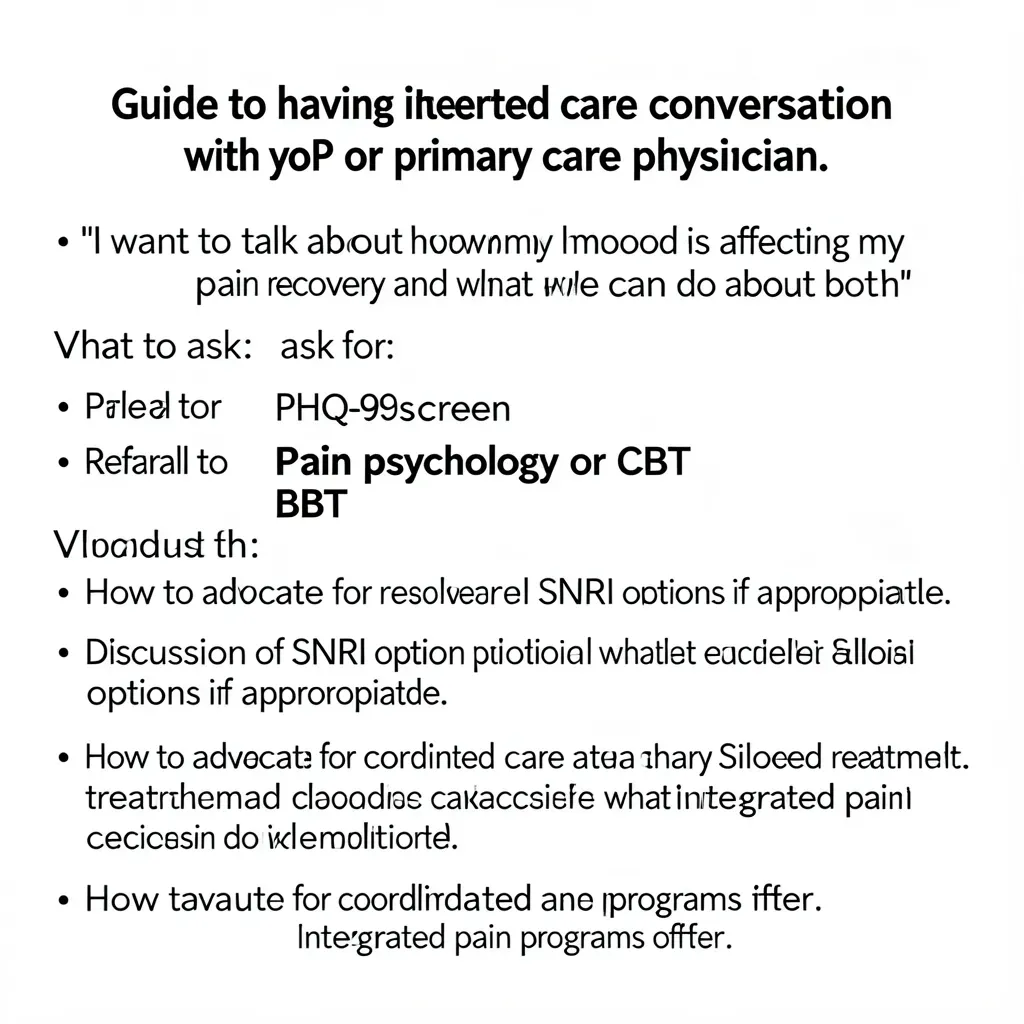
The evidence consistently shows that treating depression and back pain in an integrated, coordinated way — rather than in separate silos — produces better outcomes for both conditions. Practically, this means:
- Your primary care doctor should know about both and ideally coordinate between physical and psychological care
- If you are working with a physiotherapist, they should know if you are depressed — it affects treatment pacing and engagement
- If you are working with a mental health professional, your physical rehabilitation plan should be part of the clinical picture
- SNRI medication, if appropriate, addresses both conditions simultaneously and can be considered as part of an integrated plan
When to specifically involve mental health services: PHQ-9 scores above 10, thoughts of self-harm or hopelessness, inability to engage with physical rehabilitation due to depression severity, or when depression has been present for more than several weeks without improvement.
Recovery trajectories differ significantly with integrated versus siloed treatment. Patients receiving combined physical and psychological treatment for the depression-pain comorbidity show greater improvement at six months and better maintenance of gains at one year than those receiving only physical or only psychological treatment. The combined approach is not more time-consuming — it is more efficient, because both conditions are addressed in parallel.
In Review
- 30-60% of chronic back pain patients meet criteria for major depression — the comorbidity is common and mechanistically linked
- Shared biology includes serotonin and noradrenaline systems, the HPA axis, and descending pain inhibition pathways
- Depression worsens pain by reducing descending inhibition, increasing catastrophizing, disrupting sleep, and driving behavioral inactivity
- Chronic pain causes depression through genuine losses: function, identity, social participation, and sense of agency
- The activity trap (depression → inactivity → deconditioning → more pain → more depression) is a central target
- Exercise has strong evidence as a dual intervention — comparable to SSRIs for depression, and highly effective for back pain
- SNRIs (duloxetine, venlafaxine) address both pain and depression; SSRIs have weaker pain-specific evidence
- Integrated treatment of both conditions simultaneously produces better outcomes than treating each in isolation