Back Pain in Your 20s & 30s
Why back pain peaks in the working-age population and the lifestyle factors that either drive or prevent early disc degeneration.
The Decade That Decides
The 30s are the peak decade for disc herniation. Not because the spine is suddenly old — it isn't — but because the combination of accumulated disc loading, deteriorating movement habits, and the specific pressures of early working life converge in a way that makes the lumbar discs particularly vulnerable. The cruel irony is that this is also the decade when most people feel too young and too busy to take back pain seriously.
Understanding why pain emerges in this decade — and what specifically drives it — is the first step to either preventing it or intervening early enough to fully resolve it. The spine in your 30s is far more recoverable than the spine at 50. The biology is genuinely on your side, but only if you act on it.
The Sedentary Accumulation Pattern
Disc degeneration is not a sudden event. It is the product of accumulated mechanical loading over years, combined with inadequate recovery and movement. The disc has no direct blood supply after age 7-8 — it depends on the pumping action of movement (loading and unloading cycles) to drive fluid and nutrients in and waste products out. A person who sits for 8-10 hours per day during their 20s is not resting their discs — they are sustained-loading them at approximately 1000N while depriving them of the movement cycles that drive nutrient exchange.
By the time this person reaches their mid-30s, the disc has accumulated years of this pattern. The disc matrix — made of collagen and proteoglycans — begins to lose its water-binding capacity. The disc becomes less resilient to load. The first herniation typically occurs not from a catastrophic single event but from an accumulated structural vulnerability, triggered by a specific moment that was actually quite ordinary: picking something up from the floor, a awkward twist, a heavy gym session.
Most disc herniations in the 30s happen to people who were not doing anything unusually strenuous. The injury event is usually unremarkable — bending to pick up a bag, getting out of a car, reaching across a table. The structural vulnerability was built over years. The triggering event was just the last straw. This is why "I hurt my back doing nothing" is almost always inaccurate — the disc was already compromised.
The Gym Paradox
The 20s and 30s are when the majority of recreational gym participation occurs. This is largely positive — resistance training, when done with good technique, builds the muscular support system around the spine and improves its long-term resilience. But the same decade that is most prone to disc injury is also the decade most associated with gym culture, and gym culture has a significant technique problem.
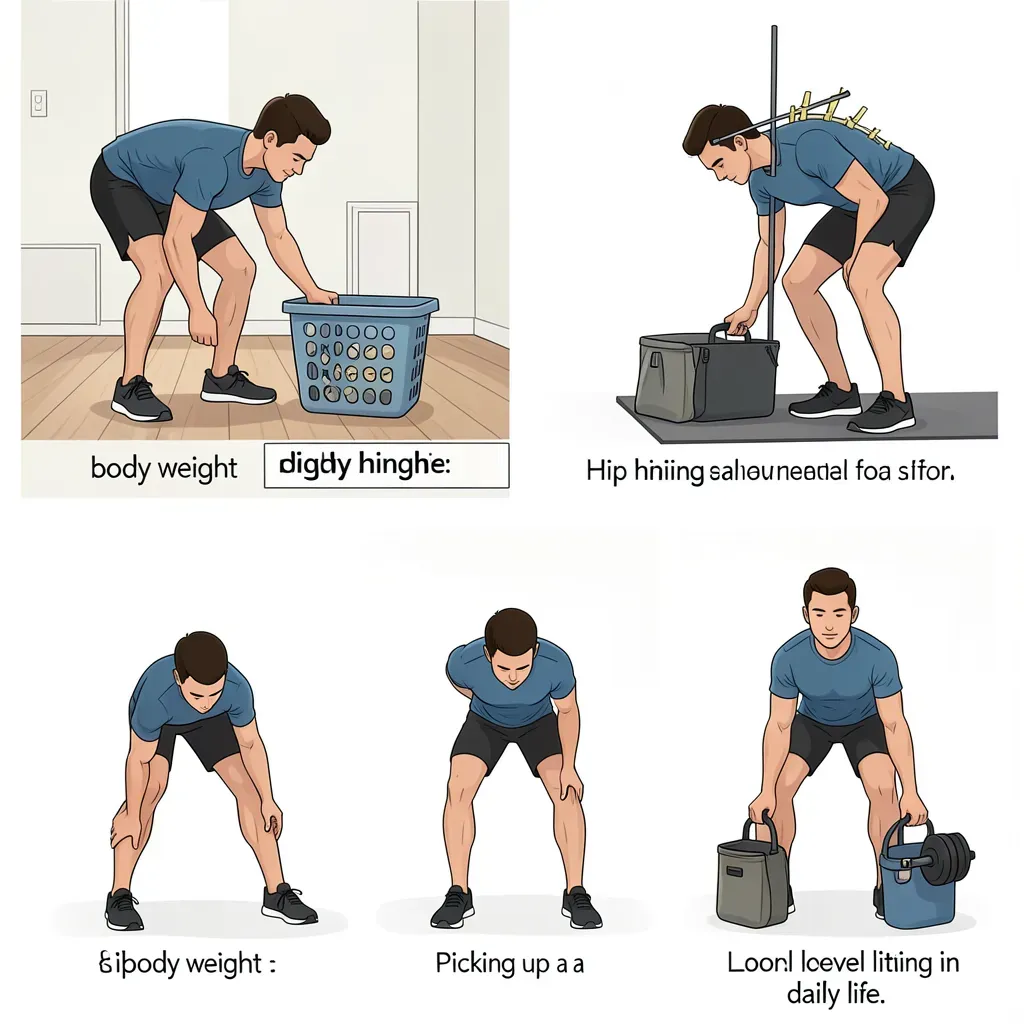
The deadlift is the most commonly blamed gym exercise for back injuries, but technique failure — not the exercise itself — is the cause. A deadlift performed with a rounded lumbar spine places enormous flexion-based shear through the L4-L5 and L5-S1 discs. Performed correctly with a neutral spine and hip-hinge pattern, it is one of the best exercises for building posterior chain resilience. The gym paradox is that people in this decade are motivated to train but frequently lack the movement foundations — specifically the hip hinge — that would make their training safe.
The solution is not less gym activity. It is building the hip hinge pattern as a non-negotiable baseline before progressing to heavy loaded movements.
Early morning gym sessions before work carry an elevated disc injury risk that most people are unaware of. After 6-8 hours of recumbent rest, the disc rehydrates and is under higher intradiscal pressure than at any other point of the day. This increased hydration also means the disc is less tolerant of compressive and flexion loading in the first 30-60 minutes after rising. If you train before work, allow 30-60 minutes of light activity before loading the spine heavily.
New Parent Physical Demands
The transition to parenthood typically occurs in this decade and introduces a set of physical demands that are both high-volume and biomechanically challenging: repeated lifting of an infant from a low surface (cot, car seat, floor), extended carrying with one arm while the other hand is occupied, prolonged nursing postures (forward head position, rounded shoulders, sustained static load), and severe sleep deprivation.
Sleep deprivation is not merely inconvenient — it directly affects pain processing. Sleep is when the central nervous system downregulates pain sensitisation. Chronically disrupted sleep lowers pain threshold, amplifies the perceived intensity of back pain, and reduces the motivation to engage in the movement and exercise that would otherwise help.
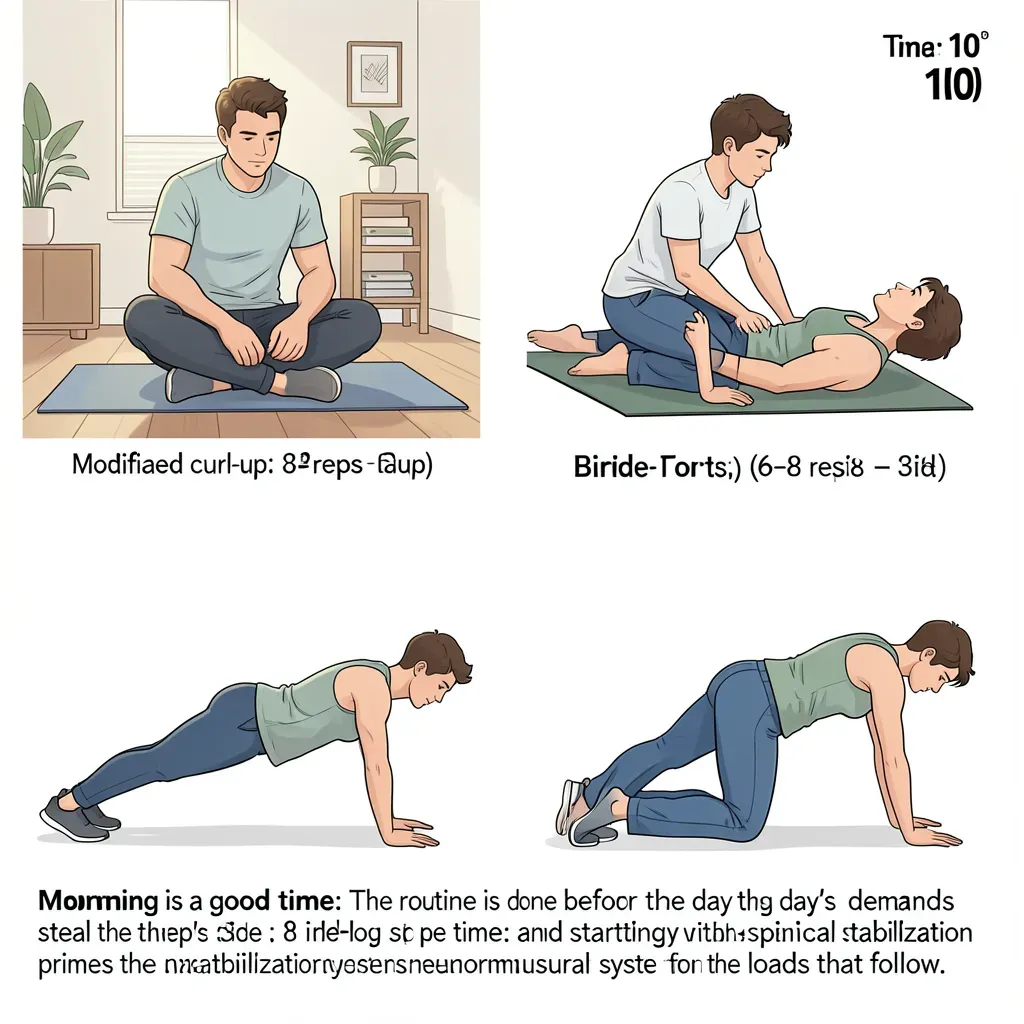
The new parent who develops back pain is dealing with a triple threat: higher physical demand, sleep deprivation amplifying pain, and drastically reduced time for exercise and recovery. Prioritising the Big 3 as a brief daily practice — which can be completed in under 10 minutes — is not impractical in this context. It is actually necessary.
Career Posture and the Invisible Accumulation
Twenty-somethings in desk-based careers are accumulating disc load before the body gives any signal that something is wrong. The first symptoms often appear in the early-to-mid 30s after 5-10 years of poor sitting habits have built up. By this point, asking the person to correct their posture is closing the stable door — but it is still worth doing, because the trajectory matters.
The specific patterns that accumulate in this decade:
- Sustained lumbar flexion from slumped sitting posture during long periods of focused work
- Forward head position from screen work, adding cervical loading
- Hip flexor shortening from prolonged hip flexion (sitting), which pulls the pelvis into anterior tilt and compresses the posterior disc
None of these cause immediate pain. All of them, maintained for 8-10 hours daily over several years, degrade disc integrity and create the vulnerability that makes eventual injury almost inevitable without intervention.
The intervention is not primarily postural correction — though that helps. It is movement frequency. Breaking up sustained sitting every 30-45 minutes with even brief movement (a short walk, a set of lumbar extensions, standing for a phone call) interrupts the accumulation pattern and restores disc fluid dynamics.
The Early Intervention Advantage
Here is the biological reality that makes this decade critical: the spine in your 30s has a significantly better healing and adaptation capacity than at 50 or 60. Disc cells retain more metabolic activity. Bone remodelling is still vigorous. Muscle hypertrophy in response to exercise is faster and more pronounced. The nervous system is more plastic.
This means that a disc herniation in your 30s, managed correctly, has a genuinely good prognosis. The majority of herniated discs resorb without surgical intervention within 12 months, and the resorption is most complete when it is accompanied by active rehabilitation. The person who develops a disc herniation at 35 and responds by building their movement foundations, learning the hip hinge, completing the Big 3, and returning to full activity has a high probability of complete resolution.
The person who responds by resting, avoiding movement, and waiting for it to go away has a significantly worse prognosis — not because of biology, but because of behaviour.
The single most important preventive action in your 20s and 30s is learning to hip hinge for all daily lifting. This one pattern change — consistently applied to every time you pick something up off the floor, load the dishwasher, lift a child, or move furniture — distributes spinal load correctly and prevents the cumulative flexion-based loading that drives disc injury in this decade.
In Review
- The 30s are the peak decade for disc herniation — not because the spine is old, but because years of sedentary accumulation create structural vulnerability that a routine event finally triggers.
- Sustained sitting at elevated disc pressure, compounded by poor posture and lack of movement breaks, is the primary driver of early disc degeneration in desk workers.
- The gym paradox: training intensity without technique foundations — especially the hip hinge — makes the most motivated exercisers in this decade among the most injury-prone.
- Early morning training before the disc has had time to decompress after overnight rehydration carries elevated injury risk; allow 30-60 minutes before heavy spinal loading.
- New parenthood adds high-volume awkward lifting and sleep deprivation to the risk profile; the Big 3 in under 10 minutes is the practical solution.
- Career posture accumulation is invisible in the 20s and manifests in the 30s; the corrective is movement frequency (every 30-45 minutes), not primarily static posture correction.
- The 30s spine has superior healing capacity compared to later decades — early intervention with correct rehabilitation produces the best long-term outcomes.
- The hip hinge, applied consistently to all daily lifting, is the single most effective preventive action in this decade.