Gut Health & Back Pain
The gut-pain axis — how microbiome disruption, intestinal permeability, and gut inflammation contribute to musculoskeletal pain.
The Connection Most Clinicians Miss
If you have back pain and also experience bloating, irregular bowel habits, or digestive discomfort, this is not coincidence. Research increasingly demonstrates a bidirectional relationship between gut health and musculoskeletal pain — a gut-pain axis that operates through systemic inflammation, immune activation, and the nervous system. Understanding this connection matters practically: addressing gut dysfunction is one of the modifiable factors that can reduce the inflammatory background in which your pain exists.
How a Disrupted Gut Drives Systemic Inflammation
The gut microbiome — approximately 38 trillion bacteria residing primarily in the large intestine — plays a central role in calibrating immune function. Roughly 70% of the body's immune tissue (gut-associated lymphoid tissue, or GALT) lines the gastrointestinal tract. When the microbiome is in a healthy, diverse state, it educates the immune system toward tolerance and appropriate response. When it is disrupted — through what researchers call dysbiosis — it shifts immune tone toward chronic low-grade activation.
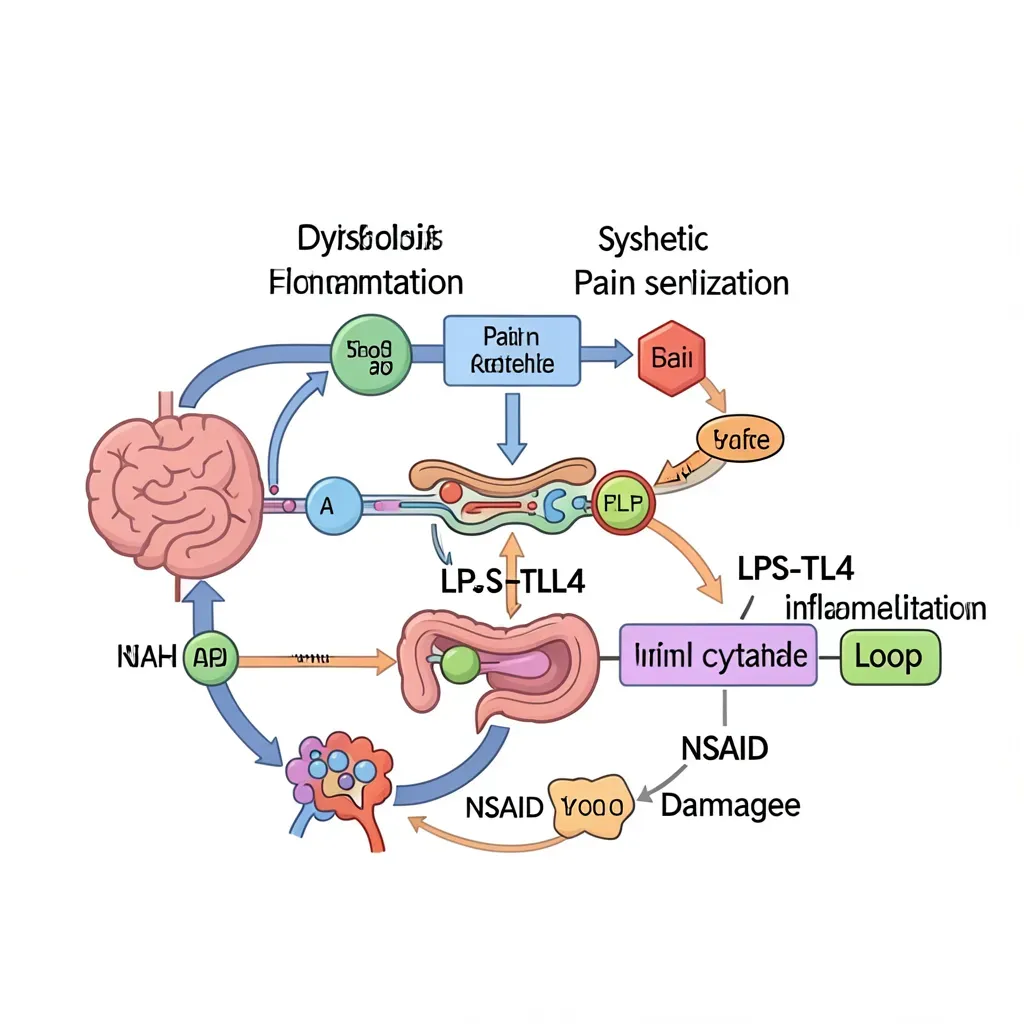
The molecular mechanism involves a molecule called lipopolysaccharide (LPS), a component of the outer membrane of gram-negative bacteria. In a healthy gut, LPS stays in the intestinal lumen. When intestinal barrier function is compromised, LPS translocates into systemic circulation — a process sometimes called "metabolic endotoxemia." Even small increases in circulating LPS activate Toll-like receptor 4 (TLR4) on immune cells, triggering production of TNF-α, IL-6, and IL-1β — the same inflammatory cytokines implicated in pain sensitization and disc degeneration.
What Causes Dysbiosis
Common drivers of microbiome disruption that are relevant to back pain patients:
Antibiotics are the most powerful acute disruptors of microbiome diversity. A single course reduces microbiome diversity and can take 6-12 months to partially recover. This does not mean avoiding necessary antibiotics — but it does mean post-antibiotic microbiome restoration is worth prioritizing.
Ultra-processed food — food made with industrial ingredients, emulsifiers, artificial flavors, and preservatives rather than whole ingredients — systematically disadvantages commensal bacteria and promotes inflammatory species. The emulsifiers polysorbate 80 and carboxymethylcellulose, common in processed foods, have been shown in animal studies to disrupt the mucus layer that protects intestinal barrier cells from luminal bacteria.
Chronic psychological stress alters gut motility, reduces secretory IgA (a key mucosal immune defense), and changes microbiome composition via the hypothalamic-pituitary-adrenal axis. For back pain patients already under stress, this creates a self-reinforcing cycle.
Proton pump inhibitors (PPIs), widely used for acid reflux, significantly alter the gastric and small intestinal microbiome by changing the pH environment. Chronic PPI use is associated with small intestinal bacterial overgrowth (SIBO) and increased intestinal permeability.
Intestinal Permeability: What "Leaky Gut" Actually Means
"Leaky gut" is a colloquial term for increased intestinal permeability — a measurable physiological state, not a metaphor. The intestinal epithelium is a single cell layer thick, held together by tight junction proteins (occludin, claudin, zonulin). When tight junction integrity is compromised, the gut becomes permeable to molecules — including LPS — that should remain in the lumen.
Intestinal permeability can be quantified clinically using the lactulose/mannitol ratio test, in which both sugars are consumed and their urinary ratio reflects tight junction integrity. Elevated zonulin in serum is also used as a marker. These are not fringe tests — they are used in clinical research and increasingly in functional medicine practice.
What increases intestinal permeability: high sugar intake, alcohol, chronic NSAID use (see below), gluten in susceptible individuals, psychological stress, and dysbiosis itself (creating a self-reinforcing loop).
The NSAID Problem
NSAIDs (ibuprofen, naproxen, diclofenac) are among the most commonly prescribed treatments for back pain — and they directly damage the gut lining through two mechanisms. First, direct topical irritation of the mucosal surface regardless of route of administration (this occurs even with injectable NSAIDs). Second, systemic inhibition of COX-1-dependent prostaglandins that normally maintain the protective mucus layer of the gut.
The result: chronic NSAID use significantly increases intestinal permeability, gastric ulcer risk, and the LPS translocation that drives systemic inflammation. The treatment is, in part, worsening the inflammatory environment it is meant to improve. This does not mean never using NSAIDs — short-term use for acute pain has a reasonable risk-benefit profile. It does mean that using NSAIDs as a chronic daily management strategy for back pain has significant gut health costs worth weighing.
Healing the Gut: Evidence-Based Strategies
Fiber diversity is the most evidence-supported intervention for restoring microbiome health. The gut microbiome feeds on fermentable fiber (prebiotics), and different bacterial species ferment different types of fiber. A landmark study from the Sonnenburg lab at Stanford found that consuming 30 or more different plant foods per week was associated with greater microbiome diversity than consuming fewer than 10, regardless of whether those plants were "superfoods." The diversity is the point, not any individual food.
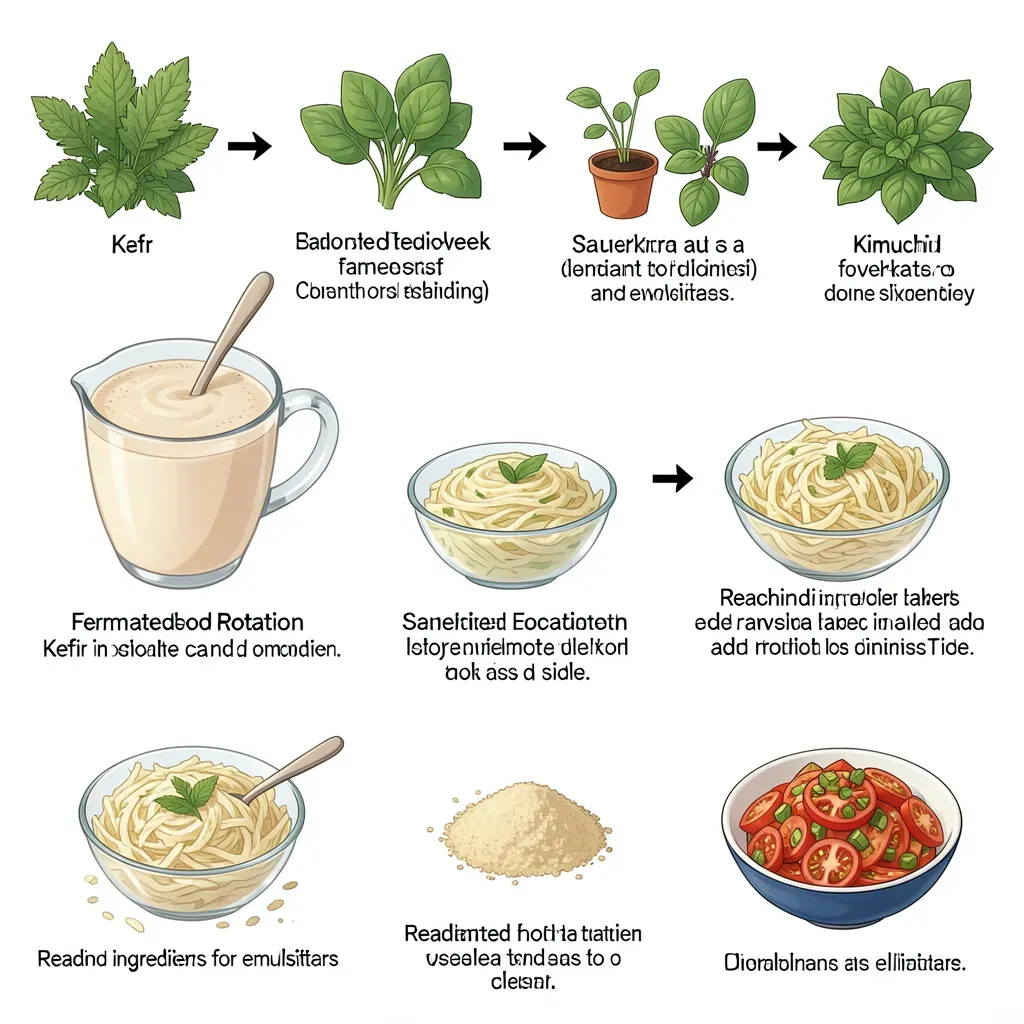
Fermented foods provide live bacteria and the metabolites they produce. Kefir, kimchi, sauerkraut, kombucha, and live-culture yogurt have all shown benefits for microbiome diversity in clinical trials. A 2021 Stanford study found that high-fermented-food diets increased microbiome diversity and reduced 19 inflammatory proteins over 10 weeks.
Removing emulsifiers and ultra-processed foods reduces the chemical burden on gut barrier integrity. This is less about individual ingredients and more about a shift toward cooking from whole ingredients.
Probiotics have strain-specific evidence. For general gut health and microbiome diversity, the evidence is modest but positive for Lactobacillus and Bifidobacterium species. For specific conditions (antibiotic-associated diarrhea, IBS), certain strains have more robust clinical support. A key limitation of most probiotic research is short study duration — probiotics are likely most useful as colonization aids alongside the fiber and fermented food dietary changes that sustain them.
The Gut-Spine Connection
Emerging research has identified a direct gut-spine microbiome connection through the endplate vasculature. The intervertebral disc is the largest avascular structure in the body, receiving nutrients via diffusion through vertebral endplate capillaries. These capillaries are vulnerable to microvascular inflammation and bacterial translocation. A 2019 study found bacterial DNA from gut-associated organisms in degenerated disc tissue, suggesting that gut bacterial translocation via the bloodstream may reach endplate vessels and directly contribute to disc inflammation and degeneration. This research is preliminary but mechanistically compelling.
In Review
- Gut dysbiosis drives systemic inflammation through LPS translocation, activating the same inflammatory cytokines that sensitize pain pathways
- Approximately 30% of chronic back pain patients have concurrent IBS — the two conditions share neuroimmune mechanisms
- Chronic NSAID use directly damages the gut lining, potentially worsening the inflammatory environment the drugs are meant to treat
- The 30-plants-per-week target is the most practical microbiome diversity strategy — diversity of plant types matters more than any individual superfood
- Fermented foods (kefir, kimchi, sauerkraut) measurably increase microbiome diversity and reduce inflammatory markers over weeks
- Emerging evidence links gut bacterial translocation via endplate vasculature directly to disc degeneration